.png)
How cold laser therapy accelerates healing for acute joint pain beyond traditional methods

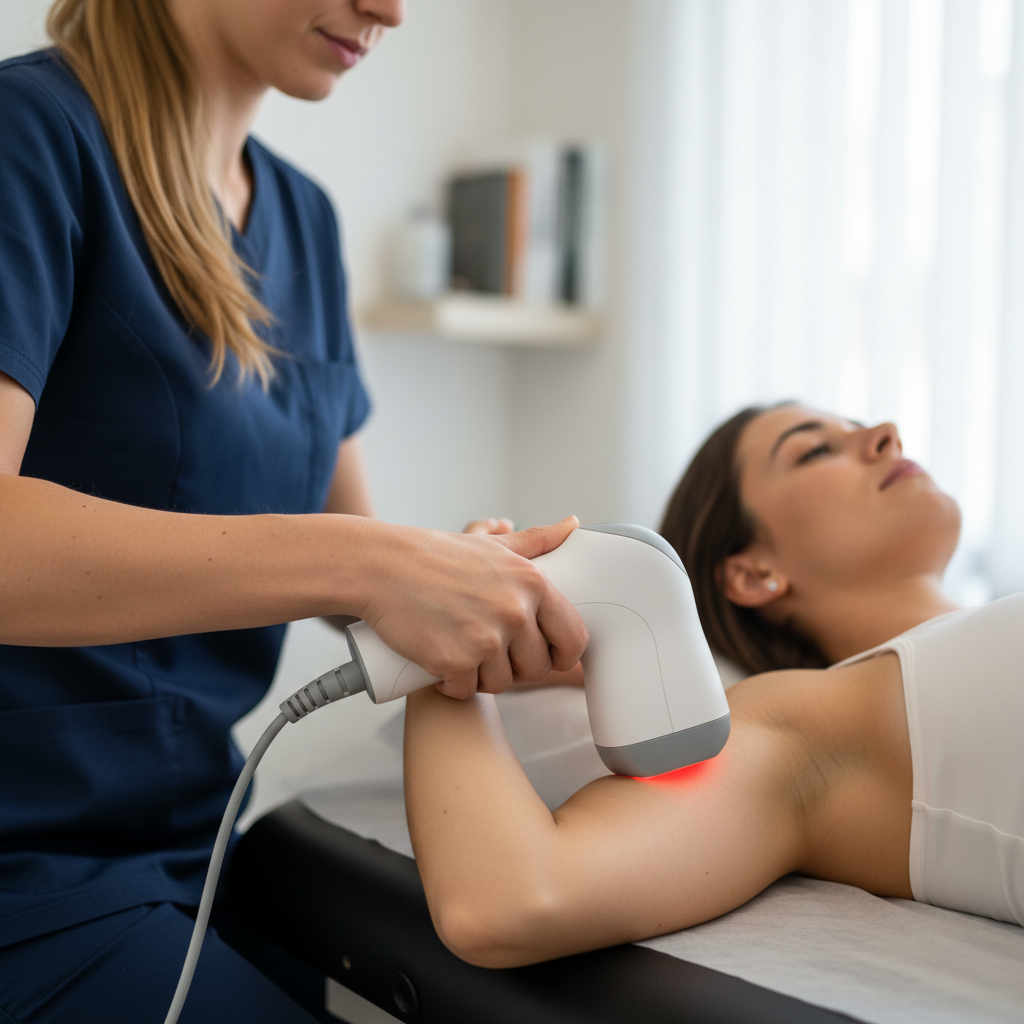
Cold laser therapy, or photobiomodulation, helps with acute joint pain by delivering specific wavelengths of light to damaged cells. This process boosts cellular energy production, which reduces inflammation, alleviates pain, and significantly accelerates the body's natural tissue repair process, addressing the injury at its source rather than just masking symptoms.
The immediate challenge of an acute joint injury
That sudden, sharp pain from a twisted ankle, a strained shoulder, or an impacted knee is an unmistakable signal. Your body has sustained an acute injury, and your first instinct is to manage the immediate consequences: the pain, the swelling, and the loss of function. For decades, the standard advice has been the R.I.C.E. protocol—Rest, Ice, Compression, and Elevation. This approach is centered on one primary goal: managing the symptoms of inflammation.
While managing symptoms is important for comfort, it doesn't actively contribute to the quality or speed of the underlying healing process. In some cases, aggressive icing can even constrict blood vessels, potentially slowing the arrival of the essential cells your body needs for repair. This is the fundamental limitation of traditional methods; they are reactive. But what if there was a proactive approach? A therapy that doesn't just put a bandage on the problem but instead gives your body the supercharged fuel it needs to heal itself faster and more effectively. This is the core value of cold laser therapy for acute joint pain.
Beyond symptom management: How cold laser therapy works differently
When you sprain a joint or tear a muscle, your body initiates a complex healing cascade. Traditional methods, including anti-inflammatory medications, are designed to interrupt this cascade to reduce pain. While helpful for short-term relief, they don't enhance the repair process itself. This can lead to slower recovery times and incomplete healing, which is a major risk factor for developing chronic issues down the road.
Cold laser therapy, also known as low-level laser therapy (LLLT) or photobiomodulation, operates on a completely different principle. Instead of muting the body's response, it enhances it. It's a non-invasive, non-thermal laser treatment that delivers focused light energy directly to the injured tissue. This isn't about cutting or burning; the "cold" in cold laser refers to the fact that the low levels of light are not enough to heat your body's tissue. This therapy is about stimulating a biological response, a process that offers a significant advantage for anyone seeking not just pain relief, but true healing.
The science of light: Unpacking photobiomodulation for cellular repair
So, how does light accelerate tissue healing? The mechanism behind LLLT is a process called photobiomodulation. Here’s a straightforward breakdown of what happens at the cellular level when the therapeutic laser is applied to your injured joint:
- Light Penetration: Specific wavelengths of red and near-infrared light are used because they can penetrate the skin and reach deep into the damaged tissue of muscles, ligaments, and joints. Cold laser therapy uses low levels of energy or photons that penetrate deep into tissue, leading to chemical changes that help damaged cells recover and regrow.
- Mitochondrial Stimulation: Inside each of your cells are tiny power plants called mitochondria. These are responsible for producing Adenosine Triphosphate (ATP), the energy currency that fuels all cellular activity, including repair and regeneration. The light photons are absorbed by a specific photoreceptor within the mitochondria, supercharging this energy production.
- Accelerated Healing Response: This surge in ATP production and laser therapy provides the immense energy required for cellular repair. It allows damaged cells to replicate faster, increases the production of collagen (the building block of tissue), improves blood circulation to the area, and reduces inflammation and oxidative stress. The result is a dramatic acceleration of the healing process.
This targeted mitochondrial stimulation laser therapy is the key difference-maker. You are not just waiting for your body to heal; you are actively giving it the resources to perform that healing more efficiently. This is especially critical in the early stages of an injury.
Why timing is everything: The critical window for healing an acute injury
Every acute injury goes through three overlapping phases of healing: inflammation, proliferation (rebuilding), and remodeling (strengthening). Applying cold laser therapy early, during the initial inflammatory and proliferative phases, creates the optimal environment for recovery. By reducing excessive inflammation while simultaneously boosting ATP production, the therapy ensures the rebuilding phase starts sooner and with higher-quality materials.
This early intervention leads to better-organized and stronger tissue repair. One of the major benefits is the reduction of excessive scar tissue formation. Proper LLLT for reducing scar tissue ensures that the new tissue is more like the original—flexible, strong, and functional—rather than a stiff, disorganized patch. This is fundamental for improving range of motion with LLLT and restoring full, pain-free function to the joint, whether it's a cold laser treatment for an ankle sprain or photobiomodulation for a rotator cuff injury.
A proactive strategy to prevent chronic pain
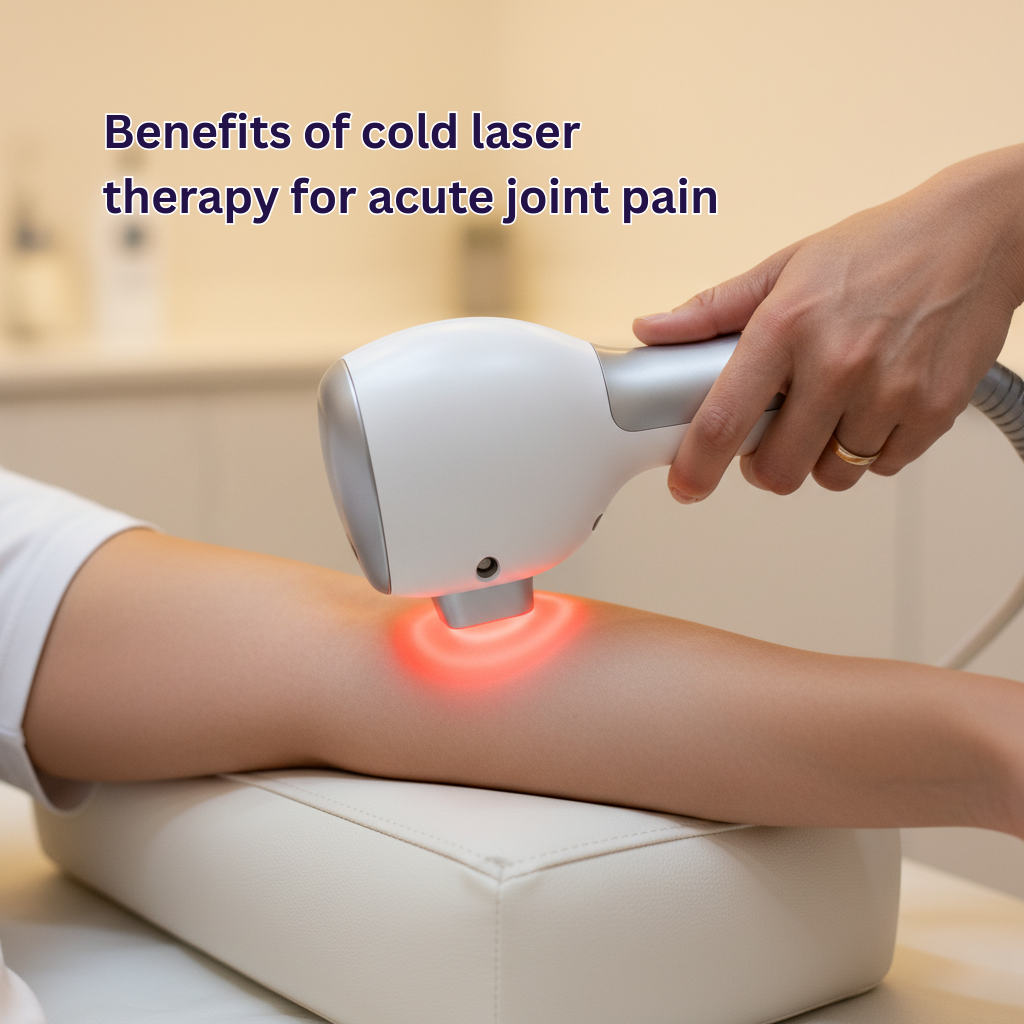
Perhaps the most profound benefit of cold laser therapy is its role in preventing an acute problem from becoming a chronic one. Incomplete or poor-quality healing can leave a joint unstable, weak, and susceptible to re-injury. Over time, this can lead to degenerative conditions like osteoarthritis. By ensuring a more complete and robust recovery from the start, you are not just treating the current pain; you are investing in the long-term health of your joint.
This proactive approach helps you break the cycle of pain and dysfunction. Whether it's LLLT for acute lumbar pain or therapy for a knee injury, the goal is to get you back to your life without the lingering weakness or instability that plagues so many people long after the initial injury has supposedly healed.
Comparing your options for acute joint pain relief
When you're in pain, you want relief fast. But it's important to understand the differences between the available treatments to make an informed decision for your long-term wellness. Here’s a look at how cold laser therapy stacks up against traditional methods based on key decision factors.
Long-term effectiveness vs. short-term symptom relief
Traditional Methods (Medications, Ice)
Primarily focused on short-term symptom relief. Anti-inflammatory drugs block pain signals and reduce swelling but do not address the underlying cellular damage. The pain often returns once the medication wears off.
Cold Laser Therapy
Focused on long-term resolution by addressing the root cause. By stimulating cellular repair and regeneration, it promotes true healing of the tissue, leading to lasting pain relief and improved joint function.
Speed of recovery
Traditional Methods
Rest is passive, and excessive icing can restrict blood flow, potentially slowing down the delivery of necessary healing components. The recovery timeline is dictated entirely by the body's unassisted capabilities.
Cold Laser Therapy
Actively accelerates the body’s natural healing timeline. Increased ATP production provides the fuel for faster tissue regeneration, which can significantly shorten the overall cold laser therapy recovery time for many injuries.
Addressing the root cause of injury
Traditional Methods
Masks the pain, which is a symptom of the injury. It does not provide any direct input to repair the damaged ligaments, tendons, or muscles.
Cold Laser Therapy
Directly targets the damaged cells. The light energy provides a direct stimulus for repair, addressing the injury at its biological source.
Non-invasive and non-pharmaceutical approach
Traditional Methods
Often relies on NSAIDs or stronger pain medications, which can have side effects on the stomach, kidneys, and liver, especially with prolonged use. Injections or surgery carry their own risks.
Cold Laser Therapy
This is a completely drug-free acute pain management solution. As a non-invasive treatment, it carries minimal risk of side effects. For this reason, it may be an option for individuals who do not wish to take medications.
What conditions does cold laser therapy treat?
Because of its foundational mechanism—stimulating cellular repair—low-level laser therapy is incredibly versatile. It is an effective treatment for a wide range of acute musculoskeletal conditions. A chiropractor using cold laser therapy can integrate it into a comprehensive care plan to improve outcomes for patients.
Some of the many injuries and conditions that respond well include:
- Joint Sprains & Strains: Cold laser treatment for ankle sprain, knee injuries (e.g., LLLT for acute knee injury), and wrist pain.
- Tendon and Ligament Injuries: Photobiomodulation for rotator cuff injury, Achilles tendonitis, plantar fasciitis, and cold laser therapy for tendonitis in the elbow (tennis or golfer's elbow).
- Back and Neck Pain: LLLT for acute lumbar pain, cold laser therapy for neck pain, and even for sciatica and SI joint pain.
- Repetitive Strain Injuries: Cold laser for carpal tunnel syndrome and other overuse conditions.
- Post-Surgical Recovery: It can even be used for LLLT for post-surgery recovery to manage pain and accelerate healing. In fact, one study found that laser therapy can significantly reduce pain and swelling after dental surgery, demonstrating its effectiveness in acute trauma situations.
One patient who was struggling after an accident shared, "I was in a car collision and had nonstop knee and leg pain. This advanced treatment has helped more than anything else..." This experience highlights how modern therapies can succeed where other methods fall short.
Your questions about cold laser therapy answered
Does laser therapy help with joint pain?
Absolutely. It helps by targeting the two main causes of pain: inflammation and tissue damage. Photobiomodulation for inflammation is a well-documented benefit, and by accelerating cellular repair, the therapy helps resolve the underlying source of the pain for lasting relief.
What does cold laser therapy feel like?
Most patients feel nothing at all during the treatment. Because it is a non-thermal laser, there is no heat. Some might feel a very subtle tingling or warmth over the area, but it is a painless and comfortable procedure. A typical session can last anywhere from 5 to 15 minutes depending on the area being treated.
Is photobiomodulation safe?
Yes, it is considered very safe when performed by a trained professional. It is an FDA-approved laser therapy for pain for numerous conditions, and cold laser therapy side effects are extremely rare. It's a non-invasive, non-toxic therapy that works with your body's natural healing mechanisms.
How many treatments are needed for knee pain or other injuries?
The number of sessions depends on the severity and type of injury. For acute conditions, patients often feel improvement after just a few treatments. A full course might range from 6 to 12 sessions, often combined with physical therapy or chiropractic care for the best results.
Making the right choice for your needs
The best path to recovery depends on your specific injury, your lifestyle, and your long-term goals. There is no single "best" solution for everyone, but understanding the philosophy behind each approach can guide your decision.
The Athlete with an Acute Injury
For you, every day of recovery counts. Your primary goals are finding the fastest way to heal a joint injury, minimizing downtime, and ensuring the repaired tissue is strong enough to withstand the demands of your sport. Cold laser therapy is an ideal fit, as its primary benefit is accelerating the healing cascade to shorten recovery time and promote higher-quality tissue regeneration, reducing the risk of re-injury. Another patient, an avid golfer, noted, "This treatment has helped my shoulder pain tremendously! It has allowed me to start playing golf again..."
The Post-Accident Patient
You are dealing with acute trauma and significant pain, and you want a path to recovery that is effective, non-invasive, and doesn't rely on long-term medication. Cold laser therapy offers a powerful, drug-free alternative to injections for knee pain or back pain. It focuses on restoring function and mobility by healing the damaged tissues from the inside out, helping you get back to your life with confidence.
The Chronic Pain Sufferer
You may have an injury that never healed properly or a degenerative condition like osteoarthritis or fibromyalgia. Traditional methods have only provided temporary relief, leaving you frustrated. For you, cold laser therapy represents a different approach—one that targets the chronic inflammation and poor cellular function at the root of your condition. It can help manage pain and improve your quality of life by stimulating a healing response in tissues that have been "stuck" for months or years.
Ultimately, the most effective care combines advanced technology with a deep understanding of your body's mechanics. At Pure Relief Pain Solutions Chiropractic in Austin, TX, our focus is on providing state-of-the-art, non-surgical solutions that address the root cause of your pain. We believe in empowering your body's own incredible ability to heal. If you are struggling with an acute joint injury and want to explore a path that prioritizes lasting recovery over temporary fixes, we invite you to schedule a consultation to see if cold laser therapy is right for you.

Call us today or use our contact form to request an appointment and start getting relief.

