.png)
Beyond the pain pill: a non-surgical roadmap for cervical and lumbar disc herniation


Effective, lasting relief from a herniated disc is rarely found in medication or prolonged rest alone. True recovery is an active, multi-phase journey that systematically moves from controlling acute inflammation to rebuilding your spine's muscular support system, creating a foundation for long-term health and preventing future episodes of pain.
That sudden, electric jolt of pain—whether it’s a sharp stab in your lower back that shoots down your leg or a deep ache in your neck that sends numbness tingling into your fingertips—is a moment you don’t forget. It’s a signal that something is wrong. When a doctor diagnoses a cervical or lumbar herniated disc, the world can feel like it’s shrinking. Thoughts of chronic pain, missed work, and giving up activities you love can be overwhelming. The immediate question is always, "How do I fix this?" and for many, the fear of surgery looms large.
But here is the empowering truth: for the vast majority of people, the path to recovery does not lead to an operating room. In fact, a structured, non-surgical approach is not only possible but is often the most effective way to achieve lasting relief. The key is to understand that healing a herniated disc is not a passive waiting game. It's a strategic process. It requires moving beyond simply masking the symptoms and instead addressing the root causes of why the disc failed in the first place.
Understanding the enemy: what exactly is a herniated disc?
To defeat an opponent, you must first understand it. Your spine is made of a series of bones (vertebrae) stacked like a column. Between each vertebra sits a spinal disc, which acts as a shock absorber and a flexible pivot point. Think of a disc like a jelly donut: a tough, fibrous outer ring (the annulus fibrosus) containing a soft, gel-like center (the nucleus pulposus).
A "disc bulge" occurs when the "jelly" pushes the "donut" wall outward, like a tire with a weak spot. A true "herniation" happens when the outer wall tears, and some of that inner gel-like material leaks out. This escaped material can press on the highly sensitive spinal cord or the nerve roots that exit the spine at that level, causing a cascade of painful symptoms.
This process doesn’t happen in a vacuum. Of all the factors responsible for herniated discs, aging is probably the most important, with the condition being common among people aged 35 to 55 according to Harvard Health. As discs degenerate with age, they lose water content and elasticity, and the retaining wall (annulus) can fissure or tear, allowing pieces of the disc to herniate as explained by the Hospital for Special Surgery. This irritation of the nerve is what leads to common symptoms like:
- Lumbar Herniation: Often causes sciatica, a sharp, shooting pain that travels from the buttock down the back of the leg. This can be accompanied by numbness, tingling, or even weakness, such as `managing foot drop from herniated disc without surgery`.
- Cervical Herniation: Typically results in pain, numbness, or weakness that radiates from the neck into the shoulder, arm, and hand (`neck pain and arm numbness relief`), a condition known as cervical radiculopathy.
The crossroads of recovery: choosing your path
When you're in pain, you face a critical choice. This choice determines not just how quickly you feel better, but how likely the pain is to come back. You can either wait passively, hoping for the best, or you can become an active participant in a strategic recovery plan.
Path 1: Passive Waiting & Random Treatments
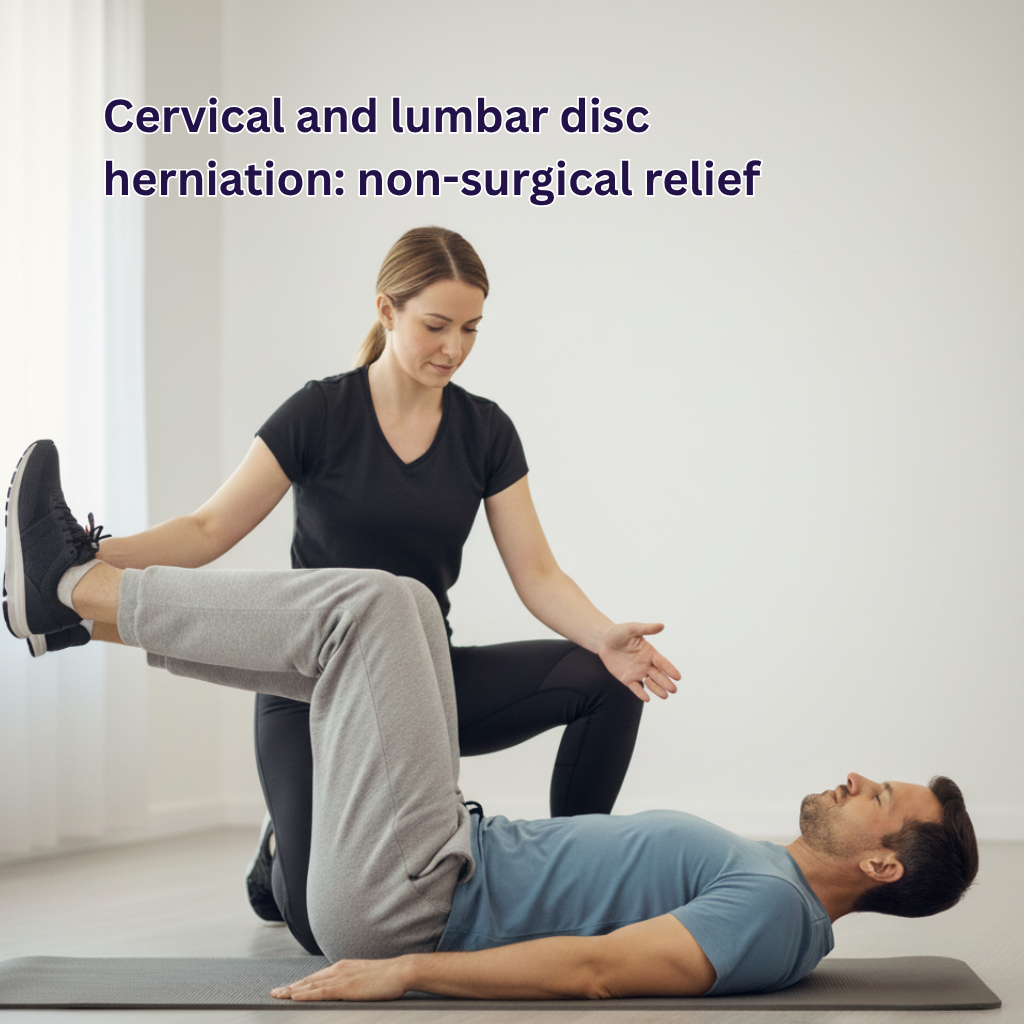
This path involves relying on complete rest, taking pain pills, and occasionally trying isolated treatments found on the internet without a cohesive strategy. It might include using an inversion table without understanding the proper protocol, or doing random stretches that could actually worsen the herniation.
Short-term vs. Long-term:
Focuses almost exclusively on immediate, temporary pain reduction. It does nothing to address the underlying muscular weakness, poor movement patterns, or postural issues that contributed to the disc injury.
Patient's Role:
The patient is a passive recipient. They wait for a pill to work or for time to heal the injury, without taking an active role in the process.
Likelihood of Recurrence:
Extremely high. Without strengthening the supporting structures and correcting root causes, the same segment of the spine remains vulnerable to re-injury from a simple movement like bending over or lifting.
Path 2: The Active, Multi-Phase Recovery Journey
This is a structured, intentional approach. It views recovery as a rehabilitation process, much like recovering from a torn ACL. It moves through distinct phases, each building on the last, with the ultimate goal of not just healing the current injury but making the entire spine more resilient.
Short-term vs. Long-term:
This path strategically addresses both. It uses targeted methods to control acute pain and inflammation first, creating a window to then engage in therapies that resolve the root cause for long-term stability.
Patient's Role:
The patient is the driver. Guided by a non-surgical spine specialist, they are an active participant, learning specific exercises, making lifestyle modifications, and taking ownership of their health.
Likelihood of Recurrence:
Significantly lower. By building a "natural back brace" of strong core and postural muscles, the spine is better equipped to handle daily stresses, drastically reducing the risk of future flare-ups.
The three-phase roadmap to lasting disc relief
A successful non-surgical strategy isn't a random collection of treatments; it's a logical progression. We call this the Three-Phase Recovery Arc. Moving through these phases in order gives your body the best possible chance to heal completely and protects you from setbacks.
Phase 1: Calm the storm (acute pain and inflammation control)
When a disc herniation is fresh, the area is intensely inflamed. The primary goal here isn't to "fix" the disc but to reduce the chemical and mechanical irritation of the nerve. Trying to do aggressive stretches or strengthening at this stage is like trying to build a house in the middle of a hurricane—it’s counterproductive and can make things much worse. The goal is to create a "window of opportunity" where the pain is low enough to begin the real work of healing.
Key strategies for Phase 1 include:
- The Myth of Complete Rest: While you need to avoid aggravating activities, prolonged bed rest is dangerous. It leads to muscle atrophy, joint stiffness, and a slower recovery. The concept of "active rest" is key: find comfortable positions, go for short, gentle walks (`is walking good for a lumbar herniated disc?` Yes, if it doesn't increase leg pain), and perform very specific, pain-free movements prescribed by your doctor or therapist.
- Ice or Heat: For the first 48-72 hours, ice is generally preferred to `reduce inflammation from a bulging disc`. Apply an ice pack for 15-20 minutes every couple of hours. After the acute phase, gentle heat can help relax tight muscles surrounding the area.
- Positional Relief: Finding the `best sleeping position for a cervical herniated disc` (often on your back with a supportive pillow or on your side with a pillow that keeps your neck neutral) can dramatically improve `how to relieve herniated disc pain at night`. For lumbar issues, lying on your back with pillows under your knees or on your side with a pillow between your knees can offload the spine.
- Medication as a Catalyst, Not a Cure: This is a critical mindset shift. `Oral steroids for herniated disc` flare-ups, NSAIDs (like ibuprofen), or even `muscle relaxants for bulging disc` can be incredibly helpful. They are not a fix, but a tool. Their purpose is to reduce inflammation and pain enough for you to tolerate the gentle movements and therapies of Phase 2. They build the bridge from agony to activity.
- Anti-Inflammatory Diet: Supporting your body's healing process with nutrition is an often-overlooked strategy. Reducing sugar, processed foods, and inflammatory oils while increasing intake of omega-3s (fatty fish, walnuts), leafy greens, and colorful vegetables can help manage systemic inflammation. This is one of the best `natural remedies for herniated disc inflammation`.
Phase 2: Restore motion (gentle mobilization and nerve decompression)
Once the initial, severe pain has subsided, the focus shifts to restoring healthy movement and gently decompressing the affected nerve. The goal is to encourage the herniated disc material to retract, improve fluid exchange around the disc for healing, and calm the irritated nerve root. This is where professional guidance from a `physical therapy` expert or a chiropractor who is a `non-surgical spine specialist` becomes invaluable.
Key strategies for Phase 2 include:
- Directional Preference Exercises (McKenzie Method): This is a cornerstone of `conservative care for discogenic pain`. A trained clinician will help you find a specific, repeated movement (usually extension for lumbar discs and retraction for cervical discs) that centralizes your pain—meaning it moves out of your arm or leg and back toward the spine. This is a strong indicator of healing. The `McKenzie method for cervical herniation` can be particularly effective for `pinched nerve in neck home remedies`.
- Nerve Glides (Flossing): These are very specific, gentle exercises designed to help the trapped nerve move more freely within its pathway. Think of it like gently untangling a snagged thread. This is a key part of any `physical therapy protocol for lumbar radiculopathy` or `cervical radiculopathy physical therapy`.
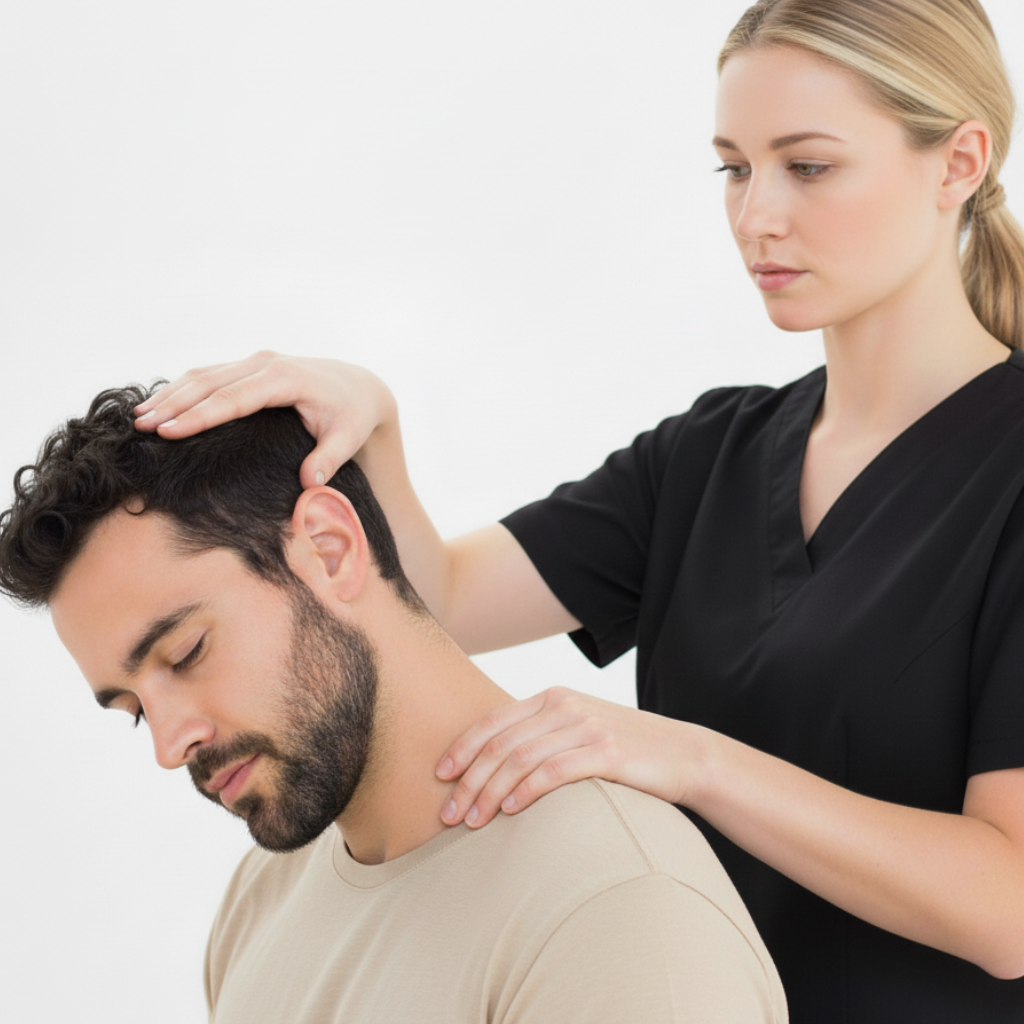
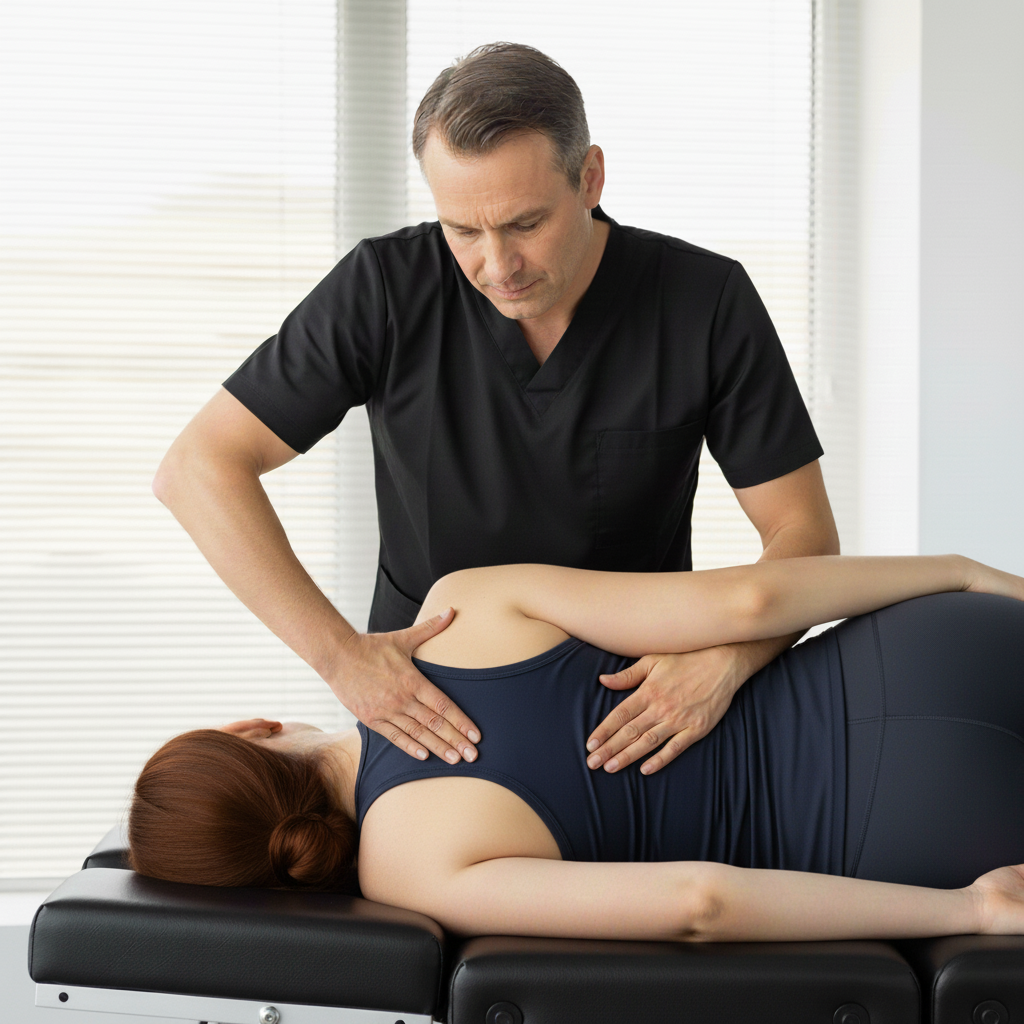
- Manual Therapy: Skilled hands-on techniques from a chiropractor or physical therapist can make a huge difference. This can include soft tissue work to release tight muscles, gentle joint mobilization, and specific, controlled `chiropractic adjustment for herniated disc` issues. The goal of an adjustment in this context is not to "pop the disc back in," but to restore proper motion to adjacent spinal segments, which reduces stress on the injured disc.
- Spinal Decompression Therapy: This non-invasive treatment uses a motorized table to apply a gentle, controlled pulling force to the spine. This creates negative pressure within the disc, which can help draw the herniated material back into place and pull in a fresh supply of oxygen and nutrients. In fact, one study demonstrated that `nonsurgical spinal decompression (NSD) therapy... has been shown to be effective at reducing herniation size` in patients with low back pain.
Phase 3: Build the fortress (core stabilization and prevention)
This is the most important—and most often skipped—phase. Getting out of pain is one thing; staying out of pain is another. Phase 3 is all about building your "natural back brace." It involves systematically strengthening the deep muscles of your core, hips, and upper back that support and stabilize your spine, offloading the discs so they are no longer the point of failure.
Key strategies for Phase 3 include:
- Deep Core Activation: This goes beyond sit-ups (which are one of the `exercises to avoid with lumbar disc herniation`). We're talking about the deep internal corset muscles like the transversus abdominis and multifidus. Exercises like bird-dog, dead bug, and plank variations are staples of `core strengthening exercises for lower back disc bulge`.
- Glute Strengthening: Your gluteal muscles are powerful stabilizers for your pelvis and lower back. Weak glutes force the smaller, more delicate muscles of the lower back to overwork, contributing to disc strain. Squats, bridges, and clamshells are essential.
- Postural Endurance: For cervical disc issues, strengthening the muscles of the upper back (rhomboids, lower traps) is non-negotiable. This helps pull the shoulders back and retract the head, taking pressure off the discs in the neck. Rows and band pull-aparts are excellent exercises for a cervical herniated disc.
- Movement Pattern Re-education: This means learning how to bend, lift, and twist correctly in your daily life. Learning to hinge at your hips instead of rounding your lower back is a fundamental skill for spinal health. This also includes `ergonomic adjustments for disc pain`, like setting up your workstation correctly.
- Returning to Activity: This phase is about safely and gradually re-introducing the activities you love. As one patient noted, "Shockwave treatment has helped my shoulder pain tremendously! It has allowed me to start playing golf again..." This is the ultimate goal—not just being pain-free at rest, but being resilient in motion.
Advanced non-surgical options: when to consider them
While the three-phase arc is the foundation, certain advanced therapies can act as powerful catalysts for recovery, especially when progress stalls.
- Epidural Steroid Injections: When inflammation is severe and unresponsive to oral medications, an `epidural steroid injection for lumbar pain` or cervical pain can deliver a potent anti-inflammatory directly to the source of the problem. Again, this is not a cure. It is a powerful tool to calm the nerve, break the pain cycle, and open a larger window of opportunity for you to engage fully in your Phase 2 and 3 rehabilitation.
- TENS Unit: A Transcutaneous Electrical Nerve Stimulation (TENS) unit is a small device that sends a low-voltage electrical current to the skin over the painful area. It can help by overriding pain signals sent to the brain, providing temporary `TENS unit for herniated disc pain relief` without medication.
- Massage and Acupuncture: `Massage therapy for sciatica nerve pain` can help release spasming muscles (like the piriformis) that may be contributing to nerve irritation. `Acupuncture for neck disc pain` is another modality that many people find helpful for pain control by stimulating the body's natural pain-relieving mechanisms.
- Shockwave Therapy: This therapy uses acoustic waves to stimulate healing and reduce inflammation in chronic conditions. For referred pain patterns or stubborn muscular trigger points associated with a disc herniation, it can be a valuable tool. One patient suffering from referred pain after an accident shared, "I was in a car collision and had nonstop knee and leg pain. Shockwave therapy has helped more than anything else..."
Answering your key questions about non-surgical recovery
Navigating this journey brings up many questions. Here are answers to some of the most common ones.
Can a herniated disc heal without surgery?
Absolutely. This is perhaps the most important takeaway. Your body has a remarkable capacity for healing. The scientific literature and clinical experience overwhelmingly show that most people get better with conservative care. In fact, `conservative treatment, which includes changing activities and taking pain medicines, relieves symptoms in most people with a herniated disk within a few days or weeks` according to the Mayo Clinic. Over time, the body can even reabsorb the herniated portion of the disc. The key is creating the right environment for that healing to happen, which is the entire purpose of the three-phase approach. Indeed, `most cases of herniated discs resolve on their own without the need for surgical treatment, typically within four to six weeks` as noted by the Cleveland Clinic.
What is the fastest way to heal a herniated disc?
The "fastest" way is not about finding a single magic bullet. The fastest, most efficient path to recovery is the most systematic one. It's about doing the right things at the right time. Rushing into aggressive exercises (Phase 3) when you're still highly inflamed (Phase 1) will cause a flare-up and set you back weeks. Conversely, staying in Phase 1 for too long leads to weakness and deconditioning, making you more prone to re-injury. The three-phase roadmap is designed to be the most direct and sustainable route to recovery by preventing these common, time-wasting setbacks.
What should I avoid with a herniated disc?
What you *don't* do is just as important as what you do. For lumbar herniations, you must avoid loaded spinal flexion. This means no sit-ups, crunches, or toe-touches. You should also avoid heavy lifting with a rounded back. For cervical herniations, avoid prolonged "text neck" posture, sleeping on your stomach, or any activity that forces your head into a forward and downward position for extended periods.
Making the right choice for your needs
Your specific path depends on your unique situation. There is no one-size-fits-all treatment, but we can tailor the approach based on your profile.
For the Acute Sufferer
You've just experienced a sudden onset of severe, debilitating pain. Your primary goal is immediate relief and inflammation control. Your focus should be squarely on Phase 1. This means identifying positions of relief, using ice, and engaging in only the most gentle, pain-free movements. Your first step should be a thorough evaluation with a professional to rule out any serious "red flag" conditions and establish a precise diagnosis. Co-managing with your medical doctor for appropriate anti-inflammatory `medications` is often a key part of this initial stage.
For the Chronic Pain Patient
You've been dealing with this for months, or even years. You've likely tried a number of treatments without lasting success. Your pain may have become a constant, nagging presence. For you, the key is to understand *why* past treatments have failed. Often, it's because the focus was stuck in Phase 1 (pain management) without ever properly transitioning to and completing Phase 3 (stabilization). You need a comprehensive plan that rebuilds your spinal support system from the ground up to finally address the root cause and build resilience against future flare-ups.
For the Performance-Oriented Individual
You're an athlete or an active person, and your goal isn't just to be pain-free while sitting at a desk—it's to get back to running, lifting, playing golf, or whatever you love without fear of re-injury. For you, Phase 3 is everything. It will be more rigorous and sport-specific. It's about not just building a "natural back brace," but fortifying it to handle the high demands of your activity. Your recovery will focus on advanced core stabilization, improving biomechanics, and developing the strength and capacity to perform at a high level safely.
Ultimately, taking control of your herniated disc recovery means choosing an active, informed path over a passive, uncertain one. A strategic, phased approach offers the most reliable route to not only resolving your current pain but also building a stronger, more resilient spine for the future. For those in the Austin, TX area seeking a partner in this journey, the team at Pure Relief Pain Solutions Chiropractic is dedicated to a holistic and solution-oriented approach. We specialize in creating personalized, non-surgical recovery plans that address the root cause of your pain. To understand your specific condition and explore the best treatment options for you, we invite you to schedule a comprehensive evaluation with our experts today.

Call us today or use our contact form to request an appointment and start getting relief.

