.png)
The comprehensive chiropractic approach to ending chronic vertigo and dizziness for good


For those suffering from chronic vertigo and dizziness, effective chiropractic treatment moves beyond general adjustments. Lasting relief is achieved through a precise, dual-approach that first corrects upper cervical misalignments—a common but often overlooked root cause—and then uses personalized vestibular rehabilitation to retrain the brain's balance system, re-establishing clear brain-body communication for sustainable stability.
When the World Won't Stop Spinning: Moving Beyond Symptom Management for Vertigo
That sudden, disorienting sensation of spinning—the feeling that you or the room around you is in motion when everything is still—can be debilitating. For millions, this isn't a fleeting moment; it's a chronic condition. Dizziness, lightheadedness, and a persistent feeling of unsteadiness can erode your quality of life, making simple activities like driving, working, or even walking across a room feel like monumental challenges. Dizziness is far from a minor issue; it's the most common complaint that brings people aged 75 and above to their doctor and the 9th most common complaint overall according to medical data.
The frustration is often compounded by the diagnostic journey. Many patients are told their symptoms are due to inner ear problems, stress, or are simply given a prescription to manage the nausea. In fact, treatment for dizziness is frequently suboptimal in primary care settings, with a staggering 90% of patients receiving a non-specific diagnosis as reported in one study. This leaves people feeling unheard and without a clear path forward for finding the root cause of dizziness.
But what if the problem isn't originating in your inner ear at all? What if the source of your chronic disequilibrium is located just a few inches away, at the very top of your neck? A growing body of evidence and clinical experience points to a powerful connection between the alignment of the upper cervical spine and the body's ability to maintain balance. This article outlines a modern, holistic approach to the chiropractic management of vertigo that addresses this connection, offering drug-free relief for vertigo by not just quieting the symptoms, but correcting the underlying cause.
The Hidden Connection: How a Neck Problem Can Cause Dizziness
To understand how to get rid of chronic vertigo, we first need to explore one of its most common and frequently missed causes: cervicogenic dizziness. The term simply means "dizziness originating from the neck." Your brain's balance system is a complex network that relies on three primary sources of information to keep you upright and stable:
- The Vestibular System (Inner Ear): Senses head motion, rotation, and gravity.
- The Visual System (Eyes): Tells your brain where you are in relation to your surroundings.
- The Proprioceptive System (Joints and Muscles): Provides feedback on the position and movement of your body parts.
The proprioceptive system is where the neck plays a starring role. The top two vertebrae in your spine, the Atlas (C1) and Axis (C2), are surrounded by the highest concentration of proprioceptive nerve receptors in the entire body. These tiny sensors constantly send information to your brain about the position of your head in relation to your neck and the rest of your body. This somatosensory input and balance are inextricably linked.
What Causes Dizziness from the Neck?
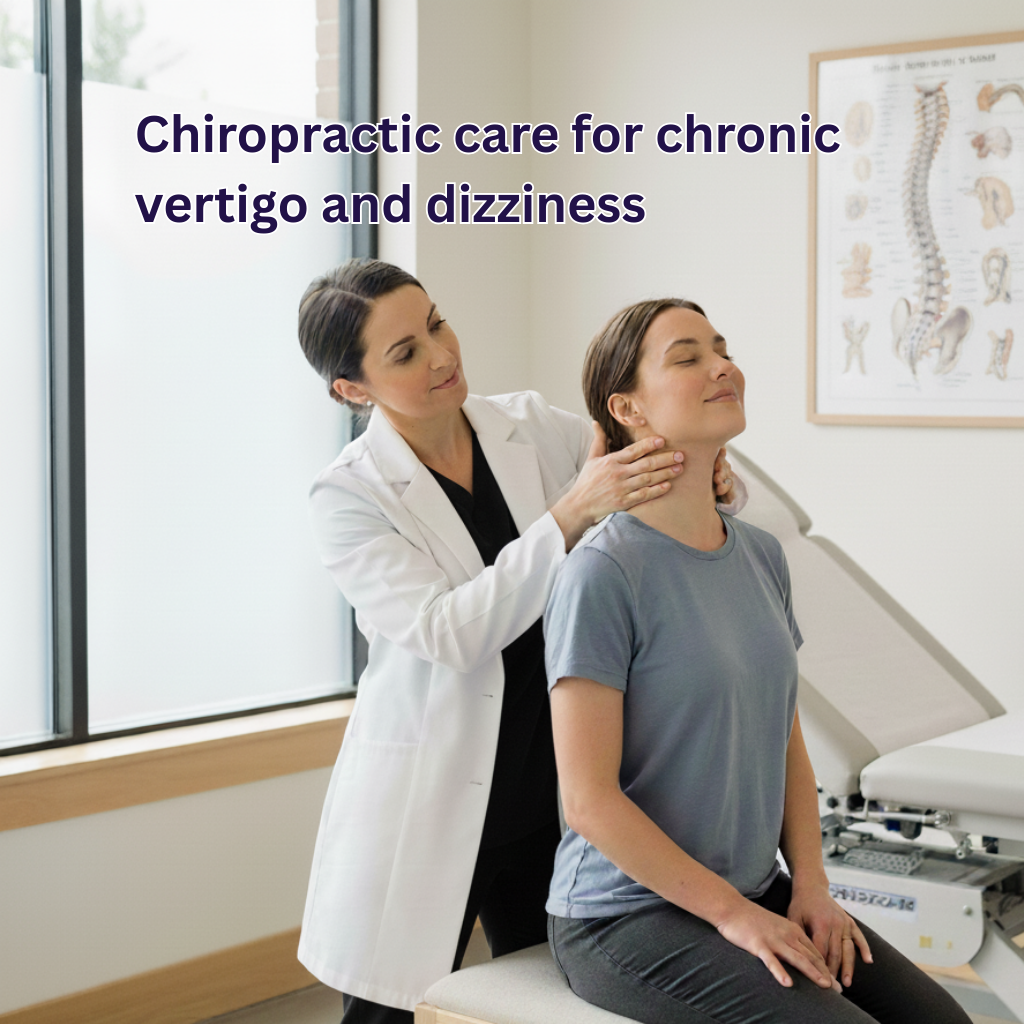
When a misalignment, or subluxation, occurs in this delicate upper cervical area—often due to a whiplash injury, a concussion, poor posture, or even birth trauma—it disrupts this critical flow of information. The nerves begin sending faulty or distorted signals to the brainstem, which is the central processing hub for balance and coordination.
This creates a sensory mismatch. Your inner ear might be saying you're still, your eyes might agree, but the nerves in your neck are screaming that your head is tilted or turning. Your brain doesn't know which signal to trust, and the result is the confusing and distressing sensation of dizziness, vertigo, lightheadedness, or general unsteadiness on feet. The question, "Can a misaligned atlas cause vertigo?" is answered with a definitive yes. This misalignment is a primary culprit behind many chronic balance disorders, yet it is often left unassessed in standard medical workups.
Common symptoms of cervicogenic vertigo include:
- Dizziness that worsens with specific neck movements or postures.
- Neck pain, stiffness, or reduced range of motion.
- Headaches, particularly those that seem to start at the base of the skull.
- A feeling of lightheadedness or being "off-balance" rather than true rotational spinning.
- Occasional ear pain or tinnitus that isn't linked to an inner ear infection.
Precision, Not Power: The Upper Cervical Chiropractic Difference
So, can vertigo be treated by a chiropractor? Yes, but the *type* Chiropractic care matters immensely. A common misconception involves the forceful "cracking" often associated with general spinal manipulation. While beneficial for many conditions, this approach may lack the specificity required to correct a delicate upper cervical misalignment causing neurological interference.
Targeted Upper Cervical vs. General Adjustments
Advanced chiropractic techniques for dizziness focus on precision over power. Specialists in this field, such as an Atlas Orthogonal or NUCCA chiropractor for vertigo, use a completely different methodology. Here's what to expect from a vertigo chiropractor who specializes in this area:
- Advanced Imaging: Treatment begins with a series of precise, three-dimensional X-rays to analyze the exact angle and direction of the misalignment of the top vertebrae down to the millimeter.
- Objective Analysis: This imaging allows the clinician to calculate the precise vector needed to gently and accurately reposition the vertebra. There is no guesswork involved.
- Gentle Correction: The chiropractic adjustment for vertigo itself is remarkably gentle. Many patients feel nothing more than a light touch or a subtle vibration behind the ear. There is no twisting, popping, or cracking of the neck. This precision ensures safety and effectiveness, especially for post-traumatic vertigo chiropractic care.
This specific, low-force correction is designed to restore proper motion, remove nerve interference at the brainstem level, and allow the brain to once again receive clear, accurate signals from the proprioceptors in the neck. By restoring how neck alignment affects balance, we can address the problem at its source.
The Crucial Second Step: Why Lasting Success Requires Vestibular Rehabilitation
Correcting the structural problem is the essential first step, but for many chronic sufferers, it's not the complete solution. Think of it this way: if you've been walking with a limp for years, simply fixing the original injury isn't enough. You also have to retrain your body to walk normally again. Similarly, after months or years of receiving distorted signals, your brain has adapted and created compensatory strategies to keep you upright. These adaptations need to be unlearned and replaced with correct ones.
This is where personalized vestibular rehabilitation therapy (VRT) becomes critical. Lasting success requires integrating this crucial second step to re-establish proper brain-body communication.
A comprehensive chiropractic care plan for vertigo patients will include a program of specific vertigo relief exercises. This isn't generic physical therapy; it's a highly customized regimen of balance therapy and chiropractic care designed to challenge and retrain your brain's balance system. This neuro-orthopedic rehabilitation for balance may include:
- Gaze Stabilization Exercises: Training your eyes to stay focused on a target while your head is moving, which helps to recalibrate the vestibulo-ocular reflex (VOR). This can help reduce the spinning sensation.
- Habituation Exercises: Involving repeated, controlled exposure to the specific movements that trigger dizziness. Over time, this helps the brain desensitize itself to those movements.
- Proprioceptive and Balance Training: Exercises performed on unstable surfaces or with closed eyes to force your body to rely more on the newly accurate signals coming from your neck and inner ear, improving overall stability.
This dual approach—combining upper cervical chiropractic for dizziness with vestibular therapy—is what creates profound and lasting change. It doesn't just put a patch on the symptoms; it corrects the hardware (spinal alignment) and updates the software (brain processing) simultaneously.
Beyond 'Feeling Better': Measuring Real-World Improvement
At our health clinic, we believe in tangible results. While a patient reporting they "feel better" is our primary goal, we also rely on objective outcome measures to track progress and prove treatment effectiveness. One of the gold standards for this is the Dizziness Handicap Inventory (DHI).
The DHI is a 25-question survey that quantifies the self-perceived impact of dizziness on a person's life across three domains: functional, emotional, and physical. It gives us a baseline score of how severely the condition is affecting daily activities, confidence, and overall well-being. By re-administering the DHI at regular intervals, we can objectively measure improvement and tailor the care plan as needed.
The power of this dual approach is not just anecdotal. A retrospective case series that studied patients undergoing both an upper cervical chiropractic technique and an individualized vestibular rehabilitation program demonstrated remarkable results. The study found that the average DHI score for these patients improved by an incredible 67.19% after just 30 days of treatment according to the Journal of the International Academy of Neuromusculoskeletal Medicine. This isn't just about feeling a little less dizzy; it's about reclaiming your life.
Navigating Your Care: Chiropractor vs. ENT for Dizziness
Deciding who to see for chronic dizziness can be confusing. Both an Ear, Nose, and Throat (ENT) specialist and a specialized chiropractor play important roles. Here’s a clear guide to help you choose the right first step:
Consider an ENT specialist first if:
- Your vertigo is a true, violent spinning sensation that is almost always triggered by specific head position changes (e.g., rolling over in bed, tipping your head back). This is a hallmark of Benign Paroxysmal Positional Vertigo (BPPV), caused by displaced inner ear crystals.
- Your dizziness is accompanied by hearing loss, a feeling of fullness in the ear, or significant tinnitus, which could suggest conditions like Meniere's disease or vestibular neuritis.
- Your symptoms began suddenly with no history of neck pain or trauma.
Consider a chiropractor specializing in upper cervical care and vestibular rehabilitation if:
- Your dizziness began after a physical trauma, such as a car accident (whiplash) or a concussion.
- You experience neck pain, stiffness, or headaches along with your dizziness.
- Your symptoms are more of a constant lightheadedness, fogginess, or unsteadiness rather than intense, brief spinning episodes.
- Your dizziness is made worse by holding your neck in certain positions (like working at a computer) or by neck movement.
- You have already seen an ENT or neurologist and they have ruled out a specific inner ear or central neurological condition.
It's important to note that many chiropractors are also trained in the canalith repositioning procedure (like the Epley maneuver) to treat BPPV. So, even if the cause is inner ear crystals, a knowledgeable chiropractor can often help. The key is finding a practitioner who performs a thorough assessment to determine the true cause, whether it's cervicogenic vertigo vs BPPV, before beginning treatment.
Comparing Your Treatment Options
When considering non-invasive vertigo treatment options, it's vital to understand the key factors that lead to lasting relief. Let's compare the common approaches.
General Chiropractic Adjustments
Treatment Specificity
Often focuses on the entire spine to improve overall mobility. May not use the specific imaging or analysis required to correct a complex upper cervical misalignment.
Comprehensiveness of Care
Typically focuses solely on the adjustment. It generally does not include the critical component of vestibular rehabilitation to retrain the brain.
Likelihood of Lasting Relief
May provide temporary relief by reducing general muscle tension and improving joint movement, but if the specific upper cervical issue is not corrected, the dizziness symptoms are likely to return.
Targeted Upper Cervical Chiropractic Care
Treatment Specificity
Highly specific. Uses advanced diagnostics to pinpoint and correct the primary structural issue at the top of the neck, directly addressing a common root cause of vertigo.
Comprehensiveness of Care
Excellent at correcting the "hardware" problem. However, when delivered as a standalone treatment, it may not fully address the "software" compensations the brain has developed over time.
Likelihood of Lasting Relief
Very high potential for significant and sustainable improvement, as it corrects the underlying cause of the distorted nerve signals.
Personalized Vestibular Rehabilitation
Treatment Specificity
Highly specific to retraining the brain's balance centers. Uses customized exercises to address the patient's unique sensory conflicts and functional deficits.
Comprehensiveness of Care
Excellent at retraining the brain ("software"). However, if the neck continues to send distorted signals due to an uncorrected misalignment ("hardware"), the brain is trying to adapt to a constantly changing, faulty input, which can limit progress.
Likelihood of Lasting Relief
Crucial for long-term stability. The most sustainable results are seen when it is combined with treatment that corrects the source of the faulty signals.
The analysis clearly shows that while each approach has its merits, the synergistic combination of targeted upper cervical care and personalized vestibular rehabilitation offers the most comprehensive and effective path to lasting relief from chronic vertigo.
Making the Right Choice for Your Needs
Ultimately, the best path forward depends on your unique history, symptoms, and health goals. There is no one-size-fits-all answer, but here is some guidance based on common patient profiles.
The Chronic Sufferer
If you've been living with long-term dizziness for months or years, have seen multiple doctors, and received non-specific diagnoses like "general dizziness," you are the ideal candidate for a comprehensive neuro-structural evaluation. Your condition is likely complex, and a dual approach that assesses and treats your upper cervical spine *and* retrains your vestibular system is essential for finally finding the root cause and achieving a breakthrough.
The Post-Trauma Patient
For anyone whose vertigo, disequilibrium, or dizziness began after a physical trauma like a car accident, a fall, or a sports-related concussion, the suspicion for a cervicogenic cause should be extremely high. The forces involved in whiplash are notorious for misaligning the C1 and C2 vertebrae. For you, a targeted upper cervical assessment is not just a good idea—it is a critical first step. Our clinic understands the complex nature of post-traumatic conditions. As one of our patients noted after their recovery from an accident, "I was in a car collision and had nonstop knee and leg pain. Shockwave therapy has helped more than anything else..." This same meticulous, root-cause approach is applied to post-traumatic dizziness.
The Senior Patient
If you are over 75 and dizziness has become a primary and debilitating complaint, a non-pharmaceutical and non-surgical solution is often the safest and most desirable option. The gentle, precise nature of upper cervical chiropractic care, combined with targeted balance therapy to improve stability and reduce fall risk, can dramatically improve quality of life, independence, and confidence without the side effects of medication.
You no longer have to accept chronic vertigo and dizziness as a permanent part of your life. By moving beyond temporary fixes and addressing both the structural cause in the neck and the functional processing in the brain, a path to clear, stable, and lasting relief is possible.
At Pure Relief Pain Solutions Chiropractic in Austin, TX, our holistic, dual-approach model is designed to provide just that. We combine precise, state-of-the-art upper cervical corrections with personalized vestibular rehabilitation to address the complete picture of your balance disorder. If you are tired of a world that won't stop spinning and are ready to find a real solution, we invite you to schedule a comprehensive assessment with our expert team today.


Call us today or use our contact form to request an appointment and start getting relief.

