.png)
Why your golf and tennis elbow treatment may be failing (and how to fix it)


That sharp, nagging pain on the inside or outside of your elbow—known as golfer's or tennis elbow—can be one of the most frustrating injuries for an active individual. Effective, long-term relief requires a chiropractic approach that looks beyond the inflamed joint. Lasting healing comes from addressing the root cause within the entire biomechanical kinetic chain, correcting imbalances from your spine to your wrist to not only resolve the pain but also prevent its return.
The Victim, Not the Villain: Why Your Elbow is Crying Out for Help
When your elbow hurts, your first instinct is to treat the elbow. You might try ice, bracing, or stretching the forearm. While these can provide temporary relief, they often fail in the long run because they address the symptom, not the source. For athletes in sports like golf and tennis, the elbow is frequently the "victim" of a mechanical breakdown happening elsewhere in the body.
Think of your body as a finely tuned kinetic chain. During a powerful golf or tennis swing, force is generated from the ground up, transferred through your legs, core, and spine, then funneled through your shoulder to the arm, elbow, and wrist. If any link in that chain is weak, stiff, or misaligned, another part has to compensate and take on excessive stress. More often than not, that part is the elbow.
This isn't just a theory; it's a well-documented biomechanical reality. Research consistently shows that injuries in rotational sports are rarely isolated events. For example, a comprehensive review of golf injuries found that the most frequently injured anatomical sites are distributed across the body, including the low back, elbow, wrist, and shoulder, demonstrating that injuries are spread throughout the body's kinetic chain according to a systematic review on the subject. In fact, low back injuries alone can account for up to 34% of all golf injuries, highlighting the critical role the spine plays in the mechanics of a swing. When your spine can't rotate properly, your shoulder and arm have to overwork, placing tremendous strain on the tendons of the forearm that attach at the elbow.
More Than an Adjustment: A Biomechanical Analysis of Your Swing
So, can chiropractors fix golfer's elbow or get rid of tennis elbow? The answer is yes, but it involves much more than a simple elbow manipulation for pain relief. A truly effective chiropractic approach begins with a comprehensive diagnostic process to understand why the elbow became overloaded in the first place. This is what you should expect at a chiropractor for elbow pain who specializes in sports injuries.
A thorough chiropractic diagnosis for elbow pain includes:
- A Detailed History: Understanding when the pain started, what movements trigger it (like lifting or gripping), and your activity levels.
- Orthopedic and Neurological Testing: A series of physical tests to rule out other conditions and pinpoint the exact location and severity of the injury, such as medial epicondylitis (golfer's elbow) or lateral epicondylitis (tennis elbow).
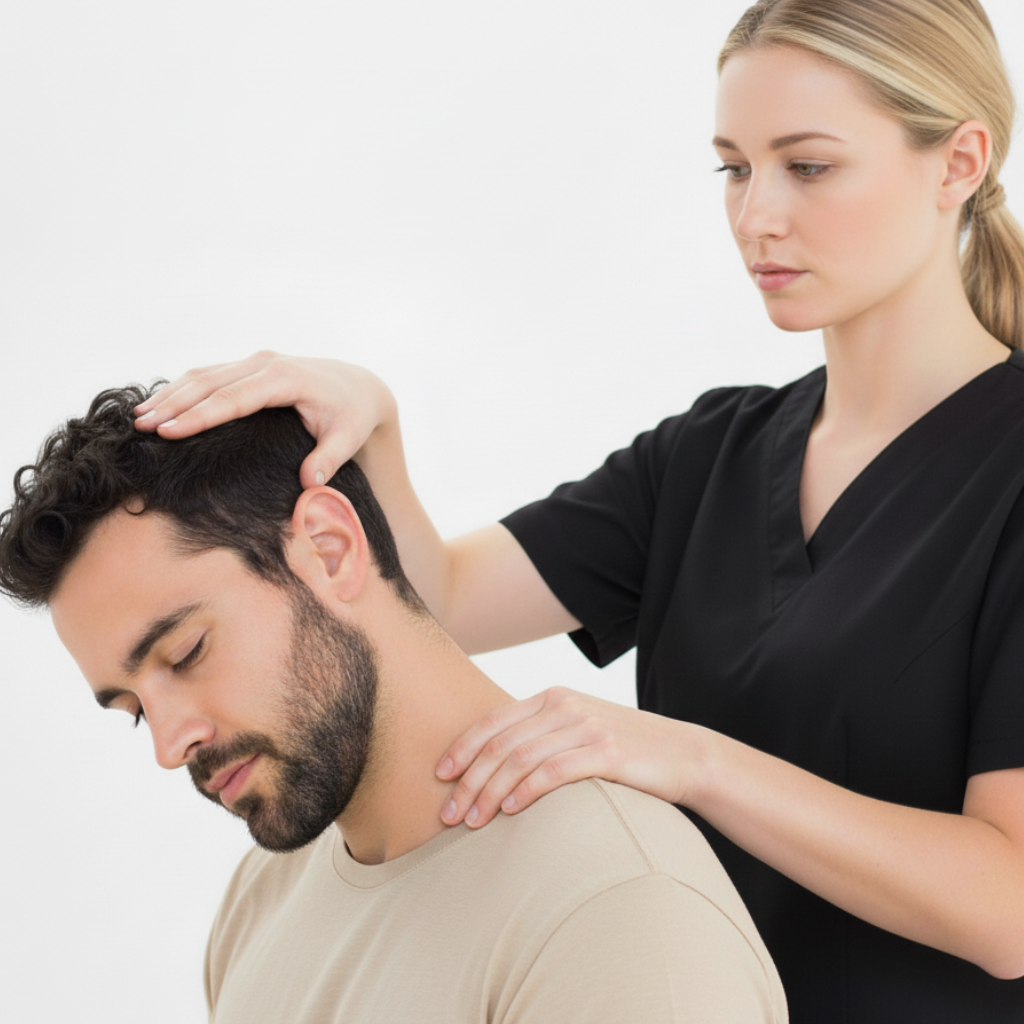
- Full Spinal and Extremity Evaluation: Assessing the mobility and alignment of your neck, mid-back, shoulder, wrist, and elbow. We often find that what presents as elbow pain can be influenced by issues higher up the chain. For instance, neck misalignment can cause nerve irritation that refers to pain down the arm, mimicking the symptoms of tennis elbow. This is why upper cervical chiropractic for tennis elbow can be a crucial component of treatment.
- Functional Movement and Swing Analysis: For athletes, this is the most critical step. We analyze the biomechanics of your golf or tennis swing to identify flawed movement patterns. Are you swaying instead of rotating? Is your shoulder mobility restricted? Is your core not engaging properly? These are the clues that lead us to the true source of stress. Research supports this, showing that a significant percentage of golf injuries happen during the high-stress follow-through (41.6%) and at ball impact (17.8%) as a direct result of biomechanical forces.
Treating the Chain, Not Just the Link: A Comprehensive Recovery Plan
Once we identify the root cause, we can build a personalized treatment plan that provides not just natural relief for golfer's elbow, but a robust framework for recovery and prevention. This holistic chiropractic for elbow injury approach combines multiple therapies to address every faulty link in the kinetic chain.
Targeted Soft Tissue Therapies for the Elbow and Forearm
First, we must address the acute pain and inflammation at the "victim" site. We use advanced, conservative chiropractic care for elbow pain to promote healing in the affected muscles and tendons of the forearm. This can include:
- Active Release Technique (ART): A specialized massage technique that breaks up scar tissue and adhesions in the overused forearm muscles. Both ART therapy for golfer's elbow and Active Release Technique for tennis elbow are highly effective at restoring muscle function.
- Graston Technique: This method uses specially designed instruments to detect and treat fascial restrictions and scar tissue, improving blood flow and accelerating healing. The Graston technique for golfer's elbow is a cornerstone of treating overuse injuries of the elbow.
- Shockwave Therapy (EPAT): This non-invasive therapy uses acoustic pressure waves to stimulate metabolism and enhance blood circulation to damaged tissue, triggering the body's natural healing process. As our patient Johnny noted, even when the primary complaint is different, treating the whole system yields results: "Shockwave treatment has helped my shoulder pain tremendously! It has allowed me to start playing golf again..." This highlights how treating one part of the kinetic chain (the shoulder) can have profound effects on overall function and ability.
Spinal and Extremity Adjustments
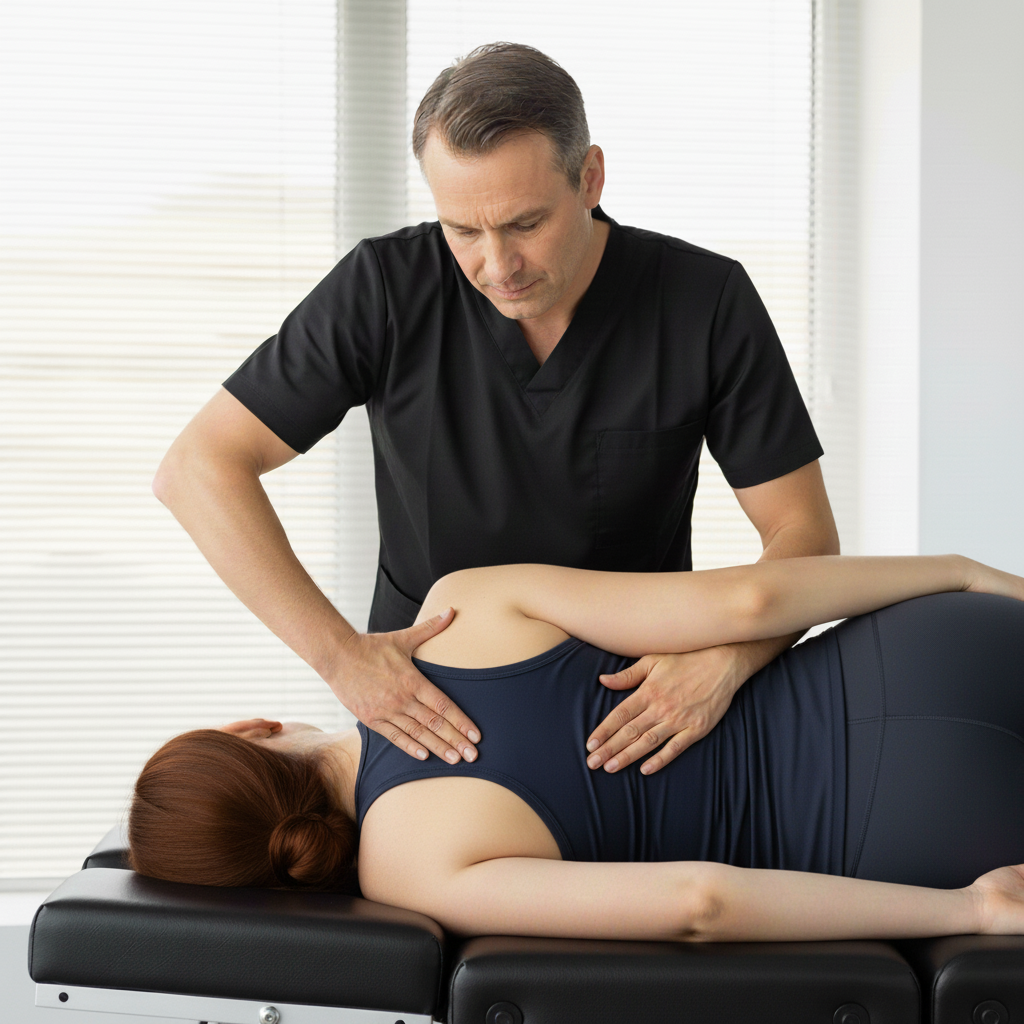
Next, we address the "villain"—the underlying biomechanical faults. A chiropractic adjustment for tennis elbow might not even focus on the elbow itself initially. We may perform specific adjustments to the spine, particularly the cervical (neck) and thoracic (mid-back) regions, to restore proper rotation and mobility. We also ensure the shoulder and wrist joints are moving freely, as stiffness in these areas directly translates to more strain on the elbow. A forearm adjustment by a chiropractor can also be beneficial for restoring proper joint mechanics.
Corrective Exercises and Stretches
Lasting relief depends on re-educating your body to move correctly. We prescribe specific chiropractic stretches for tennis elbow and targeted strengthening exercises to correct the imbalances we identified. This isn't just a generic handout; it's a rehabilitation program tailored to your unique movement patterns. These exercises for golfer's elbow from a chiropractor will focus on strengthening your core, improving hip and thoracic spine mobility, and activating the proper muscles in your shoulder girdle to take the load off your arm.
Kinetic Chain Correction vs. Symptomatic Treatment: A Head-to-Head Comparison
When considering your options, it's crucial to understand the difference between a quick fix and a long-term solution. Here's how the two main approaches stack up based on the factors that matter most.
Long-term relief vs. temporary fix
.png)
Symptomatic Treatment (Targeting Only the Elbow)
Often provides temporary relief using injections, bracing, or isolated massage. However, because the underlying mechanical cause isn't addressed, the pain frequently returns once you resume activity.
Kinetic Chain Correction (Addressing the Full System)
Focuses on providing lasting relief by correcting the root cause of the overload. By fixing the movement patterns in the spine and shoulder, the strain on the elbow is permanently removed.
Prevention of re-injury
Symptomatic Treatment
Offers minimal preventative benefit. The faulty swing mechanics that caused the initial injury are still present, making re-injury highly likely.
Kinetic Chain Correction
This is a core pillar of the approach. By strengthening weak links and improving overall biomechanics, it makes your body more resilient and significantly reduces the risk of future elbow, shoulder, or back injuries.
Treatment of the underlying cause
Symptomatic Treatment
Treat the elbow as the problem. It ignores the interconnectedness of the body and fails to ask why the elbow became painful.
Kinetic Chain Correction
Directly investigates and treats the underlying cause, whether it's poor thoracic mobility, a weak core, or a dysfunctional shoulder. It solves the problem at its source.
Non-surgical options
Symptomatic Treatment
May eventually lead to more invasive options like cortisone shots or surgery when initial conservative methods fail.
Kinetic Chain Correction
Provides a powerful, effective, non-surgical treatment for tennis elbow and golfer's elbow that can help patients avoid more invasive procedures by truly fixing the problem.
Enhanced athletic performance
Symptomatic Treatment
The goal is simply to reduce pain, not improve function. Performance is not a consideration.
Kinetic Chain Correction
A significant side benefit. By correcting flawed movement patterns, you create a more efficient and powerful swing. Many patients report hitting the ball farther and with more accuracy after their treatment, turning pain relief into performance enhancement.
Common Questions and Concerns
It's natural to have questions, especially if chiropractic care is new to you. One common query is, "Why do some doctors discourage chiropractors?" Historically, there were philosophical differences between the professions. However, modern, evidence-based chiropractic care has evolved significantly. Today, a sports chiropractor specializing in golf injuries often works collaboratively with orthopedic doctors and physical therapists. The key is to find a chiropractor who focuses on functional movement, biomechanics, and evidence-based techniques—not just passive adjustments. The benefits of chiropractic for tennis elbow and other sports injuries are now widely recognized when this comprehensive approach is taken.
For golfers, the question "Should golfers go to the chiropractor?" is a resounding yes. Not only can a chiropractor help with elbow bursitis, tendinitis, and joint pain, but a holistic chiropractic approach is one of the best ways to improve your body's mechanics for a better, safer game. It's about preventing injury just as much as it is about treating it.
Making the Right Choice for Your Needs
Ultimately, the best path forward depends on your individual goals and history with elbow pain. Whether you should see a chiropractor for elbow pain is a personal choice, but understanding your options helps you make a confident decision.
- For the Avid Golfer/Tennis Player: If you're sidelined by an acute injury and want to get back to your sport quickly while preventing recurrence, the kinetic chain approach is invaluable. It offers the fastest way to heal tennis elbow with a chiropractor because it addresses the problem's source, ensuring that when you return, you do so with a more resilient and efficient body.
- For the Chronic Sufferer: If you've tried cortisone shots, physical therapy, and endless bracing with no lasting success, a comprehensive chiropractic evaluation can be a game-changer. For chronic golfer's elbow pain, a fresh perspective that looks at your spine, shoulder, and core might finally uncover the missing piece of your recovery puzzle.
- For the Proactive Athlete: You don't need to be in pain to benefit. If you're looking to optimize your swing, increase your power, and prevent future injuries before they start, a biomechanical assessment is a wise investment. Preventing tennis elbow with chiropractic care is far easier than treating it.
The choice between a temporary fix and a long-term solution is clear. A comprehensive, kinetic chain-based approach doesn't just quiet the alarm; it resolves the underlying issue for lasting relief and improved performance. At Pure Relief Pain Solutions Chiropractic in Austin, TX, we are dedicated to this root-cause philosophy, combining advanced diagnostics with personalized, hands-on care to help you move beyond pain and back to the activities you love. If you're ready to address your elbow pain at its source, contact our team to schedule a detailed evaluation today.

Call us today or use our contact form to request an appointment and start getting relief.

