.png)
Why your core workout might be making your back pain wors


The key to building a resilient, pain-free back for life isn't about endless crunches or achieving a "six-pack." Instead, the focus must shift inward to awaken, activate, and coordinate your body's deep stabilizing muscles. These muscles form an "inner corset" that provides true spinal support, a foundational element often overlooked in popular fitness routines which can inadvertently worsen back problems.
The great core confusion: Is a weak core causing my back problems?
For many people experiencing back pain, the advice to "strengthen your core" is common. But this advice is often incomplete. The question isn't just about strength; it's about stability. Yes, a weak core can absolutely cause back problems. Weak muscles, especially those in your core and pelvis, can sometimes lead to back pain or injury. When the deep core muscles aren't firing correctly, larger, more superficial muscles and, critically, the structures of your lumbar spine are forced to compensate, leading to strain, imbalances, and chronic pain.
So, what are three physical signs of a weak core? You might notice:
- Poor Posture: A tendency to slouch or slump when sitting or standing, as the muscles aren't strong enough to hold your spine in a neutral position.
- Lower Back Pain: A persistent, dull ache in your lower back, especially after standing or sitting for long periods, is a classic indicator.
- General Instability: Feeling off-balance or unsteady during simple movements, like standing on one leg or transitioning from sitting to standing.
Understanding the difference between core strength and core stability is the first step toward lasting relief and prevention. This is where we distinguish between the muscles you see and the muscles that truly matter for spinal health.
Strength vs. Stability: A tale of two core muscle groups
Your core is more than just your abs. A common mistake is to focus only on the superficial "moving" muscles. To build a truly strong and protective core, we must understand the two primary groups and their distinct roles.
Superficial Core Muscles (The 'Six-Pack')
What they are: This group includes the rectus abdominis (the six-pack muscle) and the external obliques. They are the "movers" of your torso, responsible for powerful movements like flexing the spine forward (as in a crunch) or twisting.
The Pros: When trained properly, these muscles contribute to athletic power and create a defined, aesthetic look. They are essential for generating force in sports and daily activities.
The Cons: Over-focusing on these muscles often leads to exercises for a weak core and sore back that do more harm than good. Repetitive spinal flexion from exercises like sit-ups can place excessive pressure on your spinal discs. In fact, medical advice often states that during recovery from back pain, you should avoid exercises like sit-ups unless a provider or physical therapist says it is OK. This imbalance—strong "movers" and weak "stabilizers"—can pull the spine out of alignment and actually contribute to pain.
Deep Stabilizing Core Muscles (The 'Inner Corset')
What they are: This is your inner core unit. It includes the transverse abdominis (a deep muscle that wraps around your midsection like a corset), the diaphragm (your primary breathing muscle), the multifidus (tiny muscles along the spine), and the pelvic floor muscles. These are the muscles that make up the core's deep support system.
The Pros: These muscles are endurance-based and work to keep your spine in a neutral position during movement. They contract before you even lift an arm or a leg, bracing your spine to protect it. A study on chronic low back pain was clear in its findings: 'we recommend focusing on training the deep trunk muscles to alleviate chronic low back pain.' Improving spinal alignment with core work begins here, as functional core training for a healthy back targets these specific muscles.
The Cons: You can't see them. Training these muscles doesn't provide the same immediate visual feedback as building a six-pack. The exercises are often subtle and require concentration, which can feel less intense to those accustomed to high-impact workouts.
Activation before annihilation: The first step to a healthier back
Before you can strengthen your inner core, you must learn how to turn it on. This is about building a mind-muscle connection. The critical first step is learning how to activate your inner core unit, particularly the transverse abdominis, which acts as the body's natural weightlifting belt.
Your Breath as a Core Stabilizer
The secret to true core engagement lies in your breath. Most people are "chest breathers," using neck and shoulder muscles. Diaphragmatic breathing, or belly breathing, is the foundation of deep core stability. Mastering diaphragmatic breathing and core engagement creates 360-degree internal pressure that supports the spine from within.
Here’s how to engage your core correctly:
- Lie on the floor with your knees bent and feet flat. Place one hand on your chest and the other on your belly.
- Inhale slowly through your nose. Allow your belly to rise as you fill your lungs with air, while the hand on your chest stays relatively still. This ensures the diaphragm is contracting and lowering.
- Exhale slowly through your mouth. As you exhale, gently draw your navel in towards your spine, as if you are zipping up a tight pair of pants. You should feel a gentle tensioning deep in your abdomen. This is your transverse abdominis engaging. Hold this gentle contraction.
- This subtle activation is the cornerstone. You should be able to breathe normally while maintaining this gentle hold. This is the position from which all true core stability exercises should begin.
From the mat to daily movement: Safe exercises for a resilient spine
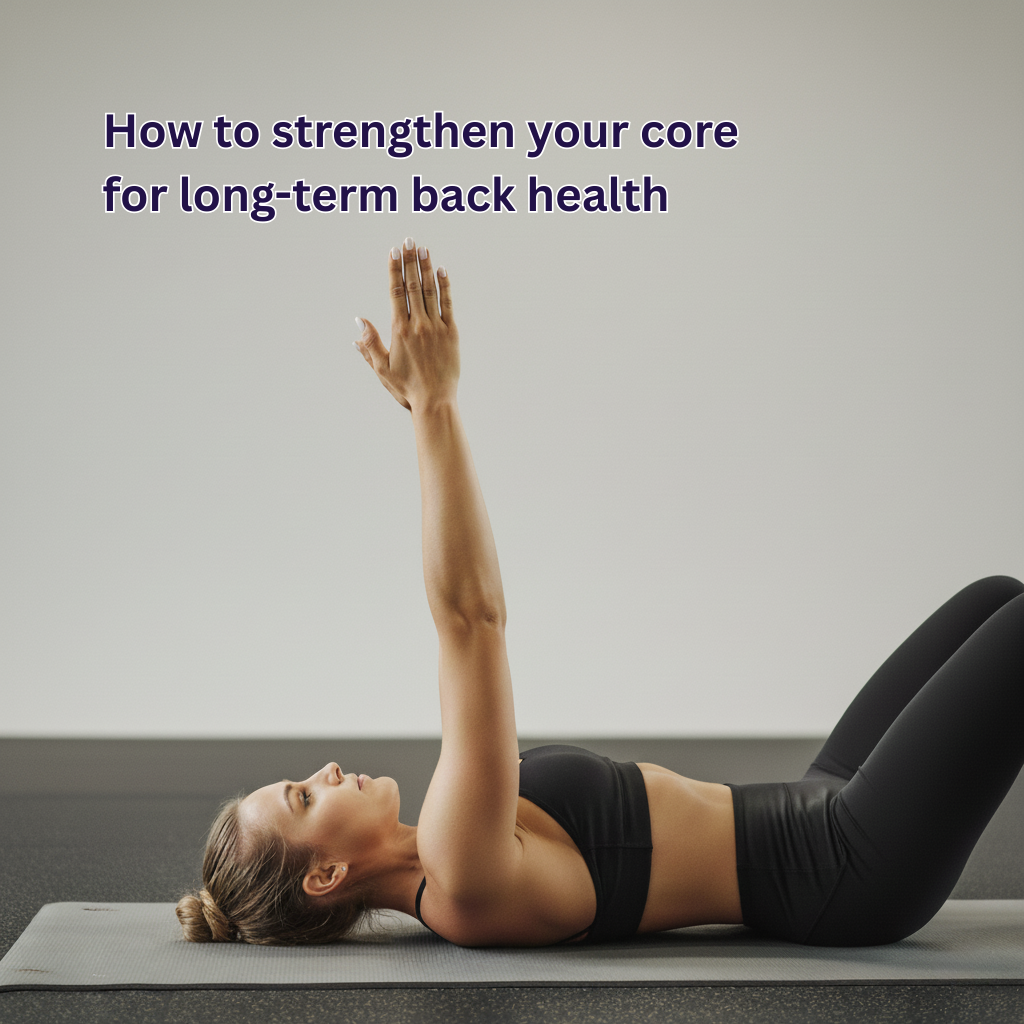
Once you've mastered activation, you can begin incorporating gentle core exercises for back pain sufferers. A systematic review confirmed that Core Stabilization Exercises (CSE) strengthen the musculature that provides stability to the spine and are an effective method to decrease pain. This is how to strengthen core with back problems safely. Start with a proper warm-up; the best way to warm up for core exercises is with gentle movements like pelvic tilts and cat-cow stretches to get the spine mobile.
Here is a beginner core workout for a healthy back you can do at home with no equipment:
- Dead Bug Exercise: The dead bug exercise for core stabilization is a fantastic anti-extension core exercise. Lie on your back in the start position, knees bent at 90 degrees over your hips, arms extended toward the ceiling. As you exhale and engage your core, slowly lower your right arm and left leg toward the floor, going only as low as you can without arching your back. Return to the start and repeat on the other side.
- Bird Dog: The bird dog exercise benefits for spine health are immense as it teaches stability while limbs are in motion. Start on all fours. Engage your core, then extend your right arm straight forward and your left leg straight back, keeping your hips level. Hold for a moment, then return to the start. Repeat on the opposite side.
- Glute Bridge: The glute bridge for lower back strength also engages the entire posterior chain. Lie on your back with knees bent, feet flat on the floor. Engage your core, then press through your heels to lift your hips until your body forms a straight line from your shoulders to your knees. Hold, then slowly lower.
How often should I do core exercises for my back? A simple 10-minute core workout for back pain done most days of the week is more effective than one or two punishing sessions. Consistency is key to re-patterning your movements. Over time, you can progress to more advanced core exercises for spine stability, such as plank variations for back strengthening or using a stability ball.
This holistic view of the body as an interconnected system is what yields lasting results. It’s a principle we see proven time and again. One of our patients who was in a car collision had persistent pain. He shared, "I was in a car collision and had nonstop knee and leg pain. Shockwave therapy has helped more than anything else..." His story highlights how addressing one area of instability can have profound, positive effects throughout the body.
The ultimate goal is to translate this deep core activation into an unconscious, automatic habit. This is how a strong core protects your spine while you're sitting, lifting, and walking. By creating a daily core routine for long-term back health, you're not just doing exercises; you're fundamentally changing how you move and carry your body, which is how to keep your spine healthy as you age.
Making the Right Choice for Your Needs
The best core exercises for spinal health depend entirely on your personal history, current condition, and goals. There is no one-size-fits-all solution.
For the Chronic Pain Sufferer
Your Need: You're looking for a lasting solution to persistent back pain after finding that popular exercises and general advice are ineffective or even make things worse. Your priority is addressing the root cause.
Your Path: Focus entirely on activation and stabilization first. Your program should consist of physical therapy core exercises like the ones described above. Start with isometric core exercises for back health, where you engage the muscles without movement. Diaphragmatic breathing is not optional; it's your primary exercise. Avoid any rotational core exercises or movements that cause pain. The goal is pain relief and rebuilding your foundation.
For the Proactive Athlete
Your Need: You want to build functional strength to prevent injury and improve performance. You understand that superficial muscle development isn't enough for true power and resilience.
Your Path: You should master foundational stability work, but you can progress more quickly to dynamic core stability exercises. Your training should blend deep core activation with functional movements that mimic your sport. Preventative core training for athletes involves integrating stability into strength, power, and rotational movements, ensuring the inner corset fires first to protect the spine under heavy loads.
For the Post-Injury Individual
Your Need: You require a safe, targeted rehabilitation program to rebuild deep core stability and avoid re-injuring your back. Your focus is on safety and gradual progression.
Your Path: Your journey is a structured one, likely guided by a professional. The focus is on re-establishing the mind-muscle connection with the deep core. A safe core workout for a herniated disc or similar condition will emphasize a neutral spine at all times. Exercises like the dead bug and bird dog are paramount. The metric for success is not how much you can lift, but how well you can stabilize your spine during simple movements. This approach allows people to reclaim their active lives, which is a powerful motivator. As one patient who got back to his favorite hobby shared, "Shockwave treatment has helped my shoulder pain tremendously! It has allowed me to start playing golf again..."
Ultimately, a successful strategy for long-term back health is one that respects your body's intricate design, prioritizing deep stability over superficial strength. By reawakening your inner corset and making its activation an unconscious habit, you are not just alleviating pain; you are building a resilient foundation that will support you for years to come.
At Pure Relief Pain Solutions Chiropractic in Austin, TX, our approach is centered on identifying and addressing the root cause of your pain with non-surgical, holistic treatments. We believe in empowering our patients with the knowledge and tools to build a stronger, more resilient body. For a personalized assessment of your spinal health and a treatment plan tailored to your unique needs, contact our expert team today.


Call us today or use our contact form to request an appointment and start getting relief.

