.png)
Why your daily routine is missing its most important habit: spinal hygiene


Most of us treat our spine like an emergency service, only calling on it when the alarm of pain rings. But this reactive approach is fundamentally flawed. We propose a shift in mindset: stop treating spinal care as a reaction to pain and start practicing 'Spinal Hygiene'—a daily, non-negotiable routine, much like dental care, that maintains your body's central information highway for improved energy, cognitive function, and long-term mobility.
The spine as the 'information superhighway' of your body
We often refer to the spine as the "backbone," a term that implies simple structural support. This metaphor, however, is incomplete. It's more accurate to think of your spinal column as the primary information superhighway for your entire body. Housed within this flexible column of vertebrae is the spinal cord, the master cable that connects your brain to every organ, muscle, and cell. The quality and speed of this connection dictate your overall health and performance.
Every movement you make, every sensation you feel, and every automatic function—from breathing to digestion—relies on clear signals traveling up and down this highway. When vertebral alignment is optimal, this communication is seamless. But physical stress, poor posture, and sedentary lifestyles can create misalignments, or subluxations, that act like traffic jams. These obstructions can impede nerve function, slowing down communication and impacting everything from athletic performance to mental clarity. The connection between spinal health and nervous system function is direct and profound. Maintaining this pathway is essential for your body to function at its peak potential.
Modern research reinforces this concept, showing that chiropractic care and spinal manipulation can have significant neurological effects. These may include positive changes to 'brain neuroplasticity, proprioception, cortical drive and function of the prefrontal cortex,' according to a comprehensive review of studies. This suggests that proper spinal care isn't just about the physical structure; it’s about enhancing the very software that runs your body, helping you think clearer, react faster, and feel more energized.
The silent symptoms of spinal neglect
Pain is a late-stage indicator of dysfunction. Long before a disc herniates or a muscle seizes in a spasm, the body sends subtler signals that the information superhighway is congested. Understanding the signs you need spinal maintenance care, beyond overt pain, is a cornerstone of what is proactive spinal health. Many people experience these symptoms for years without ever connecting them to their backbone health and overall well-being.
Surprising consequences of poor spinal health can include:
- Brain Fog and Diminished Focus: If nerve signals from the body to the brain are compromised by spinal misalignments, particularly in the cervical (neck) region, it can interfere with cognitive processing, leading to that feeling of mental "static" or difficulty concentrating.
- Chronic Fatigue: Your body expends a tremendous amount of energy compensating for poor posture and spinal imbalances. When your structure is not supporting itself efficiently, your muscles must work overtime, leading to persistent tiredness that sleep doesn't seem to fix.
- Compromised Immune Response: The nervous system plays a critical role in regulating the immune system. Chronic stress on the nervous system from spinal dysfunction can interfere with this regulation, potentially making you more susceptible to illness.
- Headaches and Migraines: Tension in the neck and upper back due to poor posture or misalignments is a very common trigger for both tension headaches and full-blown migraines.
Recognizing these silent symptoms is the first step toward understanding your spinal column's needs and appreciating why your spine needs regular attention, even when you aren't in pain.
Your five-minute 'spinal hygiene' routine
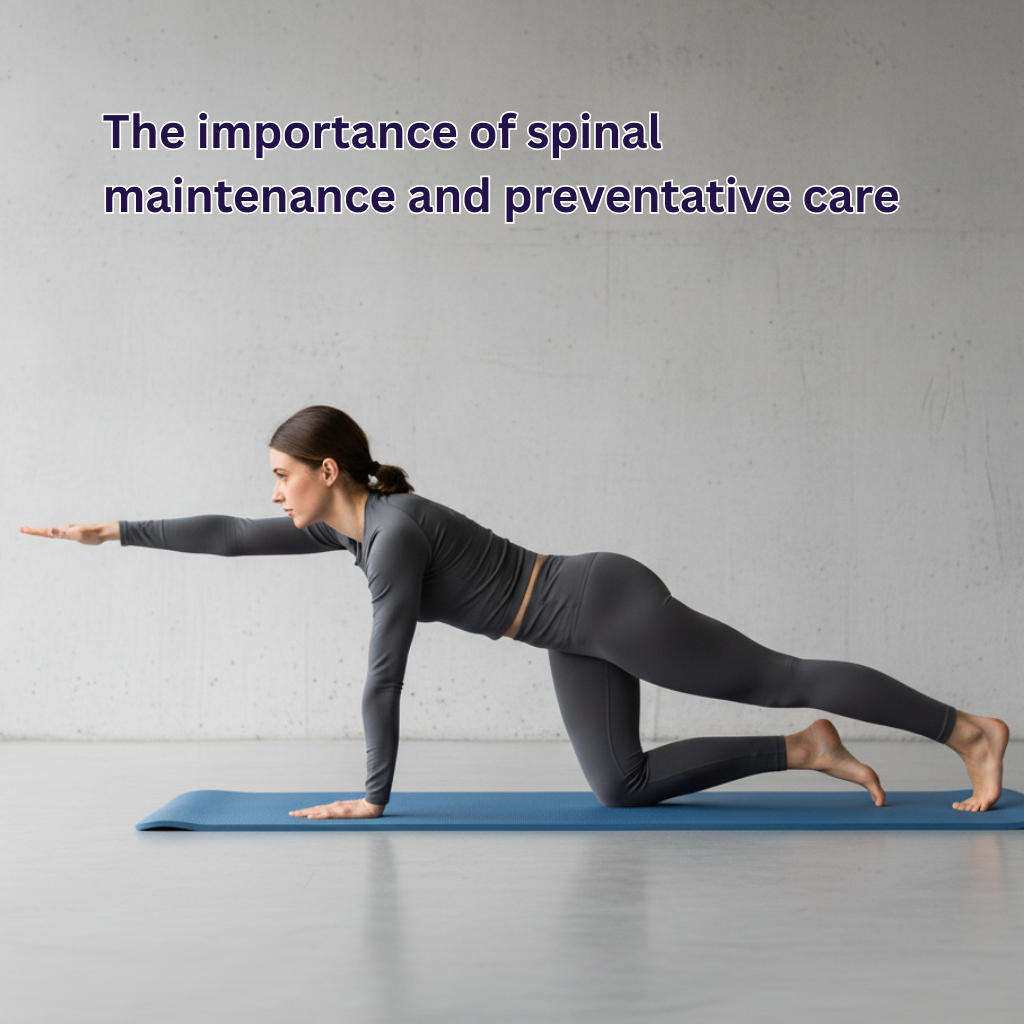
Just like brushing and flossing prevents cavities, a short daily movement routine can help counteract the effects of sitting, aging, and poor posture on your spine. The goal isn’t an intense workout — it’s to build consistent spinal stability, the same principle emphasized by spine biomechanical expert Dr. Stuart McGill and rehabilitation specialists at Harvard-affiliated Spaulding Rehabilitation Center.
A stable spine supports more natural movement, reduces strain on the lower back, and helps prevent pain. These foundational exercises echo McGill’s “big three,” which engage the deep core muscles that keep your spine supported throughout the day.
Bird-Dog (5–10 reps per side)
Start on your hands and knees. Extend your right arm forward and your left leg back, keeping your spine neutral and your hips level. Hold for a brief pause, then switch sides. This is one of McGill’s key stability exercises that trains coordinated core activation.
Curl-Up (5–10 reps)
Lie on your back with one knee bent and the other leg extended. Place your hands under your lower back to maintain its natural curve. Lift your head, shoulders, and chest slightly — just enough to feel your core engage — without flattening your spine. This strengthens the abdominal wall without stressing the lower back.
Side Plank (hold 5–10 seconds, 3–5 reps per side)
Lie on your side with your forearm beneath your shoulder. Lift your hips to create a straight line from head to knees. Hold briefly, then lower. This activates the lateral core muscles that protect and stabilize the spine during daily movements.
These three movements reflect the stability principles used in McGill’s “big three” and recommended by Harvard Health experts. As one physical therapist notes, routines like this can eventually be performed daily — because spinal health comes from consistency, not complexity.
A comparison of health strategies: proactive vs. reactive care
Understanding the fundamental difference between approaches is key to making an informed decision about your health. The conversation often boils down to a desire for long-term mobility vs. short-term pain relief. Let's compare the prevailing philosophies.
Proactive 'Spinal Hygiene' (Daily Maintenance & Regular Check-ups)
Philosophy: This approach, which includes a chiropractic maintenance plan and daily movement, treats spinal health as an ongoing practice, much like fitness or nutrition. The goal is to maintain optimal function and prevent problems before they start.
Pros: Focuses on the value of preventative care to avoid future, more serious issues. It offers holistic benefits like improved energy and cognitive function. It empowers individuals through a consistent, daily health routine, fostering a sense of control over their well-being. Regular chiropractic care can help in correcting spinal misalignments proactively.
Cons: Requires a commitment of time and discipline. The benefits are cumulative and may not be immediately obvious, which can be challenging for those seeking a quick fix. Questions like 'is preventative spinal care covered by insurance' can also be a consideration, though many find the long-term savings worthwhile.
Reactive Pain Treatment (Addressing Symptoms)
Philosophy: This is the conventional model for many health issues. You wait for a symptom—pain, numbness, or loss of mobility—and then seek treatment to alleviate that specific problem.
Pros: Directly addresses the immediate, painful problem. Treatment is often targeted and has a clear endpoint for that specific episode. It aligns with the common "if it isn't broken, don't fix it" mindset.
Cons: It's a "crisis management" model. By the time pain appears, the underlying issue may have been developing for years. This often leads to more intensive, expensive, and lengthy treatment protocols. It does not address the root cause, making recurrence likely, and misses the opportunity for the holistic health benefits of a well-functioning nervous system.
Dental Care (The Perfect Analogy)
Philosophy: A universally accepted model of proactive, preventative health. We brush daily (hygiene) and see a dentist for regular check-ups and cleanings (maintenance).
Pros: This routine prevents major issues like root canals or extractions. It's a low-cost, low-effort investment that saves significant pain, time, and money in the long run. It is a widely understood and accepted practice.
Cons: The only "con" is the minor daily effort required—which virtually everyone agrees is a worthwhile trade-off for avoiding severe dental pain and procedures. This perfectly illustrates the value proposition of spinal hygiene.
From crisis management to proactive investment
Shifting your mindset from reactive treatment to proactive spinal wellness is one of the most powerful investments you can make in your future quality of life. Musculoskeletal conditions are not a minor issue; they are the leading cause of physical disability in the United States. A proactive chiropractic care plan is not an expense; it's a strategy to protect your most valuable assets: your mobility, your energy, and your independence.
Think about the cost of preventative chiropractic care versus the cost of intervention. A maintenance plan involves regular, affordable visits. A crisis, like a herniated disc, can involve expensive imaging, specialist consultations, significant time off work, and potentially surgery. For those recovering from an accident, this distinction is especially clear. One patient noted, "I was in a car collision and had nonstop knee and leg pain. Shockwave therapy has helped more than anything else..." For this individual, a crucial part of their long-term spinal wellness program is ongoing spinal care after an injury to ensure the problem doesn't cascade into other chronic conditions.
Furthermore, lifestyle changes for better spinal health can significantly reduce your risk. For example, ergonomics and spinal preventative care for office workers can make a world of difference. Even habits like smoking have a direct impact; smoking restricts blood flow to the discs that cushion your vertebrae, which could lead to quicker disc degeneration. The role of nutrition in spinal health is also critical, as proper nutrients help maintain bone density and tissue repair. The benefits of regular spinal maintenance extend far beyond just avoiding common back problems; they help you continue doing what you love. Another client shared, "Shockwave treatment has helped my shoulder pain tremendously! It has allowed me to start playing golf again..." This is the true return on investment—the ability to fully participate in life.
Making the right choice for your needs
The ideal approach to spinal health depends on your personal goals, lifestyle, and current condition. There is no single "best" answer, but understanding your profile can help guide your decision.
The 'Proactive Professional'
If you're a desk worker experiencing mild stiffness or anticipating the long-term effects of a sedentary job, your focus should be on prevention. A plan incorporating what is considered good spinal posture, simple posture correction exercises at home, and periodic chiropractic check-ups can be invaluable. This strategy helps counteract the daily compressive forces on your spine, preventing minor stiffness from becoming chronic pain. The primary goal is to avoid degenerative disc disease before it starts.
The 'Active Ager'
For those over 50, the priority shifts to maintaining mobility, flexibility, and independence. It's a fact that you are more likely to experience back pain as you get older. A long-term spinal wellness program becomes crucial. This includes a combination of gentle, consistent movement, physical therapy, and regular chiropractic care to manage age-related changes. Preventative strategies for scoliosis management and preventative care for spinal stenosis can significantly improve quality of life and help ensure you remain active and self-sufficient for years to come.
The 'Performance Optimizer'
If you're an athlete or someone who is not in pain but seeks to enhance overall wellness, energy, and cognitive function, preventative care is about optimization. Understanding the biomechanics of a healthy spine can unlock new levels of performance. For you, a wellness chiropractic approach focuses on fine-tuning nervous system communication, improving reaction times, and ensuring your body's structure can withstand the demands you place on it. It’s about moving from a state of "not sick" to a state of "thriving."
Ultimately, a proactive approach to spinal maintenance offers a powerful path toward long-term health and vitality. At Pure Relief Pain Solutions Chiropractic in Austin, TX, we focus on creating personalized, non-surgical preventative care plans designed to address your specific goals. Whether you're seeking to prevent future problems, maintain an active lifestyle, or optimize your body's performance, our team is here to provide a professional assessment and guide you toward a healthier future. Contact us to learn how a proactive spinal care routine can benefit your life.


Call us today or use our contact form to request an appointment and start getting relief.

