.png)
Why you can't stop cracking your back (and the real way to find relief)


That constant urge to crack your own back or neck is not a simple habit, but a critical signal from your body indicating an underlying instability. While the satisfying ‘pop’ provides a deceptive and temporary sense of relief, it often masks the real problem. The true goal for your long-term health isn't to get better at cracking your joints, but to build a stable, healthy spine that eliminates the need to crack at all.
That Deep, Nagging Pressure and the 'Satisfying' Pop
It’s a feeling many of us know well. It starts as a dull, building pressure in your neck after hours at a computer, or a deep stiffness in your lower back from standing too long. You twist in your chair, lean back, or ask a friend for a forceful push, all in pursuit of that one satisfying back cracking sound. The pop comes, and for a moment, there’s relief. But a few hours later, the pressure is back, and the cycle begins again. If you're wondering, "should I be worried about my back cracking so much?" the answer isn't a simple yes or no. But it is a signal to listen more closely to what your body is trying to tell you.
The Deceptive 'Pop': Unpacking the Science of Relief
Many people find that cracking your back feels good, but is it bad for you in the long run? To understand the answer, we first need to look at what happens when you crack your back. That popping sound isn't your bones breaking; it's a phenomenon called joint cavitation.
What Is the Popping Sound in Your Joints?
Your joints, including the facet joints of your spine, are lubricated by a substance called synovial fluid. This fluid is rich in dissolved gases, primarily nitrogen. When you stretch or twist a joint, you rapidly decrease the pressure within the joint capsule. This pressure drop allows the dissolved nitrogen bubbles in the synovial fluid to momentarily form and then collapse, creating the audible 'crack' or 'pop'. This is the simple mechanical explanation for what are the gas bubbles in joints. The feeling of relief that follows is more complex, involving a temporary reset of your nervous system. An older study suggests that people associate the cracking sound from joint manipulation with a feeling of relief and the release of that built-up pressure.
The Vicious Cycle: How Self-Cracking Creates More Instability
Herein lies the core issue with the habit of daily back cracking. The temporary relief you feel encourages you to repeat the action, but this very repetition can lead to a cycle of chronic instability. When you perform self-chiropractic adjustment techniques, like twisting hard in a chair or using a foam roller for a forced back cracking maneuver, you aren't targeting the joints that are truly stiff and stuck. Instead, you're moving the joints that are already the most mobile.
From Temporary Fix to a Chronic Problem
Over time, this habitual self-manipulation of the spine can overstretch the ligaments that are supposed to provide stability. As these ligaments become lax, a condition known as hypermobility develops. In fact, repeatedly cracking your neck can cause ligaments to become loose and less stable over time, making you more prone to injuries. This creates a frustrating paradox: the joints become looser and less stable, which makes the surrounding muscles work harder to compensate. This muscular tightness is then misinterpreted by your brain as joint stiffness, triggering the constant urge to crack your back again. This is the essence of cracking joints and hypermobility; you're moving the loose segments and ignoring the truly restricted ones, making the problem worse over the long term.
Self-Adjustment Dangers: Understanding the Real Risks
So, is it bad to self-adjust your back? While a gentle, occasional pop is unlikely to cause harm, forceful and frequent self-manipulation carries definite risks, especially when it comes to your neck.
Is Cracking Your Own Neck Dangerous?
The question "can you paralyze yourself by cracking your neck?" is a common fear, and while paralysis is exceedingly rare, other serious risks exist. The primary concern with improper or forceful self neck adjustment techniques is the potential for injury to the blood vessels that run through the cervical spine. One of the most severe, though rare, side effects of cracking your neck is a vertebral artery dissection (VAD). This is a tear in one of the major arteries that supplies blood to your brain. It's a serious condition that requires immediate medical help. A Vertebral artery dissection (VAD), a tear in an artery carrying blood to the brain, is one cause of stroke in patients younger than 45 years old and can be a rare risk associated with neck manipulation. Other potential issues include nerve irritation causing neck pain after cracking it, muscle strains, neck cracking and headaches, or even dizziness after popping neck.
Does Cracking Your Back Cause Arthritis?
This is a long-standing myth. Current medical information does not support the idea that simple joint cracking directly causes arthritis. However, this doesn't mean chronic self-cracking is harmless. The instability and hypermobility created by forcefully popping your own back can lead to abnormal wear and tear on your joints over decades. This can contribute to degenerative changes similar to osteoarthritis down the road. The true long-term effects of cracking your joints are tied more to the instability it creates than the sound itself.
Diagnosing Your 'Why': Finding the Root Cause of the Urge
If you have a constant urge to crack your back, it's essential to view it as a symptom, not the core problem. A frequent urge to crack the back, especially if accompanied by tightness or pain, may indicate an underlying condition that requires a doctor's diagnosis and treatment. For most people, the cause of this urge can be traced back to a few key areas:
- Postural Strain: Hours spent hunched over a desk, a laptop, or a phone create significant strain on the cervical and thoracic spine, leading to muscle fatigue and joint restriction.
- Muscular Imbalances: A common pattern is having tight chest muscles and weak upper back muscles. This pulls your shoulders forward and head forward, placing continuous stress on your neck and upper back joints.
- Lack of Core Stability: When your deep core muscles are weak, the smaller stabilizer muscles along your spine are forced to overwork and become chronically tight and fatigued, creating that sensation of stiffness.
- Repetitive Stress: Your daily activities matter. According to the Cleveland Clinic, if you are cracking your back every few hours to relieve overburdened joints, it's a sign of a repetitive stress issue that needs to be addressed. This could be from your job, your workout, or even how you sleep.
For specific situations, such as during pregnancy, it is absolutely essential to consult a healthcare professional. While many women experience back pain and the urge to crack, professional chiropractic care tailored for pregnancy can be both safe and beneficial to address the biomechanical changes without the risks of self-manipulation.
Self-Cracking vs. Professional Care: A Clear Comparison
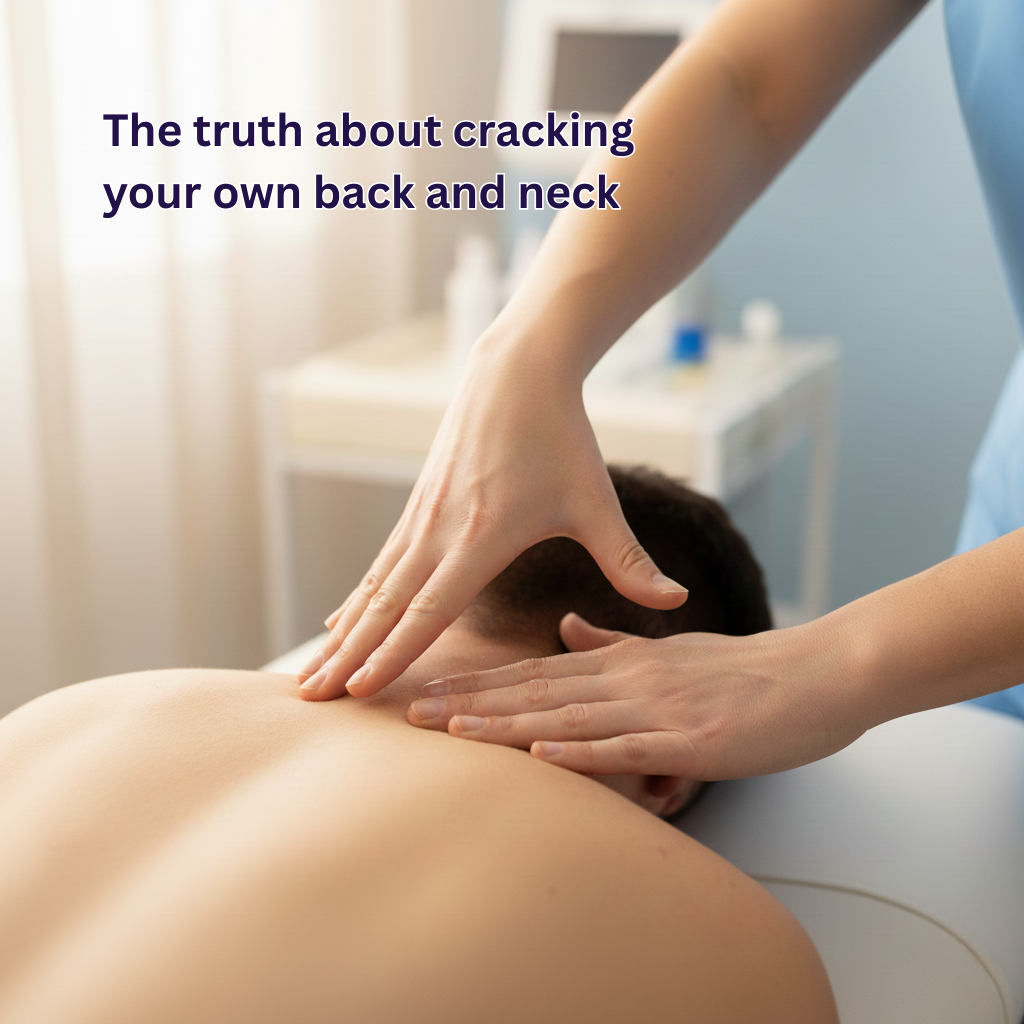
Understanding the difference between a self-induced pop and a professional chiropractic adjustment is key. Can a chiropractor teach me to crack my own back? A responsible chiropractor will not, because there is a fundamental difference in intent, safety, and effectiveness. A professional's job is not just to "crack you," but to diagnose the problem and restore proper function.
The Goal of Professional Chiropractic Care
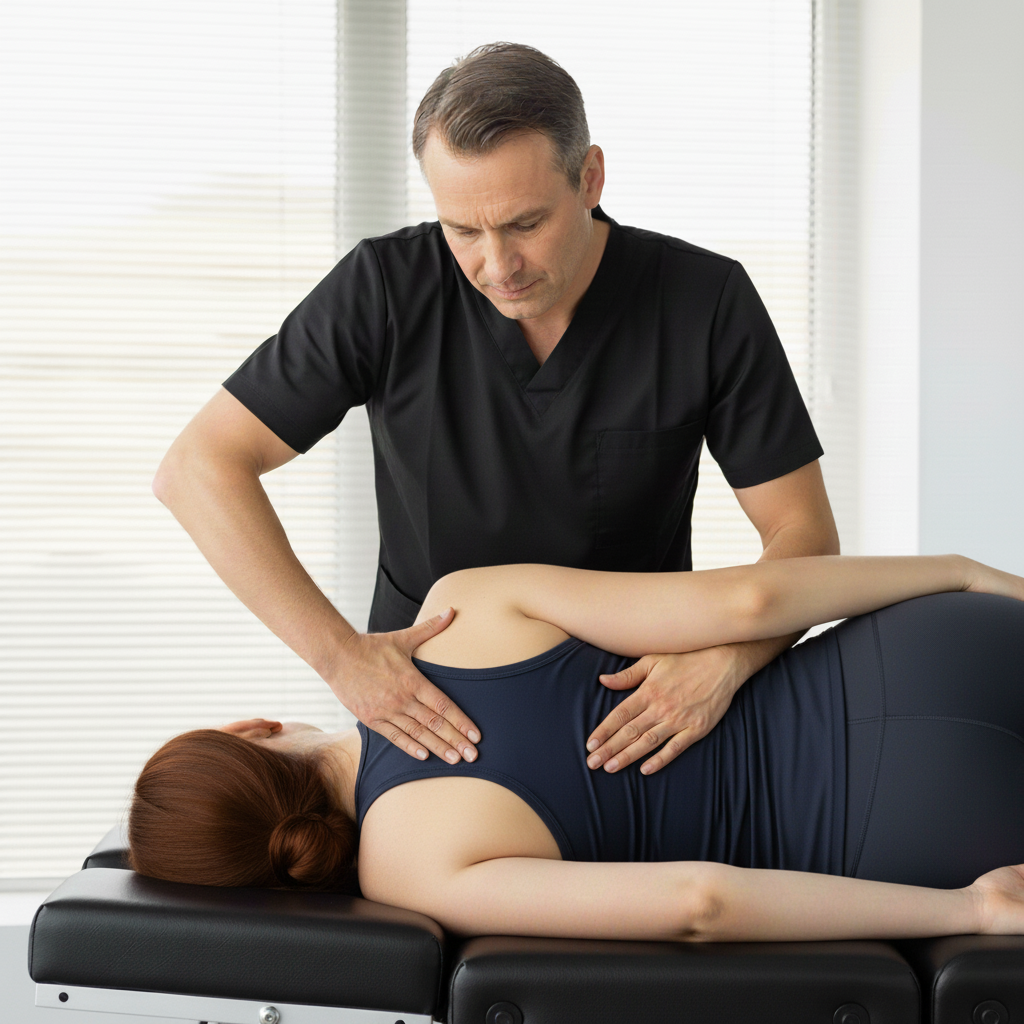
When you see a doctor of chiropractic, the goal is to identify which specific joints are *hypo*mobile (stuck or restricted) and deliver a precise, controlled chiropractic adjustment for the spine to restore motion in that exact segment. This is the opposite of self-cracking, which moves the already loose *hyper*mobile joints. A professional care plan also includes exercises to reduce joint cracking by strengthening the unstable areas and improving overall spinal health. This is how you get rid of the need to crack your neck or back. Sometimes, advanced technologies can help address the root cause of pain. Muscular imbalances, for instance, often contribute to spinal stress. We’ve seen incredible results with targeted therapies for the soft tissue component. One patient noted, "Shockwave treatment has helped my shoulder pain tremendously! It has allowed me to start playing golf again...", highlighting how addressing the muscular component can restore function. Another shared, "I was in a car collision and had nonstop knee and leg pain. Shockwave therapy has helped more than anything else...", showing the power of treating the true source of dysfunction.
Decision Factors: What Matters Most for Your Spinal Health
When you contrast self-cracking with professional care, the choice becomes clearer when you focus on what really matters for your long-term health.
Long-term effectiveness vs. temporary relief
Self-cracking: Provides a few minutes of relief by stimulating joint mechanoreceptors, but the pressure and stiffness almost always return because the root mechanical problem hasn't been addressed.
Professional Care: Aims to restore proper joint mechanics, strengthen supporting muscles, and correct posture through chiropractic adjustments and targeted exercises, leading to lasting relief and eliminating the need to self-adjust.
Safety and risk of injury from self-manipulation
Self-cracking: Lacks precision and control. Is it bad to crack your own back by twisting? Yes, it can be. This action can strain muscles, sprain ligaments, or in rare but serious cases involving the neck, damage a vertebral artery.
Professional Care: Involves a thorough examination and a precise, controlled spinal manipulation therapy delivered by a trained doctor of chiropractic to a specific joint, minimizing risk and maximizing therapeutic benefit.
Desire to fix the root cause vs. managing a symptom
Self-cracking: This is pure symptom management. It's like taking a painkiller for a rock in your shoe instead of taking the shoe off to remove the rock.
Professional Care: Focuses entirely on finding and removing the "rock"—be it a stuck joint, a muscle imbalance, or a postural issue—to provide a true, lasting solution and help the patient feel better.
Making the Right Choice for Your Needs
The best path forward depends on your personal experience and health goals. There isn't a single answer, but understanding your profile can help guide your decision.
For the 'Habitual Cracker'
You may believe frequent self-cracking is a harmless habit for stress relief. We encourage you to reframe this habit as a signal. Instead of mindlessly twisting for a pop, start asking why the urge appears. Is it after you've been sitting until 5:00 pm? Is one side tighter? Try some safe alternatives to cracking your own back, like gentle cat-cow stretches or thoracic spine rotations. These movements provide safe ways to relieve back pain at home by promoting mobility without forcing a pop, helping you transition from a compulsive action to a mindful one and showing you how to stop cracking your neck habit.
For the 'Chronic Pain Sufferer'
You use self-cracking as a coping mechanism for persistent discomfort, but you are actively seeking a genuine, long-term solution. Your use of self-cracking is completely understandable—it's a tool for managing your pain. But you deserve a real solution, not just a temporary tool. A professional evaluation from a chiropractor for neck pain or back pain is the most direct path to diagnosing the source of the chronic instability and getting the specific care needed for true back cracking relief.
For the 'Concerned but Uninformed'
You occasionally crack your back or neck, feel the urge, and are wisely seeking information on whether it's safe. The key takeaway for you is that while an occasional, gentle pop is usually benign, a *constant urge* is not. If you feel pressure building, stiffness, or pain that prompts the need to crack, that's your body asking for help. A proactive approach with a professional can address a minor issue before it becomes a chronic one, setting you on a path to better spinal health.
Ultimately, understanding the "why" behind your urge to crack is the first step toward lasting relief and a healthier spine. At Pure Relief Pain Solutions Chiropractic, our focus is on comprehensive diagnosis and personalized care plans that address the root cause of your discomfort. We believe in empowering our patients to build a strong, stable spine that doesn't need constant cracking. If you're ready to move beyond temporary fixes and find a permanent solution, our team of experts in Austin, TX, is here to provide information and help. Contact us to schedule a detailed assessment and learn how we can help you achieve genuine relief.


Call us today or use our contact form to request an appointment and start getting relief.

