.png)
Why your jaw pain might actually be a neck problem: A 2025 guide to lasting TMJ relief


For many suffering from temporomandibular joint dysfunction (TMD), a comprehensive treatment plan that starts with conservative chiropractic care offers profound and lasting relief. The most successful outcomes, however, arise from a collaborative strategy that addresses the jaw not in isolation, but as part of an interconnected system involving the neck and spine, often integrating dental or surgical expertise when necessary.
The hidden connection: Understanding the 'kinetic chain' of jaw pain
That persistent clicking, the dull ache that radiates into your temples, the frustrating inability to open your mouth wide for a yawn—these are the hallmark symptoms of temporomandibular joint (TMJ) disorders. If you're struggling with them, you've likely focused all your attention on your jaw. But what if the root of the problem isn't just in your jaw, but in your neck?
The human body is a masterpiece of interconnected parts, often referred to as a kinetic chain. A problem in one area can create dysfunction in another, seemingly unrelated, part of the chain. The relationship between your jaw and your cervical spine (your neck) is one of the most intimate and impactful in the entire body. The muscles that control chewing and talking, like the masseter and temporalis, are functionally linked to the muscles that support and move your head and neck.
This is precisely why we must ask: can a misaligned neck cause TMD? The answer is an emphatic yes. Consider the common issue of forward head posture, where your head juts forward from your shoulders. This posture, often worsened by hours spent over a computer or phone, forces the muscles in the back of your neck to work overtime. This strain doesn't stop at the neck; it pulls on the muscles under your chin, which in turn pull the lower jaw backward and down. Your body, ever trying to adapt, forces the jaw muscles to contract constantly just to keep your mouth closed. This chronic tension is a direct pathway to muscle fatigue, inflammation, and TMJ pain.
Effective treatment, therefore, demands a practitioner who is a jaw alignment specialist but also an expert in the entire musculoskeletal system. A thorough assessment must include evaluating the connection between neck posture and jaw pain, looking for imbalances that could be perpetuating the cycle of dysfunction.
Beyond the adjustment: The modern chiropractic toolkit for non-surgical TMJ relief
When patients ask "how do chiropractors treat TMJ," they are often surprised by the breadth of techniques involved. While a specific, gentle chiropractic adjustment for jaw clicking or misalignment is a cornerstone of care, it's part of a much larger, holistic treatment for jaw pain. The goal is not just to silence a symptom but to restore proper function to the entire jaw and neck complex.
Here’s what to expect at a TMJ chiropractor visit and the tools we use:
Comprehensive Diagnosis and Assessment
Before any treatment begins, a skilled chiropractor will perform a detailed evaluation. This includes assessing the range of motion of your jaw and neck, palpating the muscles of the head, face, and neck for trigger points and tension, and observing your posture. We look at how your teeth come together (occlusion) and how your head sits on your shoulders. This process of how chiropractors diagnose jaw disorders is critical for creating a personalized treatment plan.
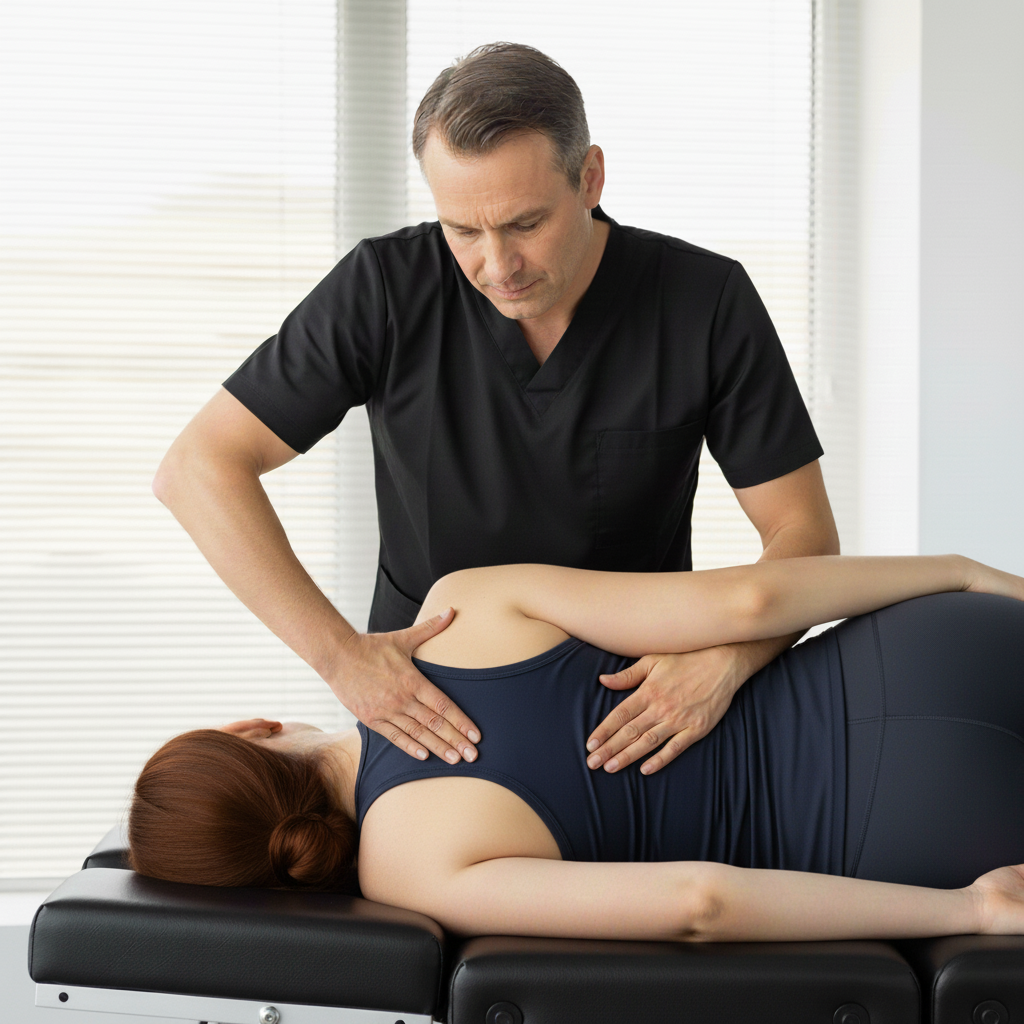
Specific and Gentle Chiropractic Adjustments
The primary goal of adjustments is to restore proper motion and alignment. This isn't about forceful cracking. For jaw disorders, we employ highly specific techniques:
- Cervical Spine Alignment for Jaw Pain: Gentle adjustments to the vertebrae in the neck, particularly the upper cervical area, can release immense pressure on the nerves and muscles that influence the jaw. Techniques like Upper Cervical Chiropractic for TMD and the Atlas Orthogonal technique focus on the critical C1 (atlas) vertebra.
- Temporomandibular Joint Mobilization: This involves direct, gentle mobilization of the jaw joint itself to improve its movement and tracking.
- Instrument-Assisted Adjustments: For patients who prefer a non-thrust approach, the Activator Method for TMJ uses a small, handheld instrument to deliver a precise and gentle impulse to the joint or spine, restoring motion without any popping sounds.
Advanced Soft Tissue Therapy
The muscles surrounding the jaw are often the primary source of pain. Releasing this tension is non-negotiable for lasting relief. We use a variety of soft tissue therapy for jaw clenching and pain, including:
- Myofascial Release for Temporomandibular Joint: This technique applies sustained pressure to tight connective tissues (fascia) surrounding the jaw and neck muscles.
- Trigger Point Therapy for Masseter Muscle: The powerful masseter muscle is a common culprit. We locate and deactivate painful knots or trigger points within the muscle belly.
- Intra-oral Adjustments for Jaw: Sometimes, the most effective way to provide pterygoid muscle pain relief is from inside the mouth. Wearing a glove, the chiropractor can gently release deep muscles like the medial and lateral pterygoids that are inaccessible from the outside.
- Active Release Technique (ART): ART is a movement-based technique that breaks up adhesions and scar tissue in overworked muscles, improving flexibility and reducing pain.
Rehabilitative and Supportive Therapies
True correction involves empowering you to maintain progress. This includes specific chiropractic exercises for TMJ designed to strengthen weak muscles and stretch tight ones. We also utilize modalities like cold laser therapy to reduce inflammation in the joint tissue and promote healing on a cellular level. For stubborn trigger points, approaches like dry needling for TMJ can be exceptionally effective.
This comprehensive, non-surgical approach yields significant results. In fact, a retrospective case series examining chiropractic treatment for TMD showed that patients experienced an average pain score reduction from 8.3 to 1.4 on a 10-point scale—an incredible 80.9% improvement according to the study published on Academia.edu.
Chiropractic first, but not always chiropractic only: Comparing treatment philosophies
Does chiropractic for jaw pain work? Yes, overwhelmingly so. But the critical question is whether it's the *only* treatment you'll ever need. The answer depends entirely on the root cause of your specific condition. Understanding the scope of different approaches is key to making an informed decision.
Chiropractic Care as a Standalone Treatment

Effectiveness and Longevity of Relief:
Extremely high when the primary cause of TMD is biomechanical—stemming from issues in the cervical spine, muscle imbalance, or joint restriction. By correcting the root postural and alignment faults, relief is often profound and long-lasting.
Scope of Treatment (Systemic vs. Symptom-focused):
The core strength of chiropractic is its systemic approach. It views the jaw as part of the larger musculoskeletal system and treats the underlying dysfunction in the kinetic chain, not just the painful joint.
Necessity for Interdisciplinary Collaboration:
For many patients, especially those with muscle-related jaw pain or TMJ headaches, chiropractic care alone is sufficient. It is an excellent and powerful first-line conservative treatment.
Invasiveness of Procedures (Non-Surgical vs. Surgical):
Completely non-invasive and non-surgical. Treatment focuses on manual therapy, exercise, and lifestyle modifications, making it an exceptionally safe option.
An Integrated, Multi-Disciplinary Approach (Chiropractic, Dental, Surgical)
Effectiveness and Longevity of Relief:
This is the gold standard for complex or chronic cases. When a patient's progress plateaus, integrating dental care (for bite splints) or, in rare cases, surgical intervention (for internal joint damage) can provide the missing piece, leading to complete and permanent resolution.
Scope of Treatment (Systemic vs. Symptom-focused):
This is the most comprehensive approach possible. It addresses the biomechanics (chiropractor), the dental occlusion and surfaces (dentist), and the internal joint integrity (oral surgeon) simultaneously. A systematic review from Duke University confirms that TMD often requires a complex diagnostic and therapeutic approach, which usually involves multidisciplinary management as noted in their analysis.
Necessity for Interdisciplinary Collaboration:
Essential for patients with structural dental problems, significant bruxism (teeth grinding), or internal derangement of the articular disc within the TMJ. This collaboration is the key to breaking through treatment plateaus.
Invasiveness of Procedures (Non-Surgical vs. Surgical):
The approach starts conservatively with chiropractic and dental care and only escalates to more invasive procedures if absolutely necessary. This tiered approach ensures the patient receives the least invasive, most effective care for their specific needs.
Building your 'Care Team': Knowing when to bring in a dentist or oral surgeon
A trustworthy healthcare provider not only knows what they can fix but also recognizes the limits of their specialty. The goal is always your best outcome, and sometimes that means building a team. The co-management advantage cannot be overstated; it leads to faster, more complete relief and prevents you from spending time and money on treatments that aren't addressing the whole picture.
Critical Signs You May Need a Dentist
While a chiropractor is often the best starting point, especially when neck pain or headaches are present, certain signs point toward a dental component. If you experience significant wear on your teeth, it's a strong indicator of bruxism (teeth grinding). While chiropractic for bruxism can help by relaxing the jaw muscles and correcting the neural patterns that lead to clenching, a custom-fitted splint or night guard from a dentist is crucial to protect your teeth. This collaboration is becoming increasingly common; one case study concluded that dentists should consider referral for chiropractic care in patients with stubborn TMJ dysfunction as documented by Cleveland University researchers.
Red Flags That May Warrant an Oral Surgeon Consultation
The vast majority of TMJ conditions do not require surgery. However, in cases of acute trauma or severe internal issues, a surgical opinion is vital. Red flags include a jaw that is truly "locked" open or closed (lockjaw), a suspected dislocation of the joint (jaw subluxation), or a sudden, dramatic change in your bite after an injury. In these scenarios, treating jaw popping without surgery may not be possible if the articular disc is physically displaced and blocking movement. A compelling case study of a pediatric athlete highlighted this; her condition resolved only after TMJ arthrocentesis, a minimally invasive surgical procedure, was performed after her chiropractic progress had plateaued according to the Parker University journal. This case powerfully argues for interdisciplinary collaboration in acute situations.
Answering your key questions about chiropractic for jaw pain
Navigating treatment options can be confusing. Here are straightforward answers to some of the most common questions we hear from patients.
Can a chiropractor truly fix TMJ pain?
For a significant number of sufferers, yes. When TMJ pain is rooted in biomechanical issues like poor posture, neck misalignment, and muscle tension, chiropractic care is not just a pain reliever—it's a corrective solution. By restoring proper function to the cervical spine and jaw, we address the cause of the problem, leading to lasting relief from symptoms ranging from facial pain to chiropractic for TMJ related ear pain.
I'm pregnant. How can I safely treat TMJ pain?
Pregnancy is a time when many women experience an increase in TMJ symptoms due to hormonal changes that relax ligaments. Chiropractic care is an ideal treatment option during pregnancy because it is completely drug-free and non-invasive. We use modified, gentle techniques to provide safe and effective relief without any risk to the mother or baby.
Why do some medical doctors seem to discourage chiropractic care?
This is a valid question that often stems from outdated perceptions of the chiropractic profession. Historically, there was a significant philosophical divide between the two fields. However, modern, evidence-based chiropractic has built strong bridges with the medical community. Today, collaboration is increasingly the norm, with medical doctors, dentists, and chiropractors referring to one another to achieve the best patient outcomes. The growing body of research in journals like PubMed and PMC validates the effectiveness of chiropractic therapy for musculoskeletal conditions, including TMD.
How can I check my jaw at home? The 3-Finger Test for TMJ
While not a substitute for a professional diagnosis, the 3-finger test is a simple way to screen for restricted jaw opening. Simply turn your hand so your palm is facing you and try to vertically insert your index, middle, and ring fingers into your mouth between your top and bottom front teeth. A normal range of motion is typically between 40-50mm, which is about the width of three fingers for most people. If you can't fit at least two fingers, or if doing so causes pain, it may indicate restricted movement in your temporomandibular joint.
Making the right choice for your needs
The best TMJ treatment path is unique to you. Your symptoms, your history, and the underlying cause of your condition will determine the ideal strategy. Here is some tailored advice based on common patient profiles.
For The First-Time Sufferer
If you are experiencing new or mild jaw pain, clicking, or tension, the most logical first step is a conservative, non-invasive treatment. Starting with a TMJ chiropractor allows you to address the most common root causes—issues in the neck and surrounding muscles—without drugs or invasive procedures. This approach often resolves the problem completely, preventing it from becoming a chronic issue.
For The Chronic Pain Patient
You've been down this road before. Perhaps you've tried a night guard from your dentist or even physical therapy with limited success. Your history strongly suggests that a single-specialist approach is not enough. For you, seeking an integrated assessment is paramount. Find a chiropractor who actively collaborates with dentists and other specialists. This "care team" approach is your best bet for finally breaking the cycle of pain and discovering the missing piece of your treatment puzzle. The results of this synergy are often what our patients describe as life-changing. We see it across all types of complex joint issues. As one patient noted about his shoulder pain, "Shockwave treatment has helped my shoulder pain tremendously! It has allowed me to start playing golf again..." This relief comes from finding the right, comprehensive approach for a stubborn problem.
For The Post-Trauma Patient
If your jaw pain begins suddenly and severely after an injury, such as a sports collision or a car accident, time is of the essence. You need an immediate, comprehensive evaluation to rule out acute internal damage like a disc displacement. Your best course of action is to see a chiropractor or dentist who is experienced in jaw pain after car accident trauma and who can quickly coordinate with an oral surgeon if imaging and further evaluation are necessary. The effects of trauma can be complex. One of our patients, who was in a car collision, found this out when they experienced "nonstop knee and leg pain." They shared, "Shockwave therapy has helped more than anything else..." This highlights how trauma requires a specialized and often multi-faceted therapeutic approach, and the same principle applies directly to an injured jaw.
Ultimately, the most important step is the first one: seeking a thorough diagnosis from a professional who understands the intricate connection between your jaw, neck, and overall posture. At Pure Relief Pain Solutions Chiropractic in Austin, TX, our philosophy is built on this principle. We are committed to providing a clear diagnosis and a holistic, non-surgical treatment plan that addresses the true source of your pain. If your condition requires collaboration, we will help you build the expert team you need to achieve lasting relief. To begin your journey toward a pain-free life, contact our team to schedule a comprehensive TMJ evaluation today.


Call us today or use our contact form to request an appointment and start getting relief.

