.png)
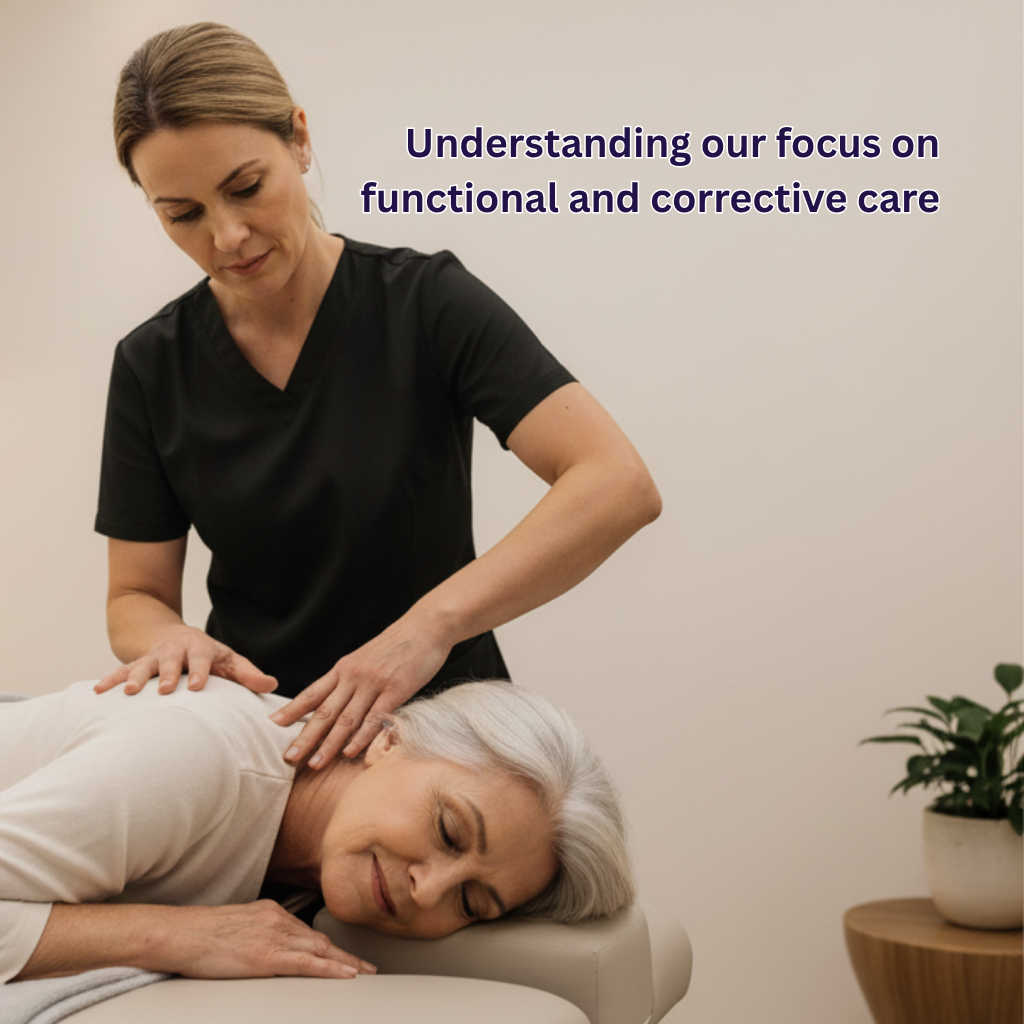
Beyond temporary relief: a guide to functional and corrective chiropractic care


True, lasting recovery from pain is achieved not by choosing between functional and corrective care, but by integrating them. Corrective care first rebuilds the body’s foundational structure to address the root cause of pain, and functional care then retrains the body’s movement patterns to ensure those corrections hold, allowing you to perform optimally in your daily life.
The pain-relief hamster wheel: why your symptoms keep returning
Many people know the frustrating cycle all too well. A flare-up of back pain, neck stiffness, or sciatica sends you searching for help. You get treatment, feel better for a while, and then, weeks or months later, the same pain returns. This is the pain-relief hamster wheel—a recurring loop of treating symptoms without ever addressing the underlying structural problem. It’s like repeatedly patching a pothole in a road with a crumbling foundation; the fix is always temporary.
The main focus of traditional chiropractic care has often been to provide this much-needed relief by improving joint mobility and reducing pain. While incredibly valuable, this approach can sometimes fall short of providing a long-term solution. When the body's "blueprint"—its ideal spinal alignment and posture—is flawed, the symptoms will inevitably reappear. To break the cycle, we must look deeper than the immediate pain and ask a more important question: why is the pain happening in the first place?
Understanding the philosophies: relief vs. corrective vs. functional care
To find a lasting solution, it's essential to understand the different goals behind various approaches to care. Each serves a purpose, but they are not interchangeable.
Relief Care (Symptom-Focused)
This is the most common starting point. The primary goal is simple: to make you feel better as quickly as possible. It focuses on reducing inflammation, alleviating pain, and restoring some mobility to the affected area.
- Pros: Provides fast relief from acute pain, is often effective for recent and minor injuries, and can be a crucial first step in any recovery.
- Cons: Does not address the root cause of the problem. Without correcting the underlying structural or movement issues, the pain is highly likely to return.
Corrective Care (Structure-Focused)
This approach operates on the principle that many chronic pain issues stem from structural problems like poor posture, spinal misalignments, or a loss of proper spinal curves. A corrective care chiropractor acts like a structural engineer for your body.
- Pros: Aims to fix the root cause of chronic pain for long-term results. It uses an evidence-based corrective chiropractic approach with detailed diagnostics to create a measurable treatment plan.
- Cons: It requires a greater time commitment from patients. The initial phase of care can be intensive, and results, while lasting, are not always immediate.
Functional Care (Movement-Focused)
Functional care, or functional rehabilitation, focuses on how your body moves and performs in real-world activities. The main focus of rehabilitation is to restore ability and performance. This approach addresses faulty movement patterns, muscle imbalances, and poor stability that contribute to pain and re-injury.
- Pros: Improves overall physical performance, helps prevent future injuries, and translates directly to better execution of daily activities, work tasks, or sports.
- Cons: May not be fully effective if significant underlying structural issues are not addressed first. Trying to build functional strength on a crooked frame can be inefficient and sometimes counterproductive.
Phase 1: Rebuilding the blueprint with corrective chiropractic care
Imagine trying to build a strong, stable house on a cracked and uneven foundation. It’s impossible. Corrective chiropractic care is the process of fixing that foundation. The difference between a general chiropractor and a corrective chiropractor lies in this focus. While both are skilled doctors of chiropractic, a corrective care specialist utilizes advanced diagnostics to identify and correct the underlying structural blueprint of the spine.
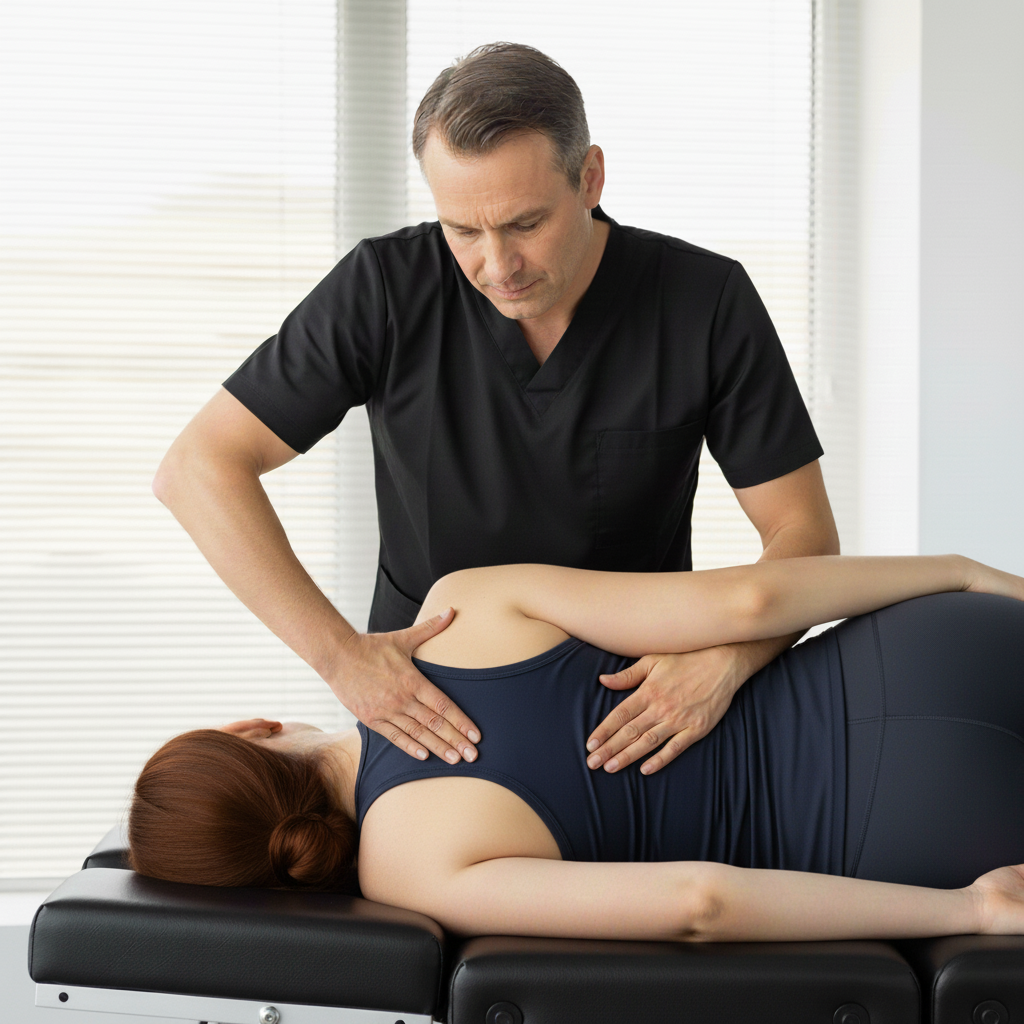
This phase of care begins with a comprehensive spinal analysis, often including digital X-rays and postural assessments, to pinpoint the exact source of your musculoskeletal imbalances. This isn't just about a single "stuck" joint; it's about understanding what is structural chiropractic—analyzing the entire system and its biomechanics. The treatment plan is then built around specific, targeted techniques for spinal correction, such as:
- Corrective adjustments for posture: Techniques designed to address issues like forward head posture.
- Spinal traction and decompression: Non-surgical methods for restoring proper spinal curves.
- Chiropractic BioPhysics® (CBP): An advanced, evidence-based protocol for spinal rehabilitation.
- Personalized corrective exercise programs: Specific exercises to strengthen weak muscles and stretch tight ones, reinforcing the adjustments.
This meticulous approach is crucial for achieving long-term pain relief solutions. The goal is to rebuild your body’s ideal structure, creating a stable foundation that can support healthy function for years to come. This integrated methodology is seen across healthcare; for example, in physical rehabilitation after a stroke, some physiotherapists use a single treatment approach, while others utilize a mixture of components from several different approaches to achieve the best outcome.
Phase 2: Learning to live in your new body with functional care
Once the foundation is repaired, the next critical step is to learn how to use your body correctly. A corrected spine doesn't automatically translate to perfect movement. Years of compensating for structural problems create ingrained, faulty movement patterns in your muscles and nervous system. Functional care is the process of overwriting those bad habits with new, efficient ones.
This is where the distinction between structure and ability becomes clear. Research in rehabilitation science notes that impairment does not always lead to functional limitation, highlighting the importance of retraining the body to use its corrected structure effectively. This is why a "focus on function" is a recurring theme in effective rehabilitation, as seen in a study evaluating interventions for children with cerebral palsy, which centered on improving the performance of functional tasks.
A personalized functional health plan might include:
- Functional Movement Screening (FMS): To identify asymmetries and limitations in your movement.
- Neuromuscular Re-education: Retraining the connection between your brain and muscles for better coordination and stability.
- Gait Analysis and Correction: Improving your walking and running mechanics to reduce stress on your joints.
- Functional Strength Training Rehabilitation: Building strength in patterns that mimic real-life activities, from lifting groceries to swinging a golf club.
One of our patients found this phase to be transformative. "Shockwave treatment has helped my shoulder pain tremendously! It has allowed me to start playing golf again..." This is the essence of functional care: not just eliminating pain, but restoring the ability to enjoy the activities you love.
The integrated approach: a partnership for lasting results
True, lasting recovery isn't a battle between "functional" versus "corrective" care; it's a strategic partnership. Corrective care rebuilds the body's foundational structure, and functional care teaches it how to perform optimally in the real world.
Another patient's journey illustrates this perfectly. "I was in a car collision and had nonstop knee and leg pain. Shockwave therapy has helped more than anything else..." For this individual, the initial treatment addressed the acute structural trauma and pain from the accident (corrective/relief). The subsequent rehabilitation focused on restoring proper leg function and walking patterns (functional) to ensure they could return to their life without fear of re-injury.
This holistic view is mirrored in advanced approaches like Cognitive Functional Therapy, an integrated behavioral approach used for the targeted management of disabling low back pain. It combines addressing the physical aspects with helping patients understand and change their own behaviors around pain and movement. This whole-body approach is the key to breaking free from chronic pain cycles and achieving optimal body function.
Choosing a Trusted Partner in Your Health
When seeking care, it's important to know what to look for. A key component is a provider who performs a thorough diagnostic evaluation before recommending a long course of treatment. A red flag in chiropractic care can be a one-size-fits-all approach, high-pressure tactics to sign up for extensive plans without clear, objective findings, or a practitioner who discourages collaboration with your other medical doctors. Trustworthy, patient-focused chiropractic care is built on transparency, personalized plans, and a clear explanation of your condition and the proposed treatment.
Making the right choice for your needs
The optimal approach depends entirely on your unique situation, history, and goals. There is no single "best" path, only the one that is right for you.
For the Acute Injury Patient
If you've recently been in a car accident or sustained a sports injury, your immediate priority is stabilization and pain reduction. Your journey will likely begin with a focus on corrective care to address the structural damage, reduce inflammation, and set the stage for proper healing. The goal is to ensure the body heals in the correct alignment to prevent long-term chronic issues down the road.
For the Chronic Pain Sufferer
For those dealing with long-term issues like persistent sciatica, forward head posture, or recurring back pain, the integrated model is often the key to breaking the cycle. Your care will start with a deep dive into the structural "why" behind your pain through corrective care. Once stability improves and pain lessens, functional care becomes essential for retraining the movement patterns that have been compensating for years, leading to a truly lasting solution.
For the Performance Optimizer
Athletes or active individuals looking to improve performance and prevent injuries may have a different starting point. While a solid structural foundation is always important, your primary focus might be on the functional side. A whole-body functional assessment can reveal hidden weaknesses or mobility restrictions that are holding you back. A plan centered on functional movement therapy and strength rehabilitation can help you unlock new levels of performance and resilience.
Ultimately, the most effective path to wellness is one that respects the intricate connection between your body's structure and its function. At Pure Relief Pain Solutions Chiropractic in Austin, TX, we are committed to this integrated philosophy. We combine evidence-based corrective chiropractic with advanced functional rehabilitation to move you beyond temporary pain relief and toward true, lasting functional independence. For a personalized assessment to understand the root cause of your pain and discover a treatment plan tailored to your goals, contact our expert team today.


Call us today or use our contact form to request an appointment and start getting relief.

