.png)
M.D. vs. D.C. vs. D.P.T.: A definitive guide to choosing the right provider for your pain

.png)
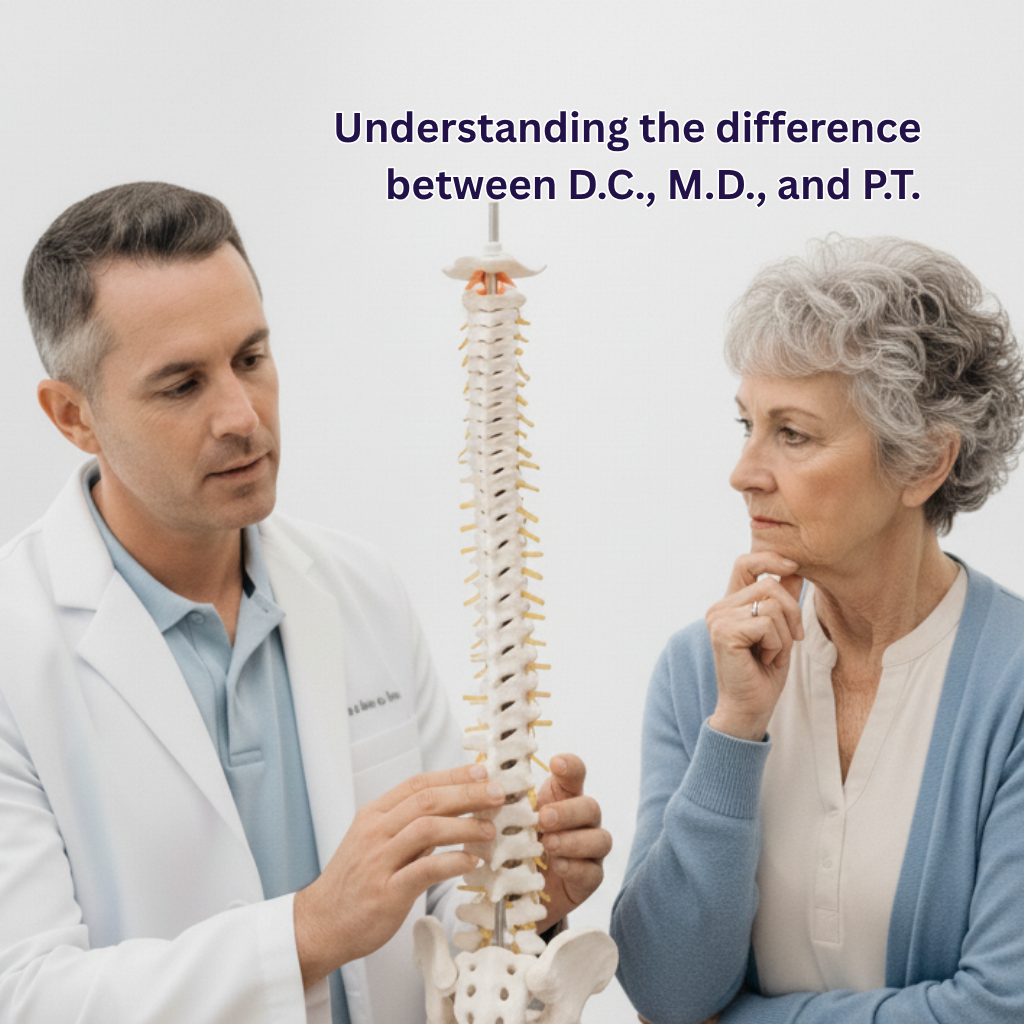
When you're in pain, choosing the right healthcare provider can feel overwhelming. The alphabet soup of credentials—M.D., D.C., D.P.T.—often leads to more questions than answers. While many guides frame this as a competitive choice, the reality is that a patient's best outcome often arises from understanding the distinct, complementary roles these professionals play. The key is to see the physician (M.D./D.O.) as the primary diagnostician and both the Doctor of Chiropractic (D.C.) and Doctor of Physical Therapy (D.P.T.) as crucial specialists within a collaborative, integrated care team.
Deconstructing the "Doctor" Title: Understanding the Landscape of Healthcare Professionals
The term "doctor" is broadly used, but in healthcare, it signifies different levels of education, training, and scope of practice. Understanding these distinctions is the first step in making an informed decision about your care and is central to understanding healthcare professional acronyms. Not all doctorates are the same, and their roles in your health journey are fundamentally different.
The Physician: Medical Doctor (M.D.) and Doctor of Osteopathic Medicine (D.O.)
At the top of the diagnostic hierarchy are physicians: Medical Doctors (M.D.s) and Doctors of Osteopathic Medicine (D.O.s). These are the only professionals with an unrestricted scope of practice. This means they are licensed to diagnose and treat the full spectrum of human diseases and conditions. Their education is the most extensive, involving four years of medical school followed by a mandatory, hands-on residency program in a chosen specialty like family medicine, orthopedics, or neurology. After graduation, medical doctors must complete a residency of 3+ years under the watchful eye of more experienced professionals. This period of intense, supervised clinical training is what truly forges a physician.
So, what's the difference between an M.D. and a D.O.? In terms of rights and privileges, there is virtually no difference. DOs (Doctors of Osteopathy) and MDs (Medical Doctors) are both physicians who can practice in any area of medicine, prescribe medication, and train to do surgery. The primary distinction lies in their foundational philosophy. Allopathic medicine (M.D.) traditionally focuses on using countermeasures like medication or surgery to treat disease. Osteopathic medicine (D.O.) incorporates a more holistic philosophy, emphasizing the interconnectedness of the body's systems and often including training in Osteopathic Manipulative Treatment (OMT), a form of hands-on manual therapy. However, in day-to-day practice, their approaches can be very similar depending on their specialty and individual practice style.
The Clinical Doctorate: Doctor of Chiropractic (D.C.) and Doctor of Physical Therapy (D.P.T.)
In recent decades, a number of healthcare fields have elevated their entry-level education to a doctoral degree to reflect the growing complexity and responsibility of their roles. Many health programs are now beginning to award the so-called practicing or 'clinical doctorate' degree. Examples include: PharmD (Doctor of Pharmacy), ND (Nursing Doctorate), DPT (Doctor of Physical Therapy), and PsyD (Doctor of Psychology). The D.C. and D.P.T. degrees fall into this category.
A Doctor of Chiropractic (D.C.) completes a rigorous 4-year post-graduate program focusing on the neuro-musculoskeletal system. They are trained as portal-of-entry providers, meaning you do not need a referral to see them. Their expertise is in diagnosing and treating conditions related to the spine and nervous system through non-invasive, drug-free methods. This directly addresses the common question, "Are chiropractors real doctors?" Yes, they are doctors of chiropractic, a title earned through an accredited doctoral program, but they are not medical doctors and do not have the same scope of practice.
Similarly, a Doctor of Physical Therapy (D.P.T.) is the current standard for physical therapists. This clinical doctorate typically involves a 3-year post-graduate program. You may wonder, "What can a DPT do that a PT can't?" The D.P.T. curriculum provides more extensive training in differential diagnosis, pharmacology, and evidence-based practice compared to the older bachelor's or master's degree programs. This advanced training often grants D.P.T.s "direct access" authority, allowing patients in many states to see them without a physician's referral, though the specifics of the physical therapist scope of practice by state can vary.
The Quarterback and the Specialist: An Analogy for Modern Healthcare
A helpful way to understand these roles is the "Quarterback and the Specialist" analogy. Think of your primary care physician (M.D. or D.O.) as the quarterback of your healthcare team. They have a view of the entire field—your overall health, medical history, lab results, and any underlying conditions. They call the plays, manage the game plan, and are ultimately responsible for the big-picture diagnosis. When they identify a specific problem area, they call in a specialist.
If the problem is rooted in the body's structure, alignment, and nervous system—particularly back pain, neck pain, or headaches—they might refer you to a Doctor of Chiropractic. The D.C. is the specialist in spinal health and manual adjustments, working to restore proper mechanics and relieve pain at its source.
If the issue involves movement, function, strength, and rehabilitation from an injury or surgery, the quarterback will call on the Doctor of Physical Therapy. The D.P.T. is the specialist in restoring functional capacity, prescribing therapeutic exercise, and teaching you how to move safely and efficiently to prevent re-injury.
This model of interprofessional collaboration in healthcare isn't about one provider being "better" than another. It's about putting the patient at the center and leveraging the unique expertise of each professional to achieve the best possible outcome. The quarterback directs the plan, but the specialists are the ones who execute the critical plays that lead to recovery.
A Head-to-Head Comparison: M.D. vs. D.C. vs. D.P.T.
To help you in finding the right provider for your condition, let's break down the key differences using the factors that matter most to patients. Instead of a simple "chiropractor vs md for back pain" viewpoint, this comparison looks at the whole picture.
Type of Condition & Treatment Focus
Medical Doctor (M.D./D.O.)
Best suited for undiagnosed symptoms, systemic diseases (like rheumatoid arthritis or infections), metabolic issues, suspected fractures, cancer, and conditions requiring surgical intervention or prescription medication management. They are the primary diagnosticians for any health concern.
Doctor of Chiropractic (D.C.)
Focuses on the relationship between the spine and nervous system. Chiropractors’ expertise is doing adjustments, recommending exercises, and offering nutrition and lifestyle advice. They typically focus on problems involving the musculoskeletal system, such as back pain, neck pain, and headaches. They excel with conditions like sciatica, herniated discs (non-surgical cases), tension headaches, and general spinal stiffness.
Doctor of Physical Therapy (D.P.T.)
Focuses on restoring movement, function, strength, and mobility. They are experts in rehabilitation after surgery or injury (e.g., ACL tear, joint replacement), treating sports injuries, improving balance, and managing chronic conditions like osteoarthritis through therapeutic exercise and manual therapy.
Treatment Philosophy
Medical Doctor (M.D./D.O.)
Predominantly allopathic, meaning they use evidence-based medicine, pharmaceuticals, and surgery to treat or manage pathology. D.O.s add a holistic layer with a focus on the whole person and the potential for hands-on osteopathic manipulative treatment.
Doctor of Chiropractic (D.C.)
Embraces a holistic and vitalistic philosophy, trusting the body's innate ability to heal. The core belief is that misalignments in the spine (sometimes referred to as "vertebral subluxations") can interfere with nerve function and overall health. Treatment is centered on drug-free, non-invasive spinal manipulation to correct these issues.
Doctor of Physical Therapy (D.P.T.)
Follows a functional and evidence-based model. The philosophy is that movement is medicine. Treatment is active and educational, focusing on prescribed exercises, manual therapy techniques, and patient education to empower individuals to manage their condition and improve their quality of life.
Scope of Practice
Medical Doctor (M.D./D.O.)
Unlimited. They can legally diagnose any health condition, prescribe any medication, and perform surgery. They are the only professionals on this list who can do all three.
Doctor of Chiropractic (D.C.)
Focused on the neuro-musculoskeletal system. They have robust diagnostic abilities within this sphere and can order and interpret imaging like X-rays and MRIs. However, a key difference is that chiropractors do not prescribe medications or complete surgery. Their practice is strictly non-invasive.
Doctor of Physical Therapy (D.P.T.)
Focused on movement and functional diagnosis. They assess and treat "movement system impairments." While they are highly skilled diagnosticians within their field, they cannot prescribe medication (with very few exceptions for certain topical agents in some states). Their ability to work without a physician referral (direct access) varies by state law.
Education & Training
Medical Doctor (M.D./D.O.)
Requires a bachelor's degree, followed by 4 years of medical school, and then 3-7+ years of residency training in a hospital or clinical setting. This amounts to 11-15+ years of post-secondary education and supervised training.
Doctor of Chiropractic (D.C.)
Requires 2-4 years of undergraduate prerequisites, followed by a 4-year Doctor of Chiropractic program. This program consists of approximately 4,200 hours of classroom, lab, and clinical experience. The chiropractic school curriculum is heavily focused on anatomy, physiology, diagnosis, and manipulation techniques.
Doctor of Physical Therapy (D.P.T.)
Requires a bachelor's degree, followed by a 3-year D.P.T. program. This includes extensive coursework in biomechanics, anatomy, and neuroscience, as well as significant time spent in supervised physical therapy clinical rotations across various settings like hospitals, outpatient clinics, and rehabilitation centers.
A Symptom-First Guide: Who Should You See First?
Navigating the healthcare system is easier when you know the right door to knock on. Your symptoms can provide a clear roadmap for where to begin your journey to relief.
When to Start with a Physician (M.D./D.O.)
Your primary care physician should always be your first call if you experience:
- Undiagnosed Pain: If you have new, unexplained pain and don't know the cause, a comprehensive medical evaluation is essential to rule out serious underlying conditions.
- Systemic Symptoms: Pain accompanied by fever, chills, nausea, unexplained weight loss, or numbness/tingling in multiple limbs requires immediate medical attention.
- Suspected Trauma: After a significant fall or accident where you suspect a fracture, dislocation, or internal injury, go to an emergency room or see a medical doctor.
- Pain from a Known Medical Condition: If your pain is related to a diagnosed condition like rheumatoid arthritis, gout, or cancer, your M.D. or specialist physician should manage your care plan.
When to Consult a Specialist (D.C. or D.P.T.)
If your issue is clearly musculoskeletal and you don't have the "red flag" symptoms listed above, you can often confidently start with a D.C. or D.P.T. This is especially true for:
- Mechanical Back or Neck Pain: Pain that worsens with certain movements or postures and feels "stuck" or stiff is a classic presentation for chiropractic care or physical therapy.
- Sciatica and Radiating Pain: Nerve pain that travels down your leg is often caused by spinal issues that both D.C.s and D.P.T.s are highly qualified to treat. Choosing a physical therapist vs. chiropractor for sciatica depends on whether you prefer a focus on manual adjustments (D.C.) or corrective exercise (D.P.T.).
- Tension Headaches and Migraines: Many headaches originate from tension and dysfunction in the neck, an area where chiropractors, in particular, have a strong track record.
- Sports Injuries and Repetitive Strains: For issues like runner's knee, tennis elbow, or shoulder impingement, both professions offer effective, non-surgical solutions. The choice of who is better for shoulder pain, a PT or chiropractor, often comes down to the specific diagnosis and preferred treatment approach.
The Power of Collaboration: A Patient Success Story
The true power of modern healthcare lies not in choosing one provider over another, but in building a team that works together. Consider the case of a 48-year-old man who developed chronic low back pain that began interfering with his work and hobbies.
His journey started correctly with his primary care physician (M.D.). The M.D. conducted a thorough physical exam and ordered an MRI to rule out any serious pathology like a tumor or infection. The diagnosis was lumbar degenerative disc disease with facet joint syndrome—a common "wear and tear" condition. The M.D. prescribed anti-inflammatory medication for acute flare-ups and, understanding the limits of pharmacological management, provided an M.D. referral to both a chiropractor and a physical therapist.
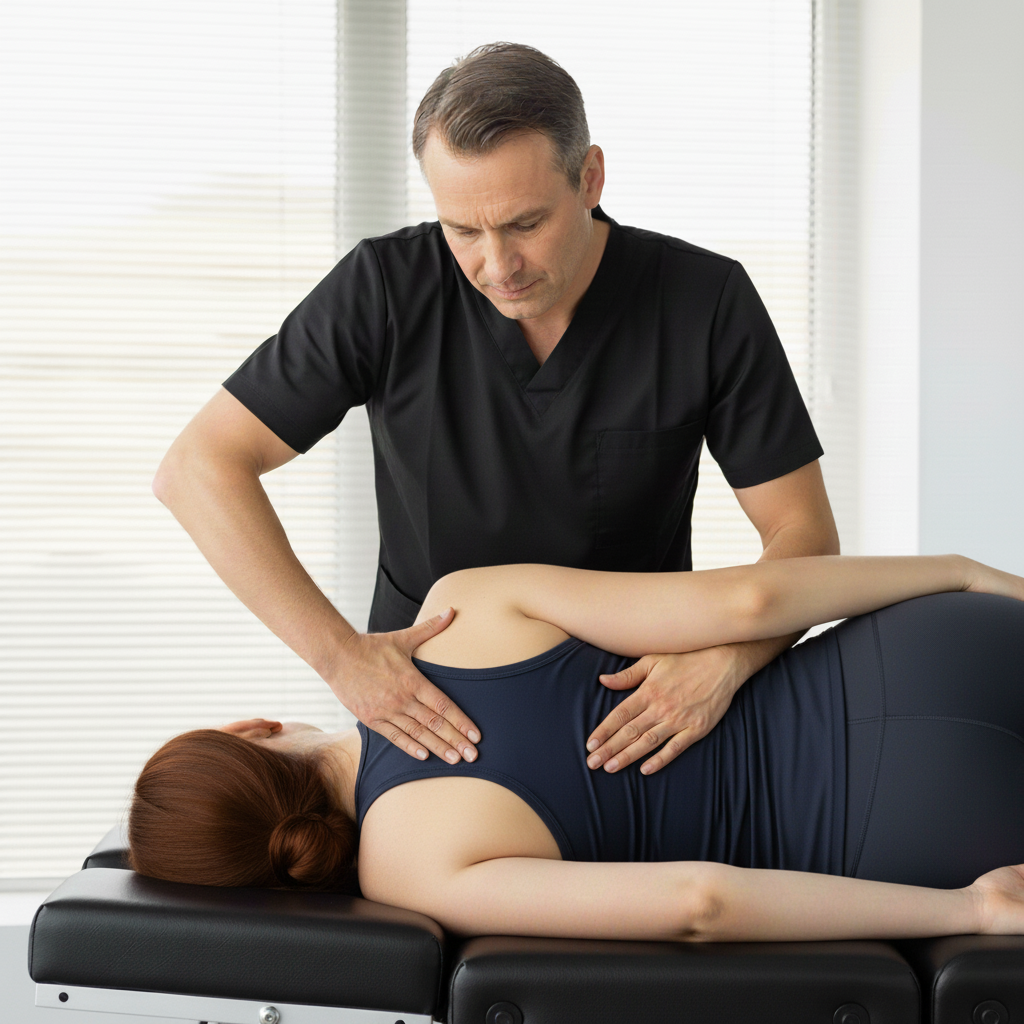
Next, he visited a Doctor of Chiropractic (D.C.). The chiropractor performed a detailed functional assessment, identifying specific spinal segments with restricted movement. Using gentle, precise chiropractic adjustments, the D.C. worked to restore mobility to these joints, which provided immediate and significant pain relief by reducing pressure on the irritated nerves and facet joints.
Concurrently, he began working with a Doctor of Physical Therapy (D.P.T.). The D.P.T. analyzed his posture and movement patterns, discovering weak core stabilizing muscles and poor lifting mechanics. The D.P.T. designed a customized therapeutic exercise program to build core strength and endurance, increase hip flexibility, and retrain his body to move in a safer, more efficient way. This work was crucial for creating long-term stability and preventing future episodes of pain.
The result of this integrated approach was a superior patient outcome. The M.D. provided the crucial initial diagnosis and medical oversight. The D.C. delivered targeted manual therapy for rapid pain relief. The D.P.T. built a foundation of strength and functional movement for lasting resilience. This patient didn't have to choose; he benefited from the unique expertise of each professional, working in concert. This collaborative spirit is essential, especially when dealing with complex injuries. As one patient noted after a serious accident, "I was in a car collision and had nonstop knee and leg pain. Shockwave therapy has helped more than anything else..." This type of advanced modality, often offered by forward-thinking chiropractors and physical therapists, can be a game-changer within a comprehensive treatment plan. Another patient, an avid golfer, shared, "Shockwave treatment has helped my shoulder pain tremendously! It has allowed me to start playing golf again..." This highlights the ultimate goal: not just pain relief, but a return to the activities you love.
Making the Right Choice for Your Needs
Ultimately, the best path forward depends entirely on your unique situation, symptoms, and health goals. There is no single "best" provider, only the right provider for you at this specific time.
For the Acute Injury Patient
If you've just experienced a sports injury, a fender bender, or a strain from lifting something heavy, your problem is likely known and musculoskeletal. Both a D.C. and a D.P.T. are excellent first choices. A chiropractor can be highly effective for immediate pain relief and restoring joint alignment, especially if the spine is involved. A physical therapist is invaluable for creating a structured rehabilitation plan to heal damaged tissues and safely return you to full activity.
For the Chronic Pain Sufferer
If you've been living with long-term back pain, persistent neck stiffness, or recurring headaches, an integrative approach is almost always the most effective. It's wise to have an M.D. or D.O. as part of your team to manage your overall health and ensure your diagnosis is current. From there, a combination of chiropractic care for ongoing spinal health and pain management, along with physical therapy to address underlying muscular imbalances and movement patterns, can provide a powerful, non-surgical, and non-pharmacological path to a better quality of life.
For the Undiagnosed Patient
If you have new, mysterious symptoms—whether it's pain, weakness, numbness, or anything else that you cannot explain—your journey must begin with a primary care physician (M.D. or D.O.). Attempting to self-diagnose or starting with a specialist before you have a clear medical diagnosis can be ineffective at best and dangerous at worst. An accurate diagnosis is the bedrock of any successful treatment plan. Let the "quarterback" assess the whole field first.
Navigating your path to pain relief requires understanding your options and choosing the right professional for the right reason. By seeing physicians, chiropractors, and physical therapists as collaborative partners rather than competitors, you empower yourself to build a healthcare team that leverages the best of all worlds. At Pure Relief Pain Solutions Chiropractic in Austin, TX, we believe in this patient-centered, integrated approach. We work to provide the most effective, non-invasive solutions for your pain while readily collaborating with other healthcare professionals to ensure you receive the comprehensive care you deserve. For a personalized assessment of your condition and to see if our conservative, holistic approach is right for you, contact our expert team today.


Call us today or use our contact form to request an appointment and start getting relief.

