.png)
Why your knee pain might actually start in your feet: a complete guide to custom orthotics

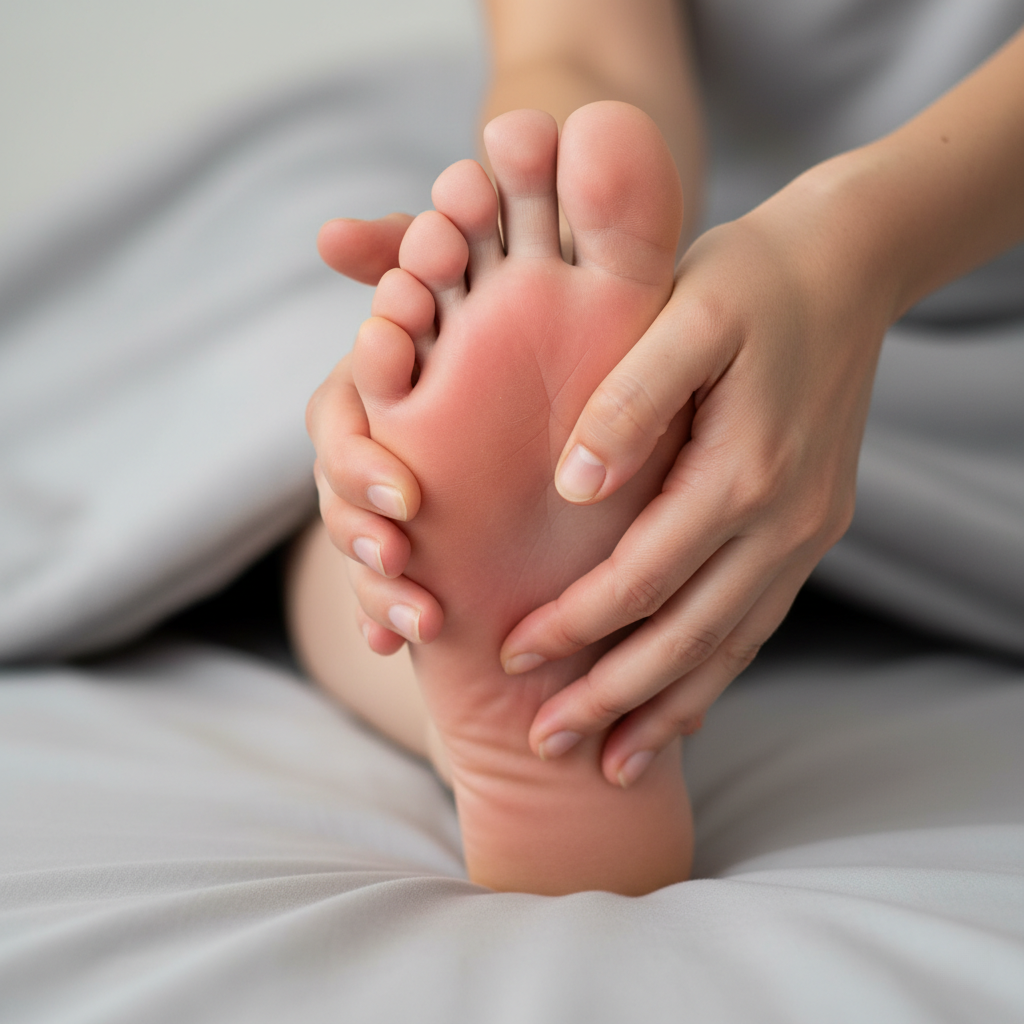
The purpose of custom orthotics is to provide pain relief and correct biomechanical foot issues that affect your entire body. These prescribed medical devices work by supporting the anatomical arches of your foot, realigning foot and ankle bones to their neutral position, and controlling abnormal motion. This correction isn't just about foot comfort; it helps alleviate pressure and stress on your knees, hips, and lower back, addressing the root cause of pain and improving your overall posture and mobility.
The Ripple Effect: Uncovering the True Source of Your Aches and Pains
It’s a common story we hear every day. Someone comes to us with persistent lower back pain, nagging hip discomfort, or chronic knee pain that just won't go away. They’ve tried stretching, resting, and maybe even direct treatments on the sore area, but the relief is always temporary. The problem, in many of these cases, isn’t originating where the pain is felt. It starts from the ground up—in your feet.
Your body is an interconnected system, a marvel of engineering known as the kinetic chain. Every movement, from a simple step to a powerful jump, creates a chain reaction of forces that travels up from your feet through your ankles, knees, hips, and all the way to your spine. When the foundation of this chain—your feet—is out of alignment, the entire structure is compromised. Even a subtle imbalance in your foot mechanics can force your joints to compensate in unnatural ways. As the Hospital for Special Surgery notes, the presence of foot problems can affect the proper functioning of other parts of the body, including the hips, knees and back.
Think of it like the tires on your car. If one tire is misaligned, it doesn’t just wear down unevenly. It causes vibrations and stress that can eventually damage the axle, suspension, and steering. Similarly, common foot conditions like overpronation (where the foot rolls too far inward) or supination (where it rolls outward) force the tibia to rotate abnormally. This twist travels up the leg, altering the mechanics of the knee, which in turn can tilt the pelvis and lead to functional imbalances in the spine. This is a clear explanation for how custom orthotics relieve back pain and why they often help do custom orthotics help knee pain for so many individuals. The symptoms you feel in your back might be the final cry for help from a body struggling with a foundational problem.
Diagnosis Before Device: Why a Professional Assessment is Non-Negotiable
Walking into a pharmacy and pulling a generic shoe insert off the shelf might seem like a quick, easy fix. The packaging promises comfort and support, and the price is certainly appealing. However, this approach completely skips the single most important step in addressing biomechanical pain: the diagnosis. Choosing an insert without a professional evaluation is like picking up a random pair of glasses and hoping they match your prescription. You might get lucky, but it’s far more likely you’ll end up with something that either doesn’t help or makes the problem worse.
A true custom orthotic is the end result of a comprehensive biomechanical assessment. This is not just a quick glance at your arch. So, what to expect at an orthotics fitting? A qualified foot specialist for custom orthotics will conduct a detailed evaluation that may include:
- Gait Analysis: Observing how you walk and run to identify subtle abnormalities in your foot mechanics and overall body movement. This helps understand the dynamic forces at play when your body is in motion.
- Physical Examination: A hands-on assessment of your feet, ankles, and lower limbs to check for structural deformities, range of motion, and areas of tenderness or discomfort.
- Foot Pressure Mapping: Using advanced technology to create a digital map of your foot, showing precisely where pressure is being concentrated as you stand and walk. This helps in alleviating pressure points on feet that cause pain.
- 3D Scanning for Custom Foot Orthotics: Instead of a messy plaster cast, modern clinics use precise 3D scanners to capture the exact contours of your feet. This data is used to create a device that is perfectly molded to your unique anatomy.
This process of getting custom orthotics, from the initial biomechanical evaluation to the final fitting, ensures that the device you receive is designed not just to cushion your foot, but to actively correct its function. This diagnostic step is what makes prescription orthotics different from anything you can buy over the counter.
Custom Orthotics vs. Over-the-Counter Inserts: A Head-to-Head Comparison
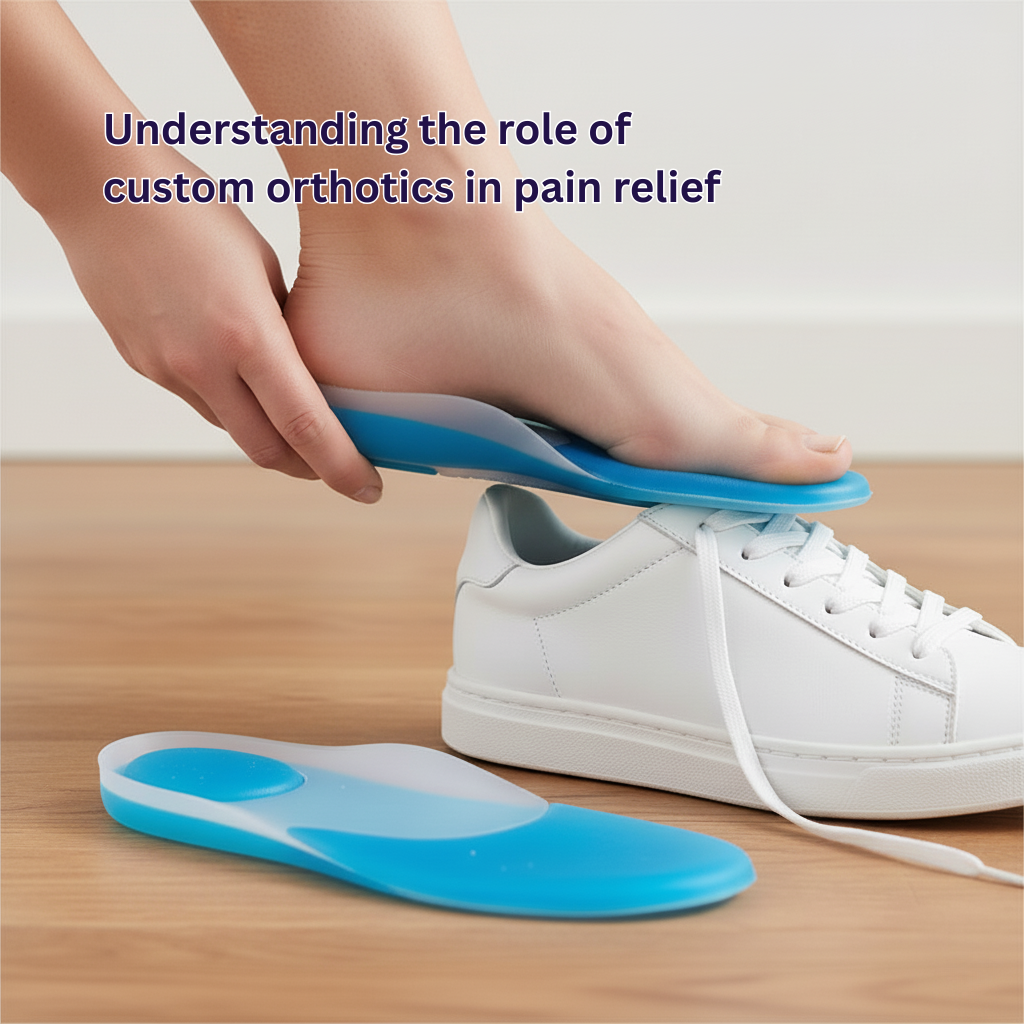
To truly understand the difference and determine what foot support gives the best pain relief for your specific needs, it’s helpful to compare custom-prescribed medical orthotics directly with their over-the-counter counterparts. They serve very different purposes and are built on fundamentally different principles.
Custom-Prescribed Medical Orthotics
Purpose:
Designed for correction. These are functional devices prescribed to correct faulty foot mechanics, treat specific conditions like plantar fasciitis or bunions, and improve overall body alignment. They control motion and redistribute forces throughout the foot.
Process:
Requires a comprehensive biomechanical assessment by a healthcare professional, such as a chiropractor or podiatrist. A precise mold or 3D scan of your foot is taken to create a unique device.
Materials:
Crafted from high-quality, durable materials designed to last for years. The types of custom orthotic materials range from rigid graphite for maximum control (often used in rigid vs semi-rigid orthotics comparisons) to semi-rigid plastics and soft, accommodative foams, depending on the patient's needs.
Fit & Function:
Molded to the exact contours of your feet for a perfect fit. They actively alter the angles at which your feet strike the ground, providing targeted support and correction that affects the entire kinetic chain.
Cost & Value:
The initial cost of custom orthotics is higher. However, their longevity and effectiveness in addressing the root cause of pain offer significant long-term value, potentially saving money on other treatments down the line. It's always worth asking, are custom orthotics covered by insurance, as many plans offer partial or full coverage.
Over-the-Counter (OTC) Shoe Inserts
Purpose:
Primarily designed for cushioning and generic support. They are accommodative, meaning they provide extra padding to relieve pressure but do not correct underlying biomechanical issues.
Process:
Purchased off the shelf based on shoe size and a general arch type (e.g., "for flat feet"). This involves self-diagnosis with no professional input.
Materials:
Typically made from less durable materials like gel, foam, or soft plastic. They compress and wear out quickly, often needing replacement every few months.
Fit & Function:
Mass-produced and not tailored to an individual's foot. The arch support may be in the wrong place or have the wrong height, potentially forcing the foot into an unnatural position.
Cost & Value:
Low upfront cost makes them accessible. However, they only offer temporary symptom relief and need frequent replacement, which can add up over time without ever fixing the core problem.
The Dangers of a "Good Enough" Solution
The biggest risk with a generic, ill-fitting insert isn't just that it won't work; it's that it can actively cause harm. Your body has developed a specific way of moving—its gait—even if that pattern is dysfunctional. When you introduce a generic arch support that doesn't match your foot's specific needs, you are forcing it into a new, and potentially worse, alignment. The Medical Board of California explicitly warns that improper orthotics can injure healthy biomechanics, gait, and posture.
An insert with an arch that is too high, too low, or in the wrong position can create new stress points on your feet, ankles, and knees. This can lead to a host of new problems, from blisters and calluses to tendonitis and stress fractures. This is one of the key reasons why a person might experience foot pain with new inserts. While a brief adjustment period is normal even with custom devices—a process often called breaking in custom orthotics—persistent or sharp pain is a sign that the support is incorrect and potentially damaging.
Many people ask, "can orthotics cause more pain initially?" With a custom orthotic, there might be some initial discomfort as your muscles and joints adapt to a new, correct alignment. This is expected and your provider will give you a schedule for how long to get used to new orthotics, typically starting with an hour or two a day and gradually increasing. With an OTC insert, however, pain is often a signal that the device is fighting against your body's natural mechanics rather than guiding them correctly.
Beyond Cushioning: How Custom Orthotics Actively Correct Your Movement
The core misunderstanding about foot supports is viewing them as passive cushions. While some accommodative orthotics are designed primarily for cushioning (often for patients with conditions like diabetes or severe arthritis in feet), the most common type used for pain relief are functional orthotics. These devices don't just cushion; they actively correct.
So, how do custom orthotics work? They function by controlling motion and realigning the forces acting on your feet and lower legs. For example, in a patient with overpronation, the orthotic will have features like a deep heel cup and medial rearfoot posting (a slight wedge) to prevent the ankle from collapsing inward. This simple correction has profound effects up the kinetic chain, realigning the knee and hip and stabilizing the pelvis. The evidence for custom orthotic effectiveness is substantial, particularly in addressing issues beyond the foot. For example, a landmark study confirmed that specific custom orthotics are proven to reduce low back pain by 34.5%. This demonstrates their role as a true corrective medical device.
This approach is central to how we manage patient care. We see how addressing the body's foundational mechanics can be transformative, often as part of a comprehensive treatment plan. For instance, many of our patients have found success through an integrated strategy. One client, recovering from a severe car collision, shared, "I was in a car collision and had nonstop knee and leg pain. Shockwave therapy has helped more than anything else..." This highlights how a therapy aimed at tissue healing can be powerfully complemented by custom foot orthotics that correct the underlying mechanical stresses that contribute to the pain, ensuring a more complete and lasting recovery.
What Conditions Can Custom Orthotics Help Manage?
Because they address fundamental issues of foot mechanics and alignment, custom orthotics are a versatile and effective non-surgical foot pain solution for a wide range of conditions. They are not just for a single type of foot pain; they are a tool for restoring proper function to the body's foundation. Some of the most common conditions we treat with custom foot orthotics include:
- Plantar Fasciitis: By supporting the arch and controlling pronation, an orthotic reduces the strain on the plantar fascia, a common source of sharp heel pain. Custom insoles for heel spurs work on a similar principle.
- Flat Feet (Pes Planus): Orthotics provide necessary support to a collapsed arch, improving foot alignment and reducing muscle fatigue and pain in the feet, legs, and back.
- High Arches (Pes Cavus): For those with high arches, an orthotic helps redistribute excessive pressure away from the ball and heel of the foot, improving shock absorption and stability.
- Bunions (Hallux Valgus): While they cannot reverse a bunion, custom orthotics for bunions can slow its progression by correcting the faulty mechanics that cause it and reducing pressure on the big toe joint.
- Knee, Hip, and Back Pain: As discussed, by correcting foot alignment, orthotics can resolve pain in other joints by fixing the root biomechanical cause. This is especially true for shoe inserts for hip pain and back issues.
- Shin Splints: Often a problem for runners, shin splints can be caused by poor shock absorption and overpronation. Custom orthotics for runners are designed to control these factors.
- Achilles Tendonitis: Orthotics can help by correcting alignment and sometimes incorporating a heel lift to reduce strain on the Achilles tendon.
- Neuropathy and Diabetic Foot Care: For high-risk patients, accommodative orthotics are crucial. Their purpose is to increase the surface area in contact with the foot and distribute the forces created by walking more evenly, reducing focal areas of pressure that can lead to ulceration.
The goal is always to restore proper function to allow the body to heal and perform optimally. We see this principle at work across different patient needs. For athletes looking to get back in the game, optimizing biomechanics is everything. As one of our patients happily reported after treatment, "Shockwave treatment has helped my shoulder pain tremendously! It has allowed me to start playing golf again..." While his treatment was for his shoulder, the underlying principle is the same: restoring proper mechanics is fundamental to pain-free movement, whether it’s in your golf swing or your daily walk. Custom orthotics apply this same principle directly to your body's foundation.
Making the Right Choice for Your Needs
So, do custom orthotics actually work? The answer is a resounding yes, but the more important question is whether they are the right solution for *you*. The best choice between a custom medical device and an over-the-counter insert depends entirely on your personal health profile, your symptoms, and your long-term goals.
For the Chronic Pain Sufferer
If you experience persistent heel, knee, hip, or lower back pain that has lasted for months or years, a generic insert is unlikely to provide a lasting solution. Your pain is a signal of an underlying mechanical issue. You are the ideal candidate for a professional biomechanical evaluation. Investing in a custom orthotic addresses the root cause rather than just masking the symptoms, offering the potential for long-term correction and genuine pain relief. Your focus should be on a solution that provides foot alignment and posture correction for sustainable results.
For the Athlete
If you're an athlete—whether a marathon runner, a weekend warrior, or someone who spends long hours on your feet—your goal is twofold: preventing sports injuries and optimizing performance. Your feet endure incredible stress, and even minor inefficiencies in your gait can lead to injury and hinder your potential. While an OTC insert might provide some extra cushioning, a custom orthotic designed for your specific sport and foot mechanics can improve gait efficiency, enhance ankle stability, reduce fatigue, and provide a significant advantage in both injury prevention and performance.
For the High-Risk Patient
If you have a pre-existing medical condition such as diabetes, peripheral neuropathy, or a significant foot deformity like Charcot foot, self-treating with an OTC product is not just ineffective—it's dangerous. For you, a precisely molded accommodative orthotic is a medical necessity. Its purpose is to protect your feet by redistributing pressure, reducing friction, and preventing the formation of ulcers or other serious complications. In this case, there is no substitute for a device prescribed and fitted by a healthcare professional.
Ultimately, the path to resolving your pain begins with understanding its true source. While a simple cushioned insert may offer a moment of comfort, lasting relief comes from addressing the foundational mechanics of how your body moves. By viewing your feet as the critical starting point of your body's kinetic chain, you can make an informed decision that supports your health from the ground up. At Pure Relief Pain Solutions Chiropractic in Austin, TX, our holistic approach focuses on identifying and correcting these root causes of pain. We combine advanced diagnostic tools with personalized, non-surgical therapies to create a comprehensive treatment plan tailored to your unique body and lifestyle. To discover how a proper biomechanical assessment and custom orthotic therapy can help you move without pain, we invite you to schedule a consultation with our expert team today.

Call us today or use our contact form to request an appointment and start getting relief.

