.png)
Why your foam roller isn't working: A clinical guide to targeting muscle pain at home


Effective at-home pain relief isn't about simply rolling out sore muscles; it's about understanding that not all muscular pain is the same. The key to lasting relief is to first identify the specific type of discomfort you're experiencing—be it general soreness, a pinpoint knot, or a fascial restriction—and then to select the precise tool and technique designed to treat that specific issue, transforming your efforts from guesswork into a targeted clinical strategy.
The Common Mistake: Treating All Muscle Pain the Same
In our clinical practice, we see a recurring pattern: patients invest in a foam roller, use it vigorously on every ache and pain, and then become frustrated when their discomfort persists or even worsens. They often ask, "Does foam rolling help with pain?" The answer is yes, but with a critical caveat. The issue is not the tool itself, but the one-size-fits-all application. Treating a deep, stubborn trigger point in your shoulder with the same broad pressure you use on post-workout leg soreness is like trying to perform surgery with a sledgehammer. It's the wrong instrument for a delicate and specific job.
This approach fails because the underlying physiology of different types of muscle pain varies dramatically. General soreness from a new workout routine involves microscopic tears across a wide muscle belly. A tight muscle knot is a localized spasm of muscle fibers caught in a painful contraction. Fascial tightness is more like a sticky, restrictive web that limits movement. Each requires a unique mechanical input to encourage the body's natural healing and release process. By learning to differentiate these signals, you can move beyond simply rolling and begin to implement a strategy of true self-myofascial release.
A Diagnostic Approach: Learning to 'Read' Your Body's Signals
The first step toward an effective at-home pain relief strategy is to become a better interpreter of your body's feedback. Before you reach for any tool, take a moment to assess the sensation. Is it a dull, widespread ache? A sharp, specific point of pain? A feeling of being "stuck" or restricted? Your answer will guide your entire approach.
Type 1: General Soreness (DOMS - Delayed Onset Muscle Soreness)
This is the classic, familiar ache that sets in 24 to 48 hours after a strenuous or new workout. It feels like a diffuse, tender soreness spread across the entire muscle group you trained. For example, your quads might feel tender to the touch after a heavy day of squats. This sensation, known as what to do for delayed onset muscle soreness, is caused by micro-trauma to the muscle fibers, which is a normal part of the muscle-building process. The primary goal here is not to "break up" anything, but to gently encourage blood flow, reduce inflammation, and calm the nervous system to accelerate recovery. Does foam rolling help with DOMS? Yes, immensely, when applied correctly. This is one of the primary benefits of foam rolling daily after intense activity.
Type 2: The Tight Knot (Trigger Point)
Unlike the widespread ache of DOMS, a trigger point is a hyper-irritable, localized spot within a taut band of skeletal muscle. When you press on it, it can be exquisitely tender and often refers to pain in other areas of the body. For instance, a trigger point in the upper trapezius muscle can refer pain up into your head, causing a tension headache. What causes muscle knots? These are essentially micro-cramps created by factors like chronic postural strain (such as foam rolling for desk workers), repetitive movements, or an acute injury. The goal of treatment here is highly specific: apply direct, sustained pressure to the knot to encourage the contracted fibers to release. This is the foundation of DIY trigger point release.
Type 3: Fascial Restriction
Fascia is the intricate, web-like connective tissue that encases and connects every muscle, bone, nerve, and organ in your body. It should be pliable and hydrated, allowing muscles to glide smoothly over one another. However, due to inactivity, trauma, poor posture, or dehydration, this tissue can become stiff and "stuck," creating fascial adhesions. This feels less like a pinpoint knot and more like a general stiffness, a lack of flexibility, or a feeling of being "shrink-wrapped." The theory behind myofascial release is that a primary factor in muscle tightness and pain is the condition of fascia, with the practice aiming to release 'fascial clumps' to relieve tension on the musculoskeletal system according to researchers at the University of Delaware. The objective here is to use slow, sweeping, sustained pressure to help rehydrate the tissue and "unstick" the layers, improving your range of motion.
The 'Right Tool for the Job' Principle: Your At-Home Pain Relief Arsenal
Once you’ve identified the type of discomfort you're experiencing, you can select the most appropriate tool from your at-home physical therapy tools. The debate of massage gun vs foam roller for recovery is common, but the truth is they serve different functions. Each tool is designed to deliver a specific type of pressure and intensity, making it suitable for a different target.
The Foam Roller: For Broad Strokes and General Mobility
Think of the foam roller as your paintbrush, ideal for covering large surface areas with broad, sweeping strokes. Foam rollers apply sustained pressure to release myofascial tissue and are beneficial for targeting larger muscle groups or for those who prefer a gentler treatment as explained by experts at Baylor College of Medicine. This is your go-to tool for post-workout foam rolling for muscle soreness (DOMS) in the quads, hamstrings, glutes, and upper back.
When considering how to choose the right foam roller density, beginners should start with a softer, low-density roller. Those with more experience and dense muscle tissue may get more benefits of a high density foam roller. A textured vs smooth foam roller comes down to preference; the knobs and ridges on a textured roller can provide a more intense, targeted massage, while a smooth roller offers consistent pressure. For general soreness, a smooth, medium-density roller is often the perfect starting point for exercises like tight IT band foam roller stretches or for improving flexibility with a foam roller.
The Massage Gun: For Deep Tissue and Dense Muscles
If the foam roller is a paintbrush, the massage gun is a fine-tipped chisel, designed for targeted, deep work. Massage guns use percussive therapy for targeted relief in specific muscle groups and are recommended for individuals looking for a deeper, more intense massage, a point also noted by Baylor College of Medicine researchers. The rapid pulses penetrate deep into the muscle tissue, making it exceptionally effective for dense muscles like the glutes, pecs, and calves. Using a massage gun on legs can quickly alleviate tightness and is excellent for those seeking how to get deep tissue massage at home. It's also one of the more effective tools for breaking up scar tissue at home under professional guidance. It's superior to a roller for addressing dense tissue but too intense for general soreness or bony areas.
The Lacrosse Ball or Massage Ball: For Precision Trigger Point Release
This simple, inexpensive tool is the undisputed champion of precision. For a deep, stubborn knot that a foam roller just can't seem to reach, using a lacrosse ball for trigger points is the clinical choice. Its small surface area and firmness allow you to apply significant pressure to a very specific point. It is the best tool for how to release muscle knots in your back, especially in the tricky areas between your shoulder blades. It’s also invaluable for relieving neck and shoulder pain with a massage ball by placing it between your back and a wall, and for addressing deep hip rotators like in foam rolling for piriformis syndrome.
A variation, the peanut massage ball, is essentially two balls fused together. Learning how to use a peanut massage ball is excellent for targeting the muscles running parallel to the spine (erector spinae) without putting direct pressure on the vertebral bones themselves, which is a key safety consideration.
Other Valuable Tools: The Massage Stick and Acupressure Mat
Beyond the main three, a few other at-home tools for fascia release deserve mention. Using a massage stick for calf pain, for example, allows for better pressure modulation than a foam roller, as you control the intensity with your arms. This is one of the better alternatives to foam rollers for pain relief in easily accessible muscles. An acupressure mat for back pain relief, covered in small plastic spikes, works differently. By lying on the mat, you stimulate thousands of points on your back, which can help increase blood flow, release endorphins, and provide a sense of relaxation for generalized tension.
Practical Application: A Step-by-Step Guide to Effective Self-Myofascial Release
Knowing the "what" and "why" is only half the battle. The "how" is where true relief is found. Foam rolling is technically known as self-myofascial release, a technique involving massage to release muscle tightness or address trigger points as defined by the University of Utah Health. Proper technique is paramount for both safety and efficacy.
General Best Practices for All Tools

- Go Slowly: This is not a race. Slow, deliberate movements give your muscle tissue and nervous system time to respond and release. Rushing over an area is far less effective.
- Breathe Deeply: Holding your breath signals your body to tense up. Deep, diaphragmatic breathing helps your parasympathetic nervous system engage, promoting relaxation and release.
- Know "Good Pain" vs. "Bad Pain": Why does foam rolling hurt? It should feel like a deep, satisfying pressure—uncomfortable, but tolerable. If you feel sharp, shooting, or nerve-like pain, you must stop immediately.
- Time It Right: How long should you foam roll an area? For a general area, 60-90 seconds is sufficient. When you find a specific tender spot or trigger point, pause on it and hold sustained pressure for 20-30 seconds, or until you feel the tension begin to dissipate.
Specific Techniques for Common Problem Areas
Your routine should be tailored to your lifestyle. A desk worker's needs are vastly different from a marathon runner's.
For the Desk Worker with Postural Strain: Chronic tension from sitting demands a focus on undoing the "computer hunch."
- Thoracic Spine Mobility: Use a foam roller for upper back and thoracic spine mobilization. Lie with the roller perpendicular to your spine, just below your shoulder blades. Support your head with your hands, lift your hips slightly, and gently roll up and down, from your mid-back to the top of your shoulders. This can be a key component of foam rolling for posture correction.
- Shoulder Knots: Stand with your back to a wall and place a lacrosse ball between the wall and the tight, ropy muscles between your shoulder blade and spine. Gently move side-to-side and up-and-down to find trigger points, then hold pressure. This is a primary technique when using a trigger point cane for shoulder knots as well.
- Hip Flexor Release: Chronic sitting shortens the hip flexors. While direct rolling can be difficult, using a small, soft massage ball to apply gentle pressure to the front of the hip can provide relief. This is one of the more advanced at-home tools for hip flexor pain.
For the Athlete Focused on Performance and Recovery: An athlete's goal is improving flexibility, increasing range of motion with a foam roller, and accelerating recovery. The question of is it better to foam roll before or after a workout is common. A light, dynamic pre-workout foam rolling routine (5-10 minutes) can increase blood flow and prepare muscles for action. A longer, slower post-workout session aids recovery.
- Glutes and Piriformis: The best way to roll out glutes involves sitting on the roller, crossing one ankle over the opposite knee, and leaning into the hip of the crossed leg to target the deep piriformis muscle. This is essential for anyone doing foam roller exercises for sciatica or piriformis syndrome.
- Quads and Hamstrings: For exercises for tight quads with a roller, lie face down and roll from the bottom of the hip to the top of the knee. For how to foam roll hamstrings correctly, sit with the roller under your thighs and use your arms to control the pressure as you roll from below the glute to the back of the knee.
- Calves: Techniques for rolling out tight calves are crucial for runners. Sit with the roller under your calf and use your other leg to add pressure. Rotate your leg inward and outward to hit the different sides of the muscle. This is also where a massage stick can be highly effective.
Beyond Symptom Relief: The Bridge to True Correction
It is vital to understand that at-home massage tools are primarily for symptom management. They are an incredibly powerful bridge, but they are not the final destination. Rolling a tight IT band may provide temporary relief, but it doesn't address *why* the IT band became tight in the first place—which is often due to weak gluteal muscles or poor pelvic stability. Breaking up muscle adhesions at home is beneficial, but it doesn't correct the movement patterns that created them.
The true value of these tools is that they can reduce pain and improve tissue quality enough to allow you to perform the corrective exercises that address the root cause. By increasing your range of motion and decreasing pain signals, you open a window of opportunity to strengthen weak muscles, improve motor control, and build a more resilient body. This is the cornerstone of a sustainable, long-term health strategy.
Critical Red Flags: When to Stop Self-Treatment and Consult a Professional
Self-care is empowering, but it is not a replacement for professional medical diagnosis and care. Knowing when to stop is just as important as knowing how to start. Can foam rolling be harmful? Absolutely, if used improperly. Pay close attention to these red flags.
Nerve Pain
Can foam rolling help with nerve pain? The answer is an emphatic no. Applying pressure directly to a nerve can exacerbate the issue significantly. If you feel sharp, shooting, electric, or tingling sensations, stop immediately. While foam roller exercises for sciatica can involve rolling the surrounding muscles like the glutes and piriformis to relieve pressure on the sciatic nerve, you should never roll directly on the area where you feel the nerve pain itself.
Direct Joint Pressure
What are two areas of your body you should avoid while foam rolling? The two most critical are your joints and your lower back. Never roll directly on your knee joint, elbow joint, or ankle joint. The roller is for soft tissue, not bone. Similarly, avoid placing the roller directly under your lumbar spine (lower back). This can cause the spinal muscles to spasm and may put undue pressure on the vertebrae. Stick to the muscular areas of the upper back and glutes instead.
Acute Injuries
If you have a recent, acute injury like a muscle tear, ligament sprain, or broken bone, do not use any of these tools on or near the injured area. The inflammation process is a necessary part of healing, and aggressive massage can disrupt it and cause further damage. Wait until you have been cleared by a medical professional.
If your pain persists for more than a week, worsens with self-treatment, or is the result of a significant trauma, it is time to seek a professional diagnosis. Sometimes, what feels like a simple knot could be a more complex issue. A patient might believe they have a stubborn knot, but it could be a referred pain pattern that requires a clinical diagnosis. One of our patients, who was in a car collision, experienced persistent knee and leg pain. They found that at-home tools provided temporary relief, but the underlying issue required professional intervention. They shared, "I was in a car collision and had nonstop knee and leg pain. Shockwave therapy has helped more than anything else..." This highlights how a proper diagnosis can lead to more effective treatments.
Similarly, chronic shoulder pain can be complex and may not respond to self-massage alone. Another patient found success with targeted clinical treatment after their at-home strategies hit a plateau: "Shockwave treatment has helped my shoulder pain tremendously! It has allowed me to start playing golf again..." These experiences underscore the importance of professional guidance when at-home remedies for muscle tension are not enough.
Making the Right Choice for Your Needs
So, do a massage gun and foam roller do the same thing? No. The best at-home massage tools for muscle knots are different from the best tools for general soreness. The right choice depends entirely on your body, your lifestyle, and your specific goals.
For the Fitness Enthusiast
Your primary needs are managing DOMS, enhancing post-workout recovery, and improving athletic performance. Your go-to tool is the foam roller, specifically a medium to high-density model for working large muscle groups like quads, lats, and hamstrings. A massage gun is an excellent secondary tool for targeting dense, overworked muscles like the calves and glutes to speed up recovery and maintain flexibility.
For the Desk Worker
Your battle is against chronic tension, specific knots, and postural decline. Your most valuable tool is the lacrosse or massage ball. It is unmatched for DIY trigger point release in the upper back, shoulders, and pecs—the areas most affected by sitting. A foam roller is a great complement for improving thoracic spine mobility and counteracting the hunched-forward posture that develops from hours at a computer.
For the Rehab Patient
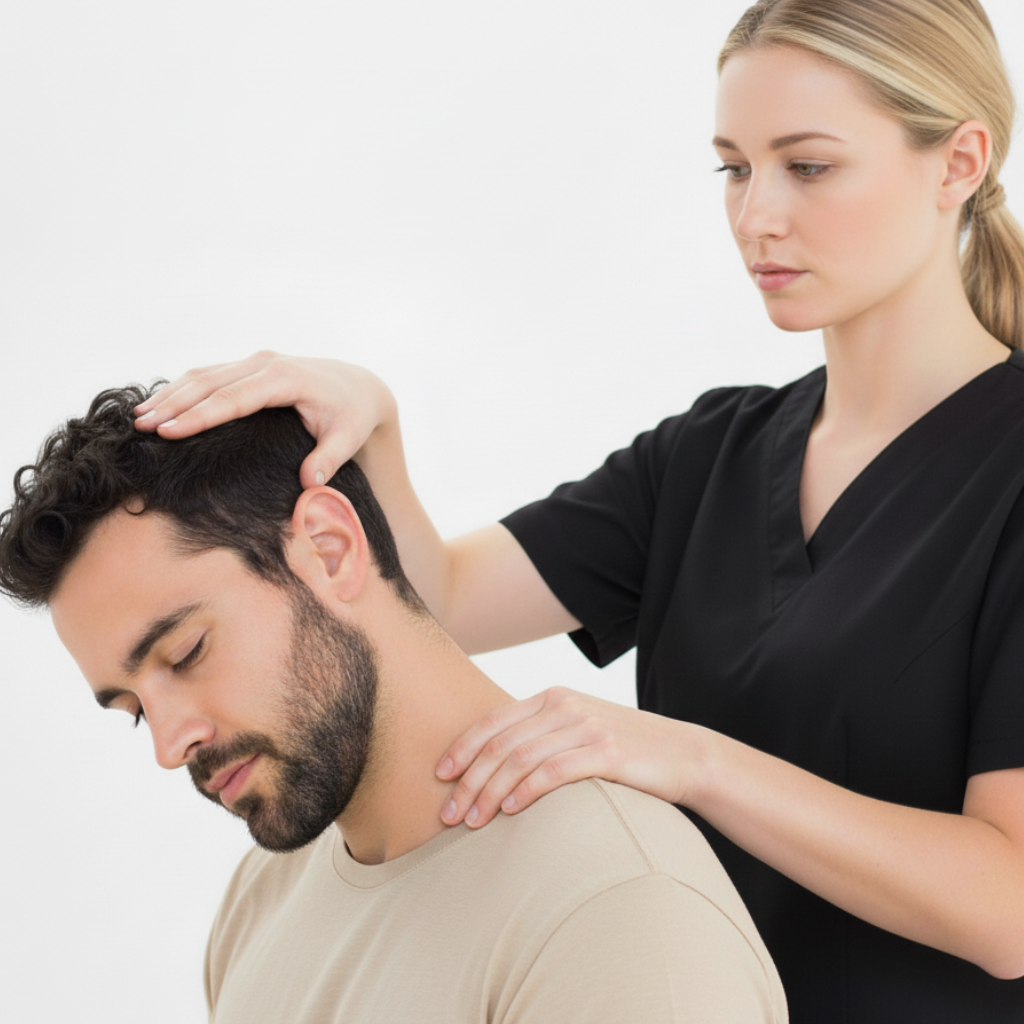
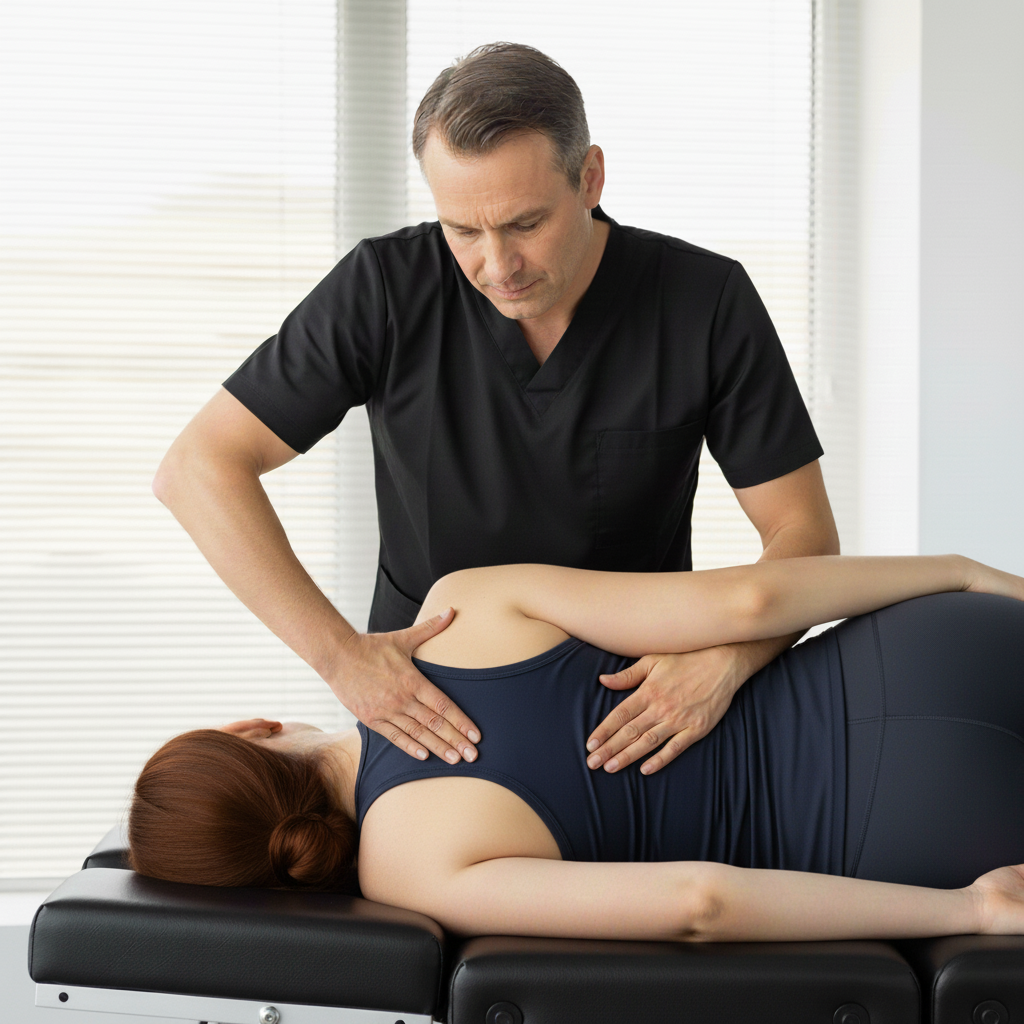
Your use of at-home tools must be guided by a clinical professional, such as a chiropractor or physical therapist. These tools are used to manage pain and maintain mobility between appointments. Your clinician will prescribe specific techniques to support your recovery plan. This plan might also include advanced, in-office therapies to address the root cause of the injury, ensuring that your at-home care is part of a comprehensive and effective healing strategy.
Ultimately, the most effective strategy for at-home pain relief is one that is both targeted and intelligent. By listening to your body, understanding the nature of your discomfort, and choosing the right tool for the job, you can develop a self-care routine that provides real, lasting relief. When that pain persists or feels too complex to manage alone, a professional diagnosis is the key to unlocking the next level of healing. For guidance tailored to your specific needs, the board-certified clinicians at Pure Relief Pain Solutions Chiropractic in Austin are available to provide a comprehensive, non-surgical evaluation and help you move toward meaningful, lasting improvement.

Call us today or use our contact form to request an appointment and start getting relief.

