.png)
A chiropractor's 3-phase method for treating a pinched nerve for good


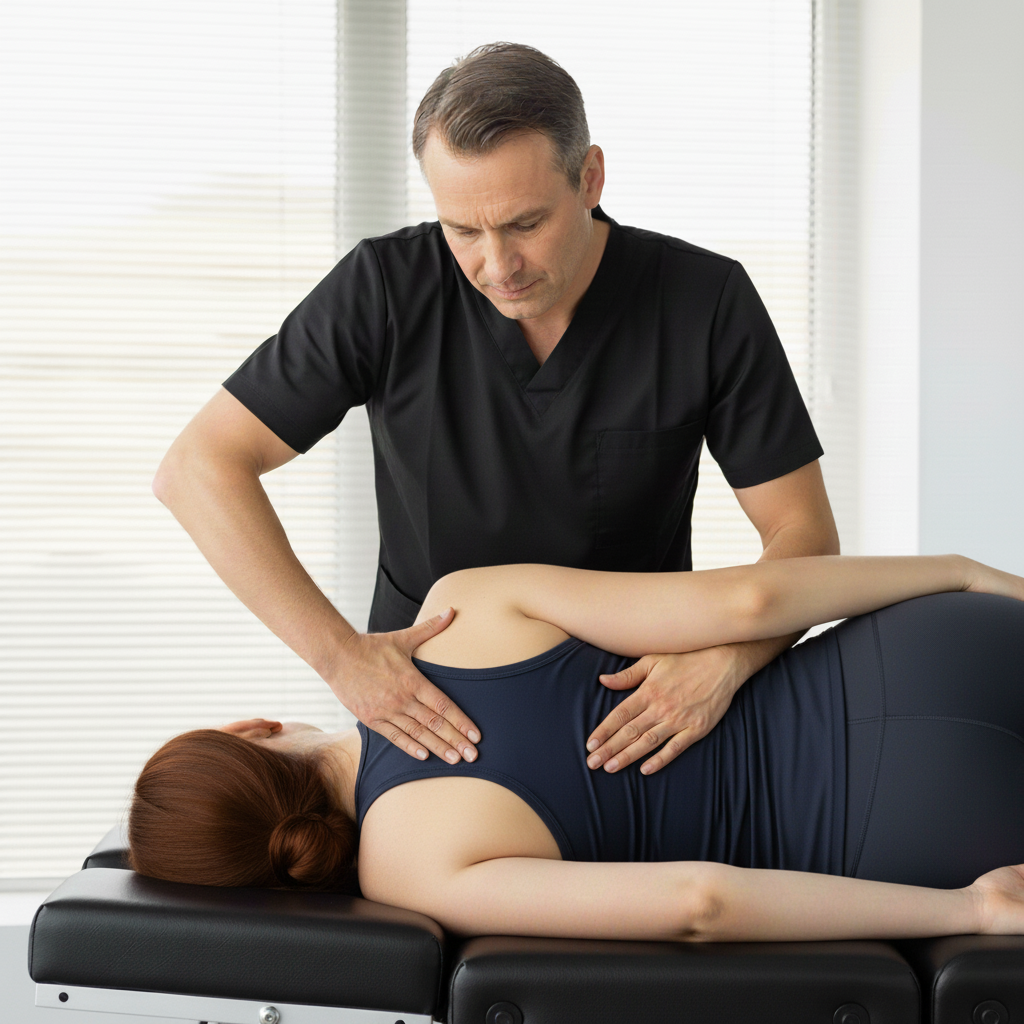
A chiropractor treats a pinched nerve not with a single adjustment, but with a comprehensive, multi-phase approach designed to provide lasting relief. This holistic treatment for nerve compression involves first using precise adjustments to restore joint mobility and creating space around the nerve, then applying targeted soft tissue therapies to release the chronic muscle tension that contributes to the compression, and finally prescribing specific corrective exercises to address the underlying movement patterns and prevent the problem from returning.
That Sharp, Shooting Pain: Understanding a Pinched Nerve
A "pinched nerve," clinically known as nerve compression or entrapment, occurs when excessive pressure is applied to a nerve by surrounding tissues. This pressure can come from bone, cartilage, muscles, or tendons. It disrupts the nerve's ability to function, leading to a cascade of unpleasant symptoms like sharp, radiating pain, numbness, tingling sensations (paresthesia), or muscle weakness along the path of the nerve.
While many people associate a pinched nerve with the spine, this condition can happen throughout the body. You might experience it as:
- Cervical Radiculopathy: A pinched nerve in the neck, often causing pain, numbness, or weakness that travels down the shoulder and into the arm and hand.
- Sciatica (Lumbar Radiculopathy): The hallmark of a compressed sciatic nerve in the lower back, leading to pain that radiates down the buttock and into the leg. When patients ask, "do chiropractors help with sciatica?" the answer is a definitive yes, as it's one of the most common conditions we treat.
- Thoracic Outlet Syndrome: Compression of nerves between your collarbone and first rib, which a chiropractor can address by assessing and treating the biomechanics of the entire shoulder girdle, not just the spine.
- Pinched Ulnar Nerve: Often felt as numbness and tingling in the ring and little fingers, sometimes called "cell phone elbow," which can originate from pressure in the elbow or even the neck.
The symptoms of nerve compression can be debilitating. In some cases, particularly with what is cervical nerve root irritation, the pain and associated signals can even lead to secondary symptoms. When asked, "can a pinched nerve cause nausea?" the answer is yes. Severe pain from a pinched nerve in the neck can sometimes trigger a vasovagal response or cause muscle tension headaches that lead to feelings of nausea and dizziness.
The Diagnostic Difference: Why Finding the True Source Matters
Effective pinched nerve treatment hinges on a precise diagnosis. Simply treating where the pain is felt often misses the mark. For example, numbness in your hand might not be a wrist problem; it could be a pinched nerve from a herniated disc chiropractic care can address, or it could be due to thoracic outlet syndrome. This is where the diagnostic process of a skilled chiropractor becomes invaluable.
A thorough initial chiropractic consultation for nerve pain is not just a conversation. It's a deep investigation into your body’s mechanics. We perform a comprehensive physical exam, including orthopedic and neurological tests, to pinpoint the exact location of the nerve impingement. We assess your posture, analyze your movement patterns, and feel for the muscular tension causing the pinched nerve. This meticulous process ensures the treatment targets the actual source, providing a clear path to realigning vertebrae for nerve relief and improving nerve function with chiropractic care.
Beyond a Quick Fix: A Comprehensive Approach vs. a Single Adjustment
When seeking a chiropractor for nerve pain, patients often encounter two very different philosophies of care. Understanding the distinction is critical to choosing the path that aligns with your health goals.
Decision Factor: Lasting relief vs. temporary pain reduction

Single-Adjustment Chiropractic: This approach focuses on performing a spinal manipulation to address a restricted joint. It can often provide immediate relief for a pinched nerve, which feels great in the moment. However, because it doesn't address the tight muscles or poor movement habits that caused the joint to become restricted in the first place, the relief is often temporary. The pain frequently returns once the body reverts to its old patterns.
Comprehensive, Multi-Phase Care: This method views the adjustment as the first step, not the only step. The goal is lasting resolution. By systematically addressing the joint, the surrounding soft tissues, and the patient's biomechanics, we aim to correct the problem at its root. This requires more patient commitment but offers a much greater chance of a permanent solution.
Decision Factor: Addressing the root cause of the problem
Single-Adjustment Chiropractic: The primary focus is on the vertebral subluxation or joint restriction itself. It treats the structural component but often overlooks the functional cause. Why did that joint get stuck? This question often goes unanswered.
Comprehensive, Multi-Phase Care: We operate on the principle that the body is an interconnected system. A pinched nerve in the hip that a chiropractic treatment can help might be caused by tight hip flexors from sitting all day, which in turn causes a spinal misalignment. Simply adjusting the spine without releasing the muscles and correcting the sitting posture is an incomplete solution. We address the entire chain of dysfunction.
Decision Factor: Inclusion of soft tissue therapy and corrective exercise
Single-Adjustment Chiropractic: This model generally does not include manual therapy for nerve impingement or a plan for rehabilitation. The service is the adjustment itself.
Comprehensive, Multi-Phase Care: This is a cornerstone of modern, evidence-based chiropractic care. We integrate soft tissue therapies to break down adhesions and release muscle tension. Then, we empower the patient with chiropractic exercises for a pinched nerve to stabilize the area and prevent recurrence. This ensures the body can hold the adjustments and remain pain-free long-term.
The Three Phases of Effective Chiropractic Care for a Pinched Nerve
Our approach is a systematic process. We don’t just chase the pain; we rebuild the foundation for a healthier, more resilient body. This is how a chiropractor can fix a pinched nerve for good.
Phase 1: Create Space and Reduce Pressure (The Adjustment)
The first phase is all about immediate relief and restoring motion. When a vertebra is misaligned or a joint is not moving correctly, it can directly cause nerve root decompression issues. The goal of a chiropractic adjustment, also called spinal manipulation, is to improve spinal motion and the body's ability to move. This is the "pop" many people associate with chiropractors, but the sound is just a byproduct of gas being released from the joint. The true purpose of a chiropractic adjustment for a pinched nerve in the neck or a pinched sciatic nerve chiropractic treatment is to gently restore the joint's proper position and mobility, taking direct pressure off the irritated nerve.
For more stubborn cases, we may use techniques like non-surgical spinal decompression for a pinched nerve. This therapy uses a specialized table to gently stretch the spine, which can help retract bulging or herniated discs. Spinal decompression therapy can treat conditions like bulging disks, herniated disks, and pinched nerves by relieving pressure on the spinal cord or nerves. The feeling is one of gentle, relieving traction.
Phase 2: Release the 'Vise-Grip' (Soft Tissue Therapy)
A restricted joint rarely exists in isolation. It's almost always accompanied by tight, guarded muscles and tense connective tissue (fascia) that are holding it in a dysfunctional pattern. Simply adjusting the joint without addressing this "vise-grip" of muscular tension is why some people find their pain returns quickly.
This is where targeted soft tissue therapy is essential. As treatment that a chiropractor may offer includes soft-tissue therapy to relax tight muscles, relieve spasms and release tension in the connective tissue that surrounds each muscle (fascia). Techniques like Active Release Technique (ART), Graston Technique, or advanced therapies like Shockwave Therapy are used to break down scar tissue, release trigger points, and lengthen chronically tight muscles. This not only provides pain relief but also allows the adjustments to hold more effectively. For a chiropractor for pinched nerve in shoulder blade issues, this step is often the key that unlocks lasting mobility. As one patient shared, "Shockwave treatment has helped my shoulder pain tremendously! It has allowed to start playing golf again..."
Phase 3: Rebuild and Retrain (Corrective Exercises)
Once we have restored mobility to the joints and released tension in the muscles, the final phase is to retrain the body to move correctly. This is the crucial step that transitions you from passive treatment to active recovery and prevention. Without it, the underlying postural or movement imbalances that led to the pinched nerve in the first place will likely cause it to return.
We prescribe a personalized program of chiropractic exercises for a pinched nerve. This isn't a generic handout. It may include specific strengthening exercises for weak stabilizing muscles, stretches for chronically tight areas, and nerve gliding exercises. Nerve gliding, or neural mobilization, involves gentle movements designed to help the nerve slide more freely within its sheath, reducing irritation and improving function. This phase is about empowering you with the tools to maintain your progress and build a more resilient body, preventing pinched nerves with chiropractic principles you can use for life.
Frequently Asked Questions About Chiropractic and Pinched Nerves
How long does it take for a chiropractor to fix a pinched nerve?
This is one of the most common questions, and the answer depends on several factors: the severity of the compression, how long you've had the condition, and your overall health. Some patients experience significant relief after the first few visits. However, achieving full correction and lasting stability is a process. More than one session is most often needed to correct a problem; treatments generally last several weeks. A typical pinched nerve recovery time with chiropractic care might involve a plan of 2-3 visits per week for a few weeks, gradually tapering down as your body stabilizes and strengthens.
Is it better to see a chiropractor or a doctor for a pinched nerve?
Both medical doctors and chiropractors play important roles, and the best choice depends on the nature of your symptoms. A medical doctor is essential for ruling out serious pathology and can prescribe medications like anti-inflammatories or muscle relaxers for severe, acute pain. A chiropractor, on the other hand, specializes in the non-surgical treatment of the biomechanical and functional causes of the nerve compression. For many pinched nerves originating from spinal misalignment or muscular tension, a chiropractor is uniquely equipped to correct the underlying mechanical problem. Often, a collaborative approach provides the best outcome for patients.
Can chiropractic make a pinched nerve worse?
This is a valid concern. When performed by a qualified and thorough chiropractor, the risk is extremely low. The key is the initial diagnosis. If a proper examination is performed, the chiropractor will identify the precise cause and apply the correct, safe chiropractic adjustments for pinched nerves. The potential for aggravation arises if the cause is not mechanical (e.g., a tumor, which a good diagnostician would identify and refer out for) or if an overly aggressive technique is used on an already inflamed area. This is why our patient-focused, methodical approach is so important for ensuring safety and efficacy.
Making the Right Choice for Your Needs
Deciding between a quick-fix approach and a comprehensive care plan depends entirely on your personal situation and long-term health goals.
For the Chronic Pain Sufferer
If you have been dealing with long-term or recurring discomfort, you have likely already discovered that temporary fixes are not enough. You need a solution that addresses the deep-seated root cause. A comprehensive, multi-phase chiropractic plan is designed for you. It systematically unwinds the layers of joint restriction, chronic muscle tension, and faulty movement patterns that have kept you in a cycle of pain, offering a genuine path to lasting relief.
For the Recently Injured Athlete
Your goal is not just to be out of pain but to return to your sport stronger and more resilient than before. A single adjustment won't accomplish this. You need a plan that includes advanced soft tissue therapy to properly heal damaged muscles and ligaments, followed by a robust corrective exercise program to rebuild stability and correct the biomechanical flaws that may have contributed to the injury. This approach helps prevent re-injury and can even enhance performance.
For the Post-Accident Patient
Recovering from a car accident or personal injury involves complex trauma. The body is dealing with joint dysfunction, significant soft tissue damage, inflammation, and compensatory movement patterns. A structured, multi-phase plan is essential. As one of our patients who was in a car collision noted, "I was in a car collision and had nonstop knee and leg pain. Shockwave therapy has helped more than anything else..." This highlights the need for a protocol that includes adjustments to restore mobility, advanced therapies to break down scar tissue, and guided rehabilitation to retrain the body to move safely and efficiently.
Ultimately, the best approach to chiropractic care for a pinched nerve is one that aligns with your goal of achieving lasting, vibrant health. For those in the Austin, TX area seeking a comprehensive and personalized plan to resolve nerve pain at its source, we invite you to experience the difference at Pure Relief Pain Solutions Chiropractic. Contact our expert team today for a detailed assessment and to begin your journey toward true, long-term relief.


Call us today or use our contact form to request an appointment and start getting relief.

